
Nick Sirianni Kick Coverage Error: Eagles’ London Lesson
A tiny special-teams decision exposed a familiar, expensive truth.
 Beatrice Kensington5 min read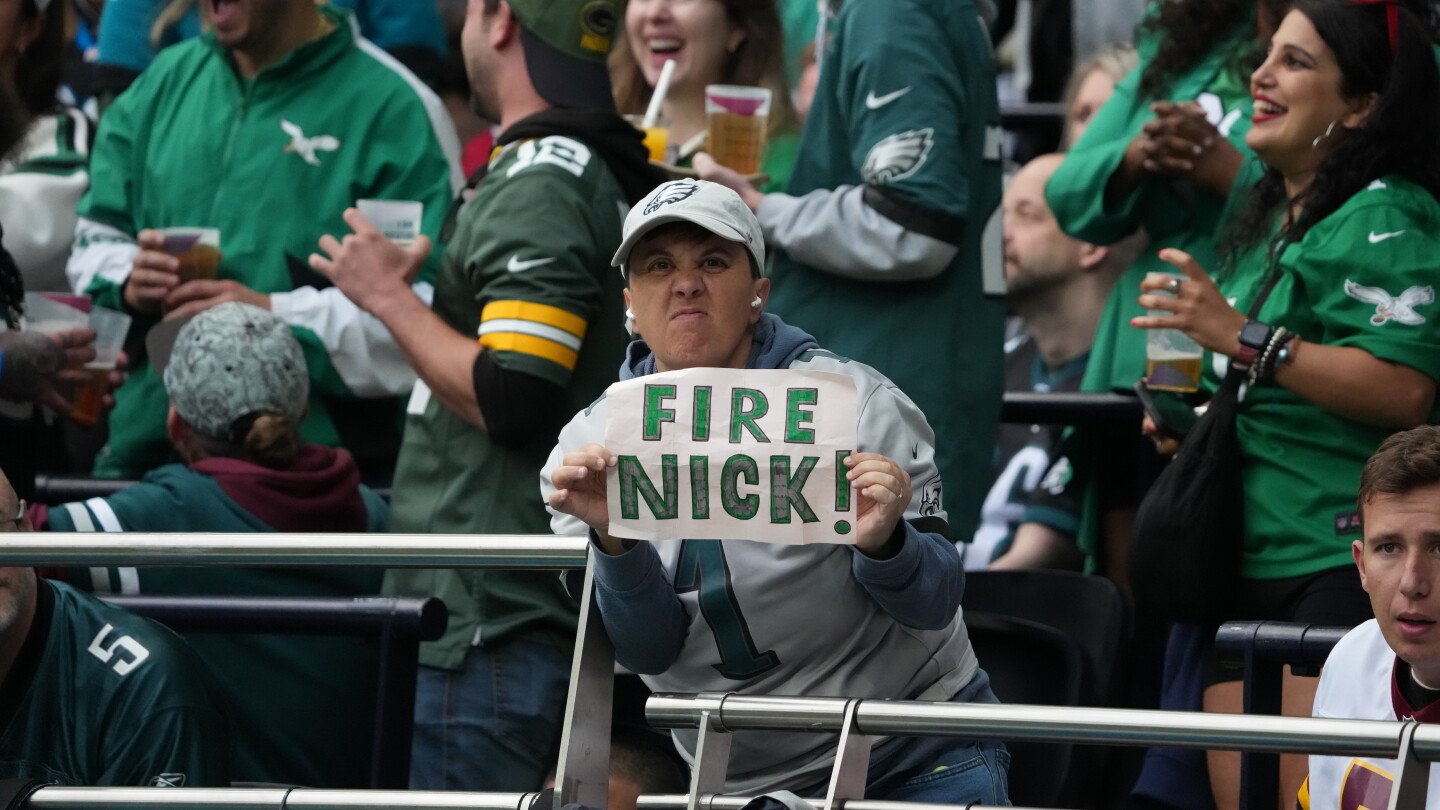
The final kickoff of an NFL game should be the sort of bureaucratic act nobody remembers by Monday. Get it deep, pin the return, walk off the field. Instead, the Philadelphia Eagles turned a last play in London into a revealing little bruise, one that said less about altitude and more about habit.
Nick Sirianni took the blame for the decision, and that matters because coaches are always the first men asked to stand in front of the wreckage. But the truth is colder than simple ownership. A coach can choose the call, yet the players still have to execute it. And on Sunday, the kick-coverage) unit confirmed the problem in the most unforgiving way possible: the ball did not go where it needed to go, and a game that should have closed with clean authority instead ended with a public accounting.
The small things have started to speak loudly
That is the part of NFL life that winning teams learn to respect and lesser ones spend all autumn ignoring. Coverage units, field position, clock management, the angle of a tackle near the sideline — these are the tiny hinges on which Sundays swing. Fans love the grand architecture, the quarterback sermons, the pass-rush glory, but championships are often built in the mechanical places, on the jobs too dull to make the highlight package.
For the Eagles, this is not merely a special-teams footnote. It is a reminder that the league’s most punishing failures often begin as sloppiness dressed in routine clothing. A kickoff that does not reach the end zone can become a return, a return can become a short field, and a short field can become a game that suddenly feels less finished than it ought to. There is no poetry in that chain. There is only consequence.
It also explains why the coach’s admission landed with some weight. Sirianni could have tried to wrap the mess in jargon, could have pointed to circumstance, wind, placement, anything. Instead, he owned it. That is the right reflex, if not the comforting one. Accountability is useful. Solutions are better.
London exposed the difference between control and execution
The Eagles have spent enough recent seasons living under a microscope to know that their errors rarely stay private. Every shaky sequence becomes a referendum on culture, every tactical wrinkle becomes a personality test. That is the price of being measured against a Super Bowl standard, even on weeks when the performance is more functional than fluent.
This was one of those moments that feels minor until you imagine the same play in January. In September or October, a missed detail can be brushed aside as a lesson. In the winter, it becomes the thing on which a season breaks its ankle. Good teams are not defined by never making mistakes; they are defined by making fewer of the self-inflicted sort, and by recovering from them before the damage spreads.
The Eagles have long carried a reputation for physicality and trench discipline. That identity tends to flatter them because it suggests sturdiness, an old-fashioned kind of football craftsmanship. Yet special teams is where reputations become brittle. You can line up with all the muscle in the world, and still lose 15 hidden yards because somebody’s angle was wrong or the operation was late. The league is ruthless that way. It always has been.
The worst errors in football rarely announce themselves as disasters. They arrive wearing the mask of something ordinary.
Sirianni’s ownership is real, but it cannot be the last word
I have always believed that a coach’s apology should be treated like the opening sentence of a larger argument, not the argument itself. Sirianni’s willingness to take responsibility is part of why players generally follow him; nobody wants a leader who hides under the turf when the tape turns ugly. But leadership in the NFL cannot stop at confession. It has to move, quickly, into correction.
That is especially true for a team with postseason ambitions and a roster built to survive in compressed games. If the Eagles are going to matter in the way they believe they can matter, then the details around the edges have to become boringly reliable. The NFL has a cruel habit of making edge cases central. A blocked lane here, a poorly judged kick there, and suddenly the margin that looked secure is nothing of the kind.
There is a historical echo here, too, one that any old playoff veteran will recognize. Many seasons are remembered for the star turns — the quarterback duels, the fourth-quarter scrambles, the one-handed grabs in the snow — but the teams that fall short often leave a trail of tiny, preventable lapses behind them. Special teams is where those lapses gather. It is the league’s dustpan. And if you do not sweep it, the mess finds its way back into the room.
What the Eagles must clean up before the next test
The good news, if there is any, is that this kind of mistake is diagnosable. It is not mysticism. It is placement, technique, discipline, and repetition. Sirianni can address the decision-making. The coverage group can be coached into sharper lanes and cleaner lanes. But everybody in that room has to understand the same thing: hidden yards are not hidden to the opponent.
The Eagles do not need a sermon about effort. They need sharper standards on the unglamorous plays, the ones that make a season feel either professional or precarious. If they are serious about the top tier of the conference, then the corrective work begins with the tasks nobody claps for. That is how strong teams stay strong.
And that is why this London moment matters beyond the embarrassment of one errant kick. It was a reminder that a football team can be competent in large ways and still be undone by the smallest lapses. The tape will be watched. The correction will be made. It had better be.
The Eagles go forward with the same roster and the same ambitions. They also go forward with one more lesson tucked into the folder. In this league, the little things keep score too.
More from Straight From The Bench
Comments
Join the conversation — sign in to leave a comment.
Sign in to commentRelated Stories

Fantasy Football Waiver Wire Week 6: Germie Bernard, Dameon Pierce
Week 6 waivers are loaded with usable volume, not just shiny names. Germie Bernard and Dameon Pierce headline a board built for managers who need production now.
Eagles vs Commanders: end-game blunders define a Week 5 mess
Philadelphia and Washington turned late-game football into a dirty little exhibit of bad hands, bad calls, and worse timing. The division’s old habit of choking at the finish line is alive and well.

Eagles vs Commanders coaching blunders: Sirianni, Quinn fail late
Sunday turned into a referendum on late-game judgment in Philadelphia and Washington. When the pressure rose, the clock and the men holding it both slipped away.