
Odell Beckham Jr. Release: John Harbaugh says it wasn’t working
The reunion lost its romance quickly, and the Ravens chose blunt practicality over nostalgia.
 Beatrice Kensington5 min read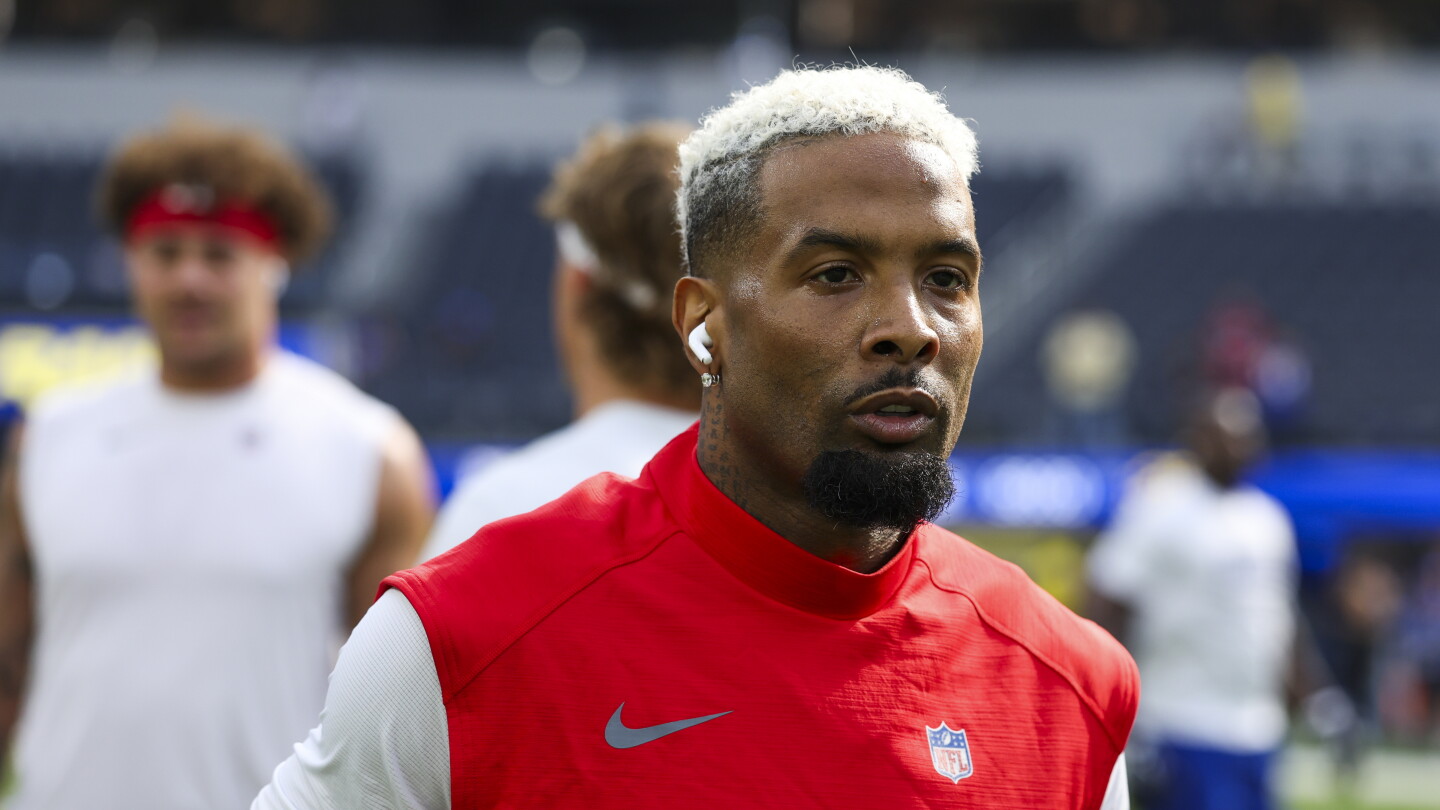
A reunion that never found its rhythm
Baltimore did not chase nostalgia for very long. On Tuesday, the Ravens cut loose Odell Beckham Jr., and by Wednesday John Harbaugh had given the simplest possible explanation: it just wasn’t working.
There is a clean, almost surgical honesty to that sentence. No melodrama. No whispered grievance. No sentimental fog bank around a player whose name still carries the shimmer of his New York Giants prime. Baltimore tried the experiment, looked at the tape, looked at the fit, and decided to stop pretending the pieces would eventually click if everyone waited long enough.
That is the Ravens’ way more often than not. They are not built for romantic failure. They are built for utility, for roles that can be defined in a meeting room and measured on Sunday. When a veteran receiver arrives with a past as bright as Beckham’s, the temptation is to imagine the old electricity returning on command. Football rarely grants that wish.
Harbaugh’s bluntness says as much as the move
Harbaugh’s answer matters because coaches usually speak in layers of politeness when a high-profile departure lands on their desk. They talk about opportunity, timing, health, mutual respect. He peeled that away and reached the core.
It wasn’t working.
That phrasing tells you the Ravens were not merely disappointed. They were done waiting for chemistry to appear. In a team room, that is often the final diagnosis. A receiver can run the route tree, know the playbook, and still never quite belong to the cadence of the offense. The quarterback may not trust the break point. The staff may not trust the separation. The player may feel underused. And soon the whole thing becomes a small cloud hanging over a larger, more important mission.
Baltimore has bigger concerns than preserving the aura of a marquee name. The Ravens are still in the business of chasing January football, still trying to build an offense sturdy enough to survive the grind, still balancing the explosive possibility that comes with Lamar Jackson against the weekly need for clean execution. A receiver room cannot be a museum exhibit. It has to move.
In the NFL, reputation is a luxury; fit is the currency.
OBJ 2.0 never escaped the shadow of memory
This was never going to be a simple signing. Beckham is not just any receiver, and Baltimore is not just any destination. The name comes with history, with highlight-reel residue, with the lingering expectation that the next chapter might somehow rhyme with the first brilliant one.
But time is ruthless to those kinds of expectations. The league has changed around Beckham, and Beckham has changed too, as every player does after injuries, age, and the accumulation of seasons that ask for more than the body sometimes offers. What once felt inevitable can become conditional. What once felt electric can start to feel strained.
That is why the ending lands less like a surprise and more like an admission. The Ravens gave the reunion a chance, and the chance expired. That happens. It happens to teams with strong identities because strong identities leave less room for drift. It happened to the Dallas Cowboys when stars arrived carrying old reputations and new limitations. It happened to plenty of offenses that thought one famous name could solve a structural issue. It rarely does.
Baltimore’s decision also says something about the modern NFL economy. Teams are more willing now to cut bait on a veteran experiment than to nurse it through the false comfort of sunk costs. There is less patience for ceremonial roster spots. More bluntness. More arithmetic.
What this means for the Ravens’ receiver room
The practical question is not whether Beckham still has football talent. Of course he does. The real question is whether his talent could be translated into enough reliable production to justify the space he occupied in the offense’s planning.
If the answer is no, then the Ravens did the responsible thing by moving on before the season’s critical stretch. There is a cost to carrying a player who requires special accommodation but returns ordinary output. That cost is borne by the rest of the room, by the quarterback, by the coaching staff, and eventually by the standings.
Baltimore now has a cleaner hierarchy, and those can be healthy things. Targets will be redistributed. Routes will be reallocated. The offense can settle, at least in theory, into more predictable patterns. Sometimes subtraction is a form of clarity.
There is also a human side to this that gets flattened too easily by transaction language. Beckham has spent much of his career living in the tension between spectacle and expectation, a player watched as if every touch might become a scene. When those scenes stop arriving, the public acts as though the player has become less real. He has not. He has merely become older, more ordinary, and in this league ordinary is often treated as a failing.
My read: Baltimore chose discipline over sentiment
I’ve covered enough of these moments to know how tempting it is for teams to linger one week too long on a familiar name. The jersey sales, the buzz, the hope that the player still contains a little weather left in the tank — all of it can obscure the plain truth. If a roster spot is precious, sentiment is expensive.
Baltimore, to its credit, did not spend long pretending otherwise. That is a serious organizational virtue, even if it bruises the romance of the thing. The Ravens have spent years building a culture that prizes standard over story. You can argue with their personnel decisions, but you cannot accuse them of worshiping nostalgia for its own sake.
And that may be the larger lesson here. The NFL has become a league that devours old narratives and replaces them with present-tense demands. Yesterday’s star is only useful if he can still answer today’s questions. The Ravens asked theirs. They did not like the answer.
For Beckham, the next chapter will be about landing, not legend. For Baltimore, it is about moving on before a detour becomes a destination. The season does not wait for memory. It never has.
More from Straight From The Bench
Comments
Join the conversation — sign in to leave a comment.
Sign in to commentRelated Stories

49ers Injury Report: KhaDarel Hodge and Keion White added
Two more names showed up on the 49ers’ Wednesday injury report, a reminder that practice availability is starting to look like a weekly storyline. The depth chart is getting stress-tested fast.
Steelers Joey Porter Jr. Injury Update: out again vs Browns
Joey Porter Jr. is out for a fourth straight game, and the Steelers’ secondary keeps paying the tax for patience. Thursday night against Cleveland just got a little more complicated.
Mike Vrabel Drake Maye Report: Patriots tension gets swatted down
Mike Vrabel brushed off talk of friction with Drake Maye, and the bigger story is what the Patriots are trying to protect: their reset, their quarterback, and the room around him.