
Oregon Ducks Depth Chart: Fall Camp Battles Taking Shape
The Ducks are built for September, but the final week will tell us how sturdy the foundation really is.
 Beatrice Kensington6 min read
Oregon’s roster is beginning to look like a team, not a collection of names
The first thing fall camp gives you is noise — helmets, whistle blasts, half-buried promises, and the persistent temptation to mistake motion for certainty. The second thing, if you are patient, is shape. That is where the Oregon Ducks are now, with one week left before camp closes and the season starts looming like weather over the Cascades. The projected depth chart is not a finished portrait, but it is no longer a charcoal sketch either.
What matters most in this moment is not who has already “won” a job in the public sense. It is who the coaching staff trusts when the noise gets stripped away. Oregon, under Dan Lanning, has built itself around speed, depth, and the idea that a roster should look less like a ladder and more like a floodplain — options everywhere, pressure at every position, no place for complacency to settle.
That is the promise of a strong camp. It is also the burden. Teams with championship expectations do not get to hide their uncertainty for long.
The line of scrimmage still tells the real story
The glamour positions will get the headlines, as they always do, but September football is usually decided by the boring people in the trenches. Oregon’s projected chart suggests the Ducks have made progress along both lines, and that alone should calm a fan base that has watched too many gifted teams discover, too late, that highlight-reel offense cannot survive without a spine.
If the offensive front settles the way Oregon hopes, the rest of the operation becomes easier. Quarterbacks can breathe. Running lanes appear before a defense has fully declared itself. The playbook opens because the staff trusts the protection. It is an old truth dressed in modern uniforms: a team’s personality is often forged where cameras rarely linger.
On the other side, the defensive front has the chance to be the kind of group that changes games without asking permission. Oregon has recruited to win the line-of-scrimmage argument, and the depth chart is starting to show whether the investment is paying dividends. That is especially important in a conference where weekly punishment is less a metaphor than a schedule.
Quarterback clarity changes everything, even before kickoff
Every fall camp has its most watched position, and at Oregon that spotlight is always bright enough to scorch grass. The quarterback battle, even when it is not framed as a battle, dictates how the rest of the roster is perceived. A settled starter gives a team rhythm. A staff can trim the menu, tighten the timing, and stop spending valuable August energy on speculation.
What the Ducks need now is not mystery. They need command.
The quarterback who emerges must do more than throw accurately in drills. He must manage the offense’s tempo, distribute the ball without forcing the issue, and carry the authority that makes everyone else play faster. That is the difference between a starter and a placeholder, between a player who merely survives a camp and one who actually changes the ceiling.
If Oregon is heading into the season with a clear answer under center, the rest of the roster can be evaluated more honestly. If it is still unsettled, the Ducks will spend the early weeks of the season learning in public, and that is an expensive classroom.
Fall camp does not reveal everything, but it usually reveals enough to know which teams are pretending and which ones are preparing.
The most important battles are the ones fans learn to ignore
There is a habit, especially this time of year, of obsessing over the first-name players and forgetting the role pieces who keep a season from fraying at the seams. Oregon’s projected depth chart matters because it shows where the Ducks believe they can rotate, where they think they have insurance, and where a thin spot could become a September headache.
That includes receiver depth, defensive back flexibility, and the kind of special teams reliability that no one celebrates until a game turns ugly. It also includes health and availability, the two great unromantic pillars of any good season. A roster can look deep on paper and still crack if the wrong injury hits the wrong position at the wrong time. Ask any serious contender. They will tell you that depth is not a luxury. It is a tax paid in advance.
For Oregon, this is where the difference between being good and being built to last becomes visible. The Ducks do not lack talent. They never seem to lack talent anymore. What they need is coherence — the sense that the second unit can enter without causing the building to tilt.
That is why the final week of camp matters. It is the last chance to sort who belongs in the circle and who is still knocking at the door.
What the Ducks’ depth chart says about the season ahead
I have long believed that August is less about competition than revelation. Programs tell you who they are when they stop performing for the crowd and start performing for the staff. Oregon, at this stage, is revealing a familiar modern profile: fast, deep, ambitious, and acutely aware that the margin for disappointment gets thinner the higher you climb.
That is not a trivial thing. College football has always been a sport of inheritance — of recruiting classes, of development windows, of institutional patience — but the transfer era has sharpened the stakes. Rosters can be remade quickly, yet trust still takes time. Chemistry is not delivered in a portal transaction. It has to be layered in, practice by practice, rep by rep.
This Oregon team seems to understand that. The projected depth chart is evidence of a program trying to turn talent into structure. The Ducks are not simply asking who can play. They are asking who can be counted on when the season starts collecting its receipts.
That is where good teams separate themselves from merely dangerous ones. Good teams have answers in September. Great teams have answers when October starts taking things away.
The Ducks are close to finding out which category they belong in. The last week of camp will not hand them a trophy. It will hand them a map. And in college football, that is often the more valuable thing.
More from Straight From The Bench
Comments
Join the conversation — sign in to leave a comment.
Sign in to commentRelated Stories

RJ Luis LSU Injunction: Judge Opens Door for 2026-27 Season
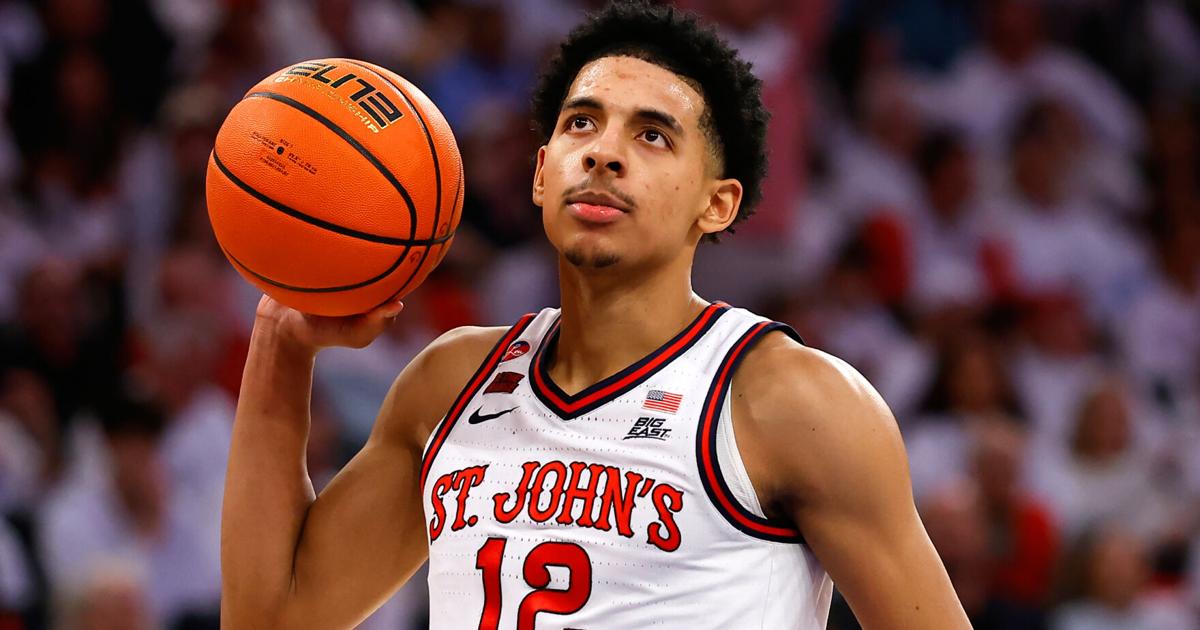
A Louisiana judge granted RJ Luis an injunction, giving LSU a legal opening to land the former St. John's guard for 2026-27. This is now a real roster storyline, not a rumor.
LSU Basketball Eligibility Update: RJ Luis cleared for 2026-27
A Louisiana judge has cleared the path for RJ Luis to play at LSU in 2026-27, a big ruling for Will Wade and the Tigers’ roster plan.

Ole Miss FBI Sweep After Lane Kiffin Exit: The Mess in Oxford
Ole Miss allegedly brought in the FBI after Lane Kiffin’s LSU exit, and that tells you plenty about the temperature in Oxford. This isn’t just football drama; it’s a trust issue.