
Patti LaBelle National Anthem: Phillies All-Star Game backlash
A hometown stage turned unforgiving in a matter of seconds.
 Beatrice Kensington6 min read
Philadelphia was dressed for celebration, but the opening notes of the 2026 MLB All-Star Game arrived with the sort of tension usually reserved for October. Patti LaBelle, the city’s own, stepped into the national anthem slot at Citizens Bank Park and, within moments, the evening had found its first controversy. What should have been a ceremonial warm-up to baseball’s midsummer pageant instead became a referendum on reverence, memory, and the merciless speed of public judgment.
The criticism came hard and fast. Fans online called the rendition “completely disrespectful to our anthem,” and the reaction spread with the familiar velocity of modern outrage, where disappointment curdles into verdict before the final note has even faded. That LaBelle is an icon, and one with deep Philadelphia roots, only sharpened the edge of the response. Hometown affection can be a cushion. It can also be a trap. Expectations rise higher when the mic is handed to someone the city claims as its own.
A hometown stage, and no easy way off it
Philadelphia is not a forgiving audience, but it is a deeply loyal one. This is a sports town that believes in loyalty the way older cities believe in weather: as fact, as mood, as inheritance. So when LaBelle — the great voice of R&B and Philadelphia soul — was introduced for the anthem, the room carried not just anticipation but ownership. That is the peculiar burden of hometown fame. The crowd wants the legend, but it also wants the legend to meet the memory it has preserved.
An anthem performance at a national event is always a minefield. Sing it straight, and people complain it lacked feeling. Add ornament, and people accuse you of showing off. Drag the melody around too much, and the internet treats it like a civic offense. The song itself has become one of the last places in American sports where restraint is policed with real ferocity. The Star-Spangled Banner is not just a song here; it is a test, one that asks not merely for vocal precision but for a kind of emotional choreography everyone thinks they understand.
The anthem is less a performance than a public oath, and the crowd decides in real time whether it was kept.
Why this landed harder in Philadelphia
There is another layer to this, and it matters. LaBelle is not some novelty booking or anonymous halftime filler. She is a veteran performer with a long history of commanding a room, and Philadelphia has spent decades claiming her as one of its own. That makes the blowback feel less like routine internet noise and more like a small civic betrayal, even if that is far too dramatic a frame for a single song. But sports thrives on drama, and so does public memory. One shaky anthem can eclipse years of good will because the moment is pure symbol. There is no box score to soften it.
The setting sharpened that symbolism. The All-Star Game in a baseball cathedral like Citizens Bank Park is designed to flatter the idea of America at play, of summer and tradition, of small rituals elevated into national ceremony. Before the first pitch, the anthem is the hinge. If it lands cleanly, the night opens gracefully. If it doesn’t, every camera phone in the ballpark becomes a little courtroom.
Baseball has always had a ceremonial streak, and Major League Baseball leans hard into that heritage at its showcase events. The irony is that the more reverent the setting, the less room there is for imperfection. A singer can bring years of greatness to the moment and still be judged on the shape of one run, one pause, one choice of phrasing. That is not artistry. It is spectacle’s blunt arithmetic.
What the backlash says about sports culture now
This story is not really about one performance, no matter how loudly the comments section insists otherwise. It is about how quickly live sports have become a tribunal of taste. In another era, a shaky anthem might have earned a shrug, a laugh, a maybe-she-was-nervous grace note. Now it becomes content, then argument, then identity test. Fans do not merely say they disliked it; they claim it offended something larger than melody.
I keep coming back to the cruelty of that speed. I’ve spent enough years around big civic sports moments to know they are built on a dangerous promise: that a city can see itself in a performer for three minutes and feel dignified by the reflection. When it works, the effect is almost devotional. When it doesn’t, the same crowd that begged for grandeur suddenly wants humility, precision, obedience. I don’t think that makes fans hypocrites so much as human. But it does reveal how little mercy our public rituals allow.
And there is a gendered, generational thrum beneath the noise too. When an elder artist takes a national stage, the public often expects both majesty and compliance, power without risk. The slightest deviation is framed as decline rather than interpretation. That is a poor way to treat artists, and an even poorer way to treat age.
The larger All-Star Game picture
There will, of course, be other moments from this All-Star Game that last longer in the baseball record — the lineups, the pitching, the ceremonial snapshots that survive beyond the scroll. Yet these openings matter because they set the emotional weather for the night. The anthem is not the main event, but it is the first thing people agree to feel together. When that collective agreement fractures, the rest of the evening starts under a cloud.
Philadelphia will move on. It always does. The city has been embarrassed, exalted, and redefined in public before. Patti LaBelle will remain Patti LaBelle, which means the backlash will likely say as much about the brittleness of modern fandom as it does about the performance itself. The true cost here is not to a box score, but to the shrinking space between admiration and impatience.
The game went on. The internet did what it does. And somewhere beneath all that noise, baseball kept its appointment with summer. Some nights, the ceremony is the story. This was one of them, for better or uglier.
What lingers now is not the pitch clock or the lineup card. It is the reminder that even a hometown legend can find herself standing alone under the brightest lights, with a city listening for perfection.
And cities, as ever, can be the hardest audiences of all.
More from Straight From The Bench
Comments
Join the conversation — sign in to leave a comment.
Sign in to commentRelated Stories
MLB All-Star Game results: AL shuts out NL in pitching clinic
The American League blanked the National League 4-0 behind Dylan Cease and a parade of arms. In a sport built on power, pitching just stole the night.

MLB All-Star Game 2026: AL wins first shutout in 13 years
The American League turned the 96th Midsummer Classic into a masterpiece of restraint, blanking the National League for the first All-Star shutout in 13 years.
Junior Caminero Injury Update: Rays Star Leaves All-Star Game
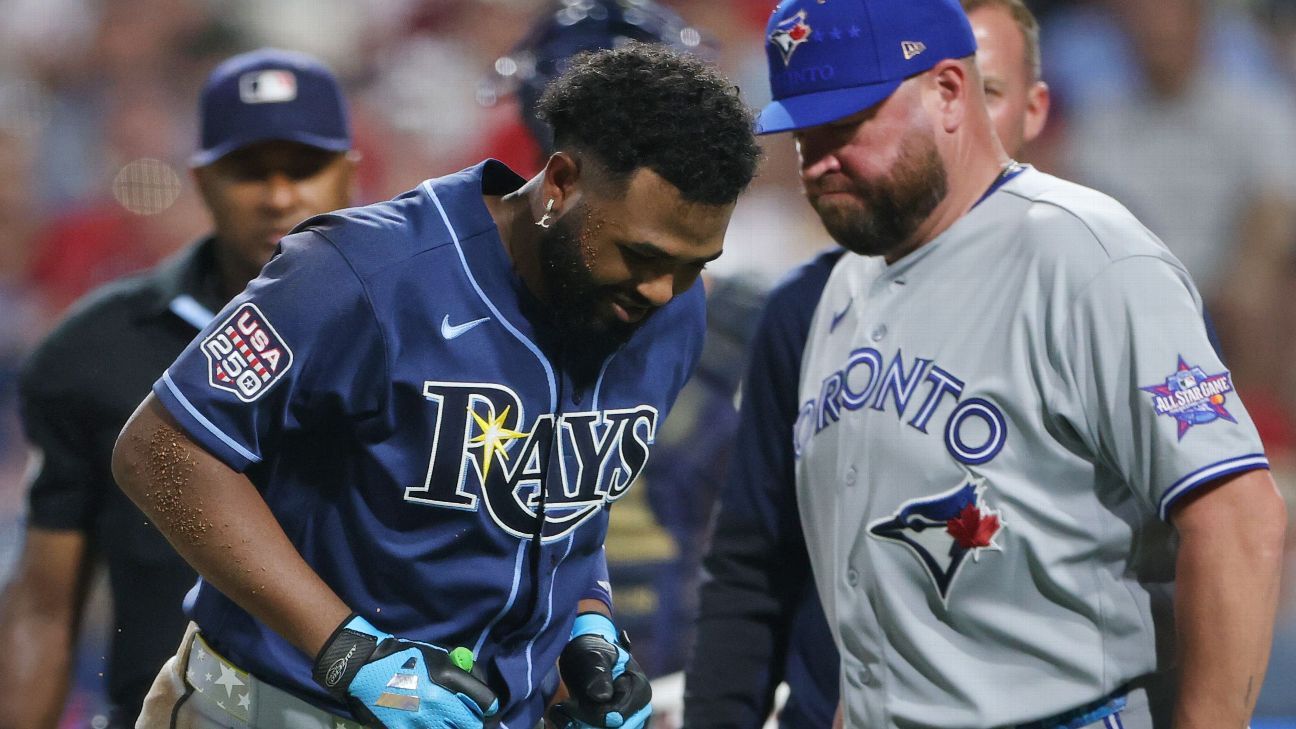
Junior Caminero’s All-Star night ended early after a 97.6 mph sinker struck his left hand. The real concern now is what that bruise means for Tampa Bay’s season.