
Rob Dieperink World Cup Referee Death: Dutch Official Dead at 38
A grim end to a story that already rattled FIFA’s optics.
 Zane Miller5 min read
Rob Dieperink’s death lands hard on a fragile story
Rob Dieperink is gone at 38, just weeks after his name was pulled out of the World Cup conversation and into a scandal he never recovered from. The timing is brutal. The optics are worse. A man who had been on the edge of football’s biggest stage was removed in May after sexual assault allegations, and now the story ends with his death two months later.
No amount of spin can make that feel clean.
This is not a normal referee headline. It’s not about a bad call, a late flag, or a post-match apology. It’s about an official whose career trajectory was abruptly shattered, leaving behind a mix of unanswered questions, institutional embarrassment, and the kind of silence football hates because it forces everybody to sit with discomfort.
FIFA’s officiating machine just took another hit
World Cup referee selections are not casual invites. They’re the top of the pyramid, the product of years of grading, fitness testing, and political navigation inside the game’s most guarded circle. When a referee gets removed from that pipeline, the message is usually clear: the organization wants distance, fast.
That’s what made Dieperink’s case so volatile. FIFA doesn’t yank a potential World Cup official lightly. The tournament is a branding exercise as much as a sporting event, and referees are part of the presentation. If a name becomes a liability, the cleanup is immediate.
The wider issue is credibility. Every major tournament leans on referees to sell fairness while the sport itself is constantly accused of opacity. When the officiating path is rocked by allegations, the public doesn’t just see one person’s downfall. It sees the system behind him. That’s the uncomfortable truth the governing bodies always try to outrun.
FIFA can replace a referee. It cannot replace the trust it burns when the process turns into a public mess.
For a federation already living with endless scrutiny around appointments, VAR, and discipline, the Dieperink situation is the exact kind of story that lingers in the bloodstream. It doesn’t vanish because the calendar moves on.
The Dutch refereeing pipeline is staring at the ripple effect
Dutch officials have long been viewed as part of a respected European officiating lane. The Netherlands has produced referees with real pedigree, and when one rises into the World Cup mix, it reflects on the whole pipeline. That’s why this doesn’t stay personal for long. It bleeds outward.
The immediate effect is obvious: the next wave of Dutch referees carries a bit more weight and a bit more pressure. Not because they did anything wrong, but because every high-profile officiating controversy forces the rest of the crew to answer for the noise. That is how these systems work. Reputation is collective until it isn’t.
There’s also a human cost that football usually pretends not to see. Referees live in a strange space already — anonymous when things go right, viral when things go wrong. Once a name is tied to scandal, the professional identity can collapse fast. The career path gets narrowed. The public conversation gets uglier. The sport moves on while the individual is left to absorb the wreckage.
I keep coming back to the same point: football’s officiating culture is built to reward precision and punish failure, but it is lousy at handling anything complicated between those two poles. As a columnist, I’ve seen leagues and federations act shocked when a carefully curated image cracks. They shouldn’t be. The pressure cooker is the product.
And if you want the bigger picture, look at how often governing bodies now have to defend not just decisions, but vetting. That’s where the trust gap lives. Fans can argue a missed handball all day. What they hate most is feeling like the gatekeepers are improvising behind the curtain.
Why this story still matters after the headlines cool
The temptation is to file this away as tragedy plus controversy and move on. Football rarely allows that luxury, though. A World Cup official being removed for allegations, then dying shortly after, creates a stain that doesn’t wash off with a new cycle.
It also puts the spotlight back on how federations manage sensitive cases involving officials. The sport’s legal and ethical machinery often moves slower than the public conversation, and that lag is dangerous. By the time the paperwork settles, the narrative has already hardened.
If you’re looking for the downstream effect, watch for two things. First, how aggressively FIFA and its confederation partners manage referee vetting in the next tournament cycle. Second, whether Dutch officiating administrators feel pressure to speak more openly about their own processes. Silence is rarely protective anymore. It reads like avoidance.
This also sits in a strange neighborhood with other football stories that have exposed how quickly reputations can swing. The sport is already dealing with a generation of headlines that go far beyond the field, from disciplinary fallout to image-driven chaos. We’ve seen that theme play out in our coverage of Folarin Balogun FIFA suspension and the way off-field decisions can rewrite a player’s trajectory in a flash.
The part FIFA cannot control
The governing bodies love process because process sounds neutral. But process doesn’t erase consequence. It doesn’t restore a reputation, and it certainly doesn’t make a story like this less painful.
Dieperink’s death makes this much more than a procedural footnote. It turns a scandal into a human ending, and that changes the temperature. There’s no clean football angle that fixes that. There’s only the reality that the sport’s machinery once again collided with a life and left a mess behind.
I’d expect this one to keep echoing, especially in referee circles where people pay close attention to how quickly a career can be lifted, then flattened. The next generation is watching all of it. So are the executives.
The World Cup moves on. The talking points move on. This one won’t disappear nearly as fast.
More from Straight From The Bench
Comments
Join the conversation — sign in to leave a comment.
Sign in to commentRelated Stories
Jayden Adams Death Investigation: South Africa Mourns a Promise
Police are investigating the death of South Africa’s Jayden Adams, found dead in Cape Town at 25 after recently appearing for his country. The grief is immediate; the answers are not.

Folarin Balogun FIFA Suspension: One Call Changed the Story
A suspension that should’ve been routine turned into a political flare-up. The Balogun saga says a lot about FIFA power, U.S. leverage, and how fragile trust is.
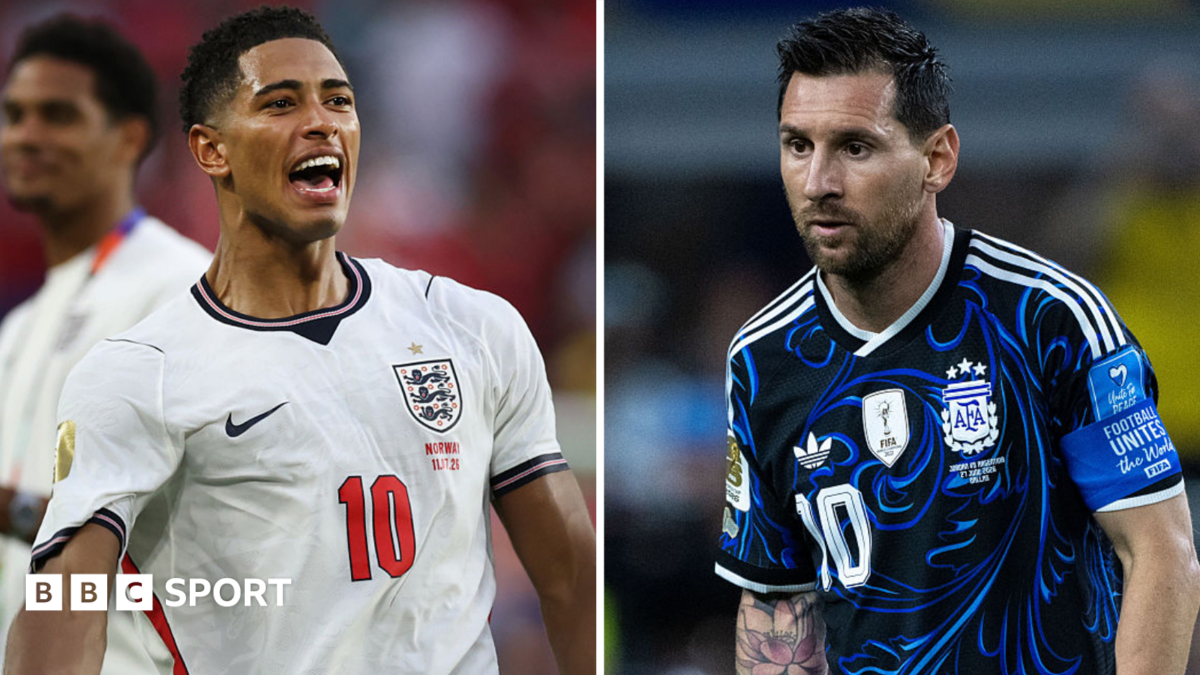
World Cup 2026: England to Wear All-White, Argentina Navy Blue
England and Argentina will meet in contrasting kits, but the deeper story is about identity, pressure, and what these colors carry into a World Cup semifinal.