
Spanish Grand Prix Practice: Madrid Circuit Debut Turns Treacherous
A first lap in a city built for show, and a track that seems to prefer punishment.
 Beatrice Kensington6 min read
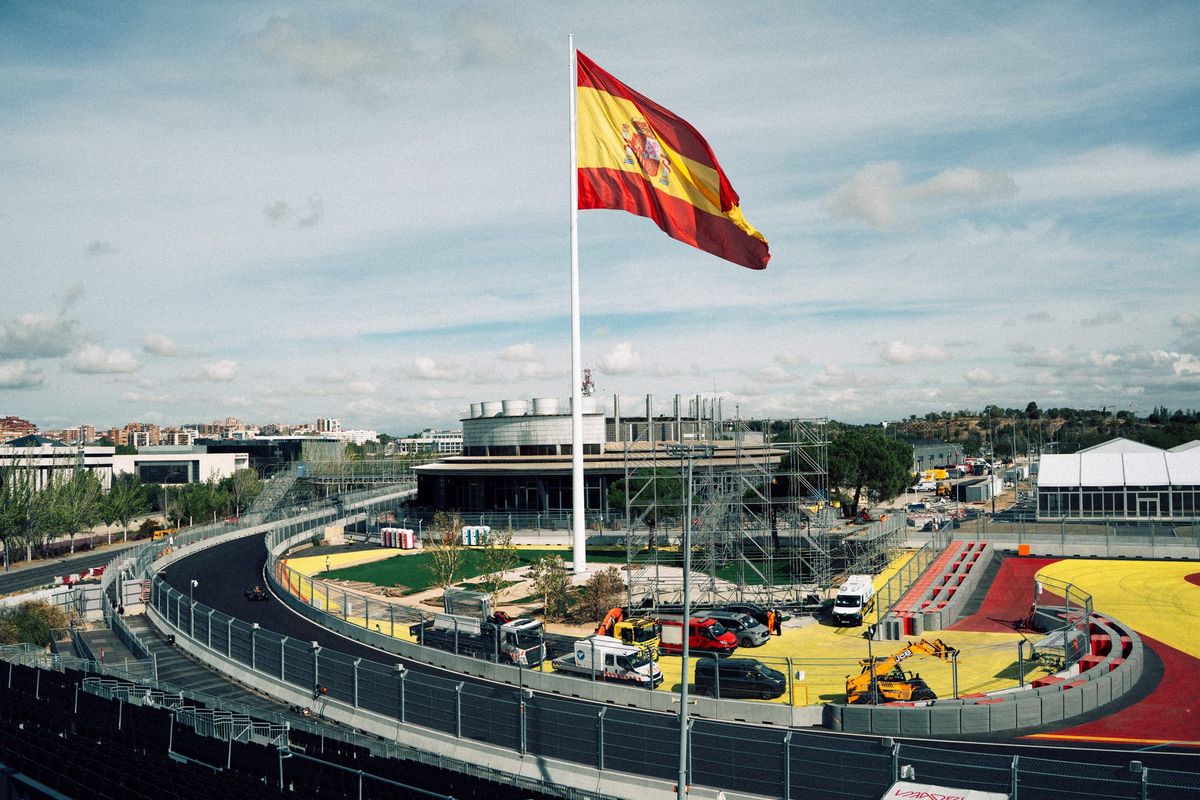
Madrid arrived on the Formula 1 calendar dressed for a coronation, but the first practice session for the Spanish Grand Prix carried the sharper scent of a trial. New circuits always promise fresh air and clean lines; they also reveal, almost immediately, where the sport intends to forgive and where it intends to collect its due. George Russell’s remark that the layout has “less margin than Monaco” was not the kind of melodrama drivers usually serve up before lunch. It sounded like a man looking at the walls and seeing a calendar full of repairs.
The session itself was less important than the message humming beneath it. For all the steel, spectacle and municipal ambition wrapped around this debut, Madrid’s new track appears to ask the oldest question in motorsport: how much bravery can a driver afford before the circuit takes the bill? That is the real story of first practice here. Not the lap time, not the order sheets, but the sense that Formula 1 may have added another venue where a tiny lapse can become an expensive lesson.
Madrid’s first impression is not of speed, but of restraint
A brand-new Grand Prix venue should look like possibility. Madrid, at least at first glance, looks like compromise sharpened into asphalt. The sport has spent years trying to balance street-circuit glamour with the need for actual racing room, and this layout seems to lean heavily toward the former. There is always a danger in that. A grand prix circuit can become a postcard, pretty in aerial shots and thin on character. Or it can become a trap, all surface and no forgiveness.
Russell’s comparison to Monaco is revealing because Monaco is supposed to be exceptional, a narrow jewel box where precision is the price of admission. To hear a driver invoke it in Madrid suggests the margins here may be equally unforgiving without Monaco’s long mythology to justify the strain. That matters. Formula 1 sells modernity, but it survives on credibility. Fans can smell a manufactured showpiece from miles away.
This is also why first practice means more than the time sheet. The teams are not merely learning a lap; they are learning the temperament of a place. Where the car lands under braking. Where the bumps bite. Where the confidence comes apart at the seam.
What this means for the drivers and the teams
New venues tend to reward the brave in theory and the cautious in practice. The first group gets the headlines; the second group, the points. That tension is likely to define the weekend. On a circuit with little margin, the drivers who normally build their weekends on rhythm may instead have to build them on survival. That is a different skill, and not every contender likes the trade.
The obvious pressure sits on the front-runners, because they are the ones who must explore the limits without wasting sessions on overreach. But the deeper burden falls on the engineers. A track with tight tolerance for error forces teams to make difficult decisions on ride height, suspension compliance and aerodynamic balance, then live with the consequences when the car is loaded up through the fast sections. The machines will not simply be fast or slow here. They will be obedient or they will be unruly, and the latter costs more than a lap or two.
That is why practice in Madrid feels like a dress rehearsal with no understudy. If the circuit truly offers fewer escape routes than expected, then the weekend’s winners may be the teams that recognize the shape of the danger early, before the confidence tax gets too high.
Russell’s warning carries weight because he has lived the edge
George Russell is not a driver who tosses off comparisons lightly. His public language tends to be measured, which makes the Monaco line land harder than a flourish would have. It suggests the issue is not merely a narrow track, but a narrow mental space. Drivers need to know where the car can be placed and, just as crucially, where it cannot. Remove that certainty and the lap starts to become a series of bargains with gravity.
If Madrid truly leaves no room for error, the weekend will belong less to the fastest car than to the calmest hands.
That is where Formula 1 often becomes most interesting, and most honest. The sport likes to market itself as a battle of innovation, but the human part still decides the drama. A circuit like this strips away some of the polish and reveals the old truth: speed is easy to admire, harder to carry when the walls are waiting.
I keep thinking about how many modern venues arrive promising “racing for the fans” and end up exposing how much of Formula 1 still depends on trust — trust in the track surface, in the run-off, in the ability to push without paying an immediate penalty. My own view is that new circuits are healthiest when they force discipline without turning into demolition sites. If Madrid is as tight as the first reports suggest, then the sport may have created a venue that flatters confidence less than it tests maturity. That can be a good thing. Or a very expensive one.
There is a historical echo here, too. Formula 1 has often been at its best when new places were introduced with a sense of architectural humility rather than corporate swagger. The great tracks endure because they ask something specific and legible of the driver. They do not merely exist. They demand. If Madrid can settle into that role, it may grow into the calendar with dignity. If not, it will become another place where the television cameras adore the backdrop while the drivers complain about the furniture.
The bigger prize: legitimacy, not just spectacle
The Spanish Grand Prix is doing more than debuting a circuit; it is testing whether Formula 1 can still create a new venue that feels earned rather than manufactured. That is no small thing. The sport’s expansion has given it reach and revenue, but also a persistent suspicion that it is chasing markets faster than it is cultivating classic racing ground. Madrid has a chance to answer that suspicion. The track must first prove it can host a contest worth remembering.
For fans, the early signs suggest a weekend worth watching closely. Not because the lap times will necessarily thrill on their own, but because the margins may be brutally small. Those are the weekends that reveal character. The fearless driver who oversteps. The patient one who survives. The team that sees the danger before everyone else.
And if the circuit does turn out to be as exacting as Russell hinted, then first practice may be remembered as the moment Madrid stopped being a concept and became a warning.
The real racing starts when the drivers stop giving the track the benefit of the doubt.
More from Straight From The Bench
Comments
Join the conversation — sign in to leave a comment.
Sign in to commentRelated Stories
Madrid Grand Prix: Why F1's New Madring Is a Car Killer
F1’s brand-new Madring arrives with Monaco-style walls and Jeddah-style consequences. The drivers are calling it tight, nasty, and built to punish mistakes.

49ers vs Rams Melbourne: Fred Warner says Rams withered away
Fred Warner saw the Rams grab a brief lead, then fade as the 49ers turned Melbourne into their kind of game. That gap in stamina told the whole story.

NFL 9/11 Anniversary: Players and Coaches Remember the Day
Twenty-five years on, the NFL’s recollections of 9/11 are still raw, halting and personal. The memory hasn’t softened; it’s just settled deeper.