
The Day the Breakaway Took the Wheel in the Massif Central
 Beatrice Kensington6 min read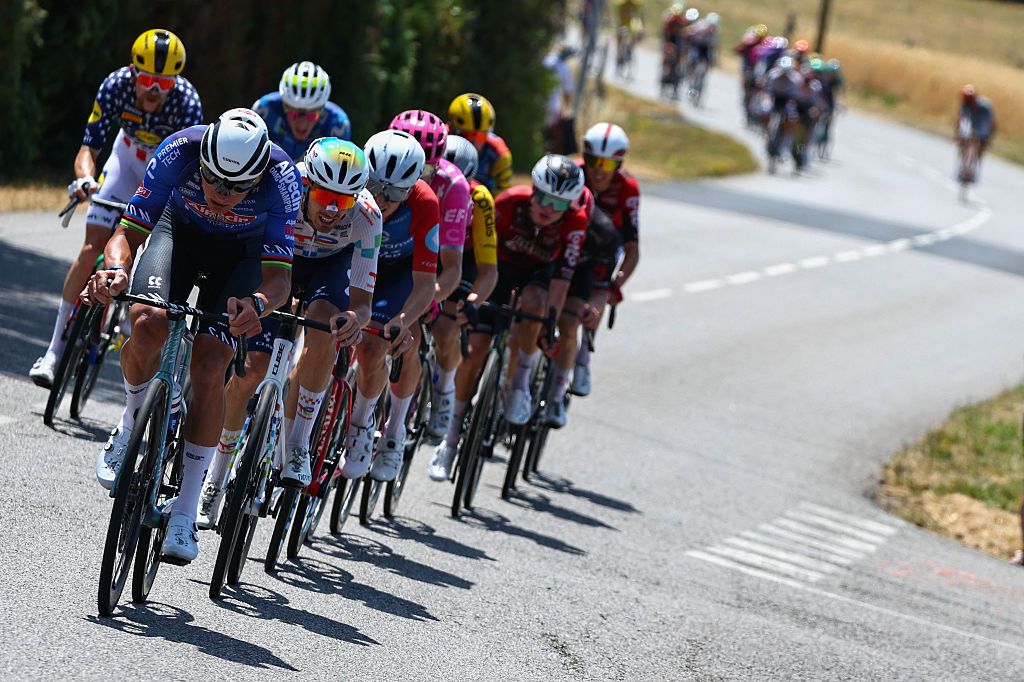
The Tour has a way of revealing its mood in the first hour, before the television graphics settle and before the same tidy narrative begins its daily march toward Paris. On Sunday, in the Massif Central, that mood was unruly from the start: a breakaway with genuine muscle, a peloton willing to let the fire burn for longer than usual, and a stage headed toward Ussel that looked less like a procession than a wager. By the time Mathieu van der Poel and Tom Pidcock were prominent in the escape, the day had already declared itself. This was not going to be one of those antiseptic sprint fixtures with three lead-out trains, two elbows, and a photo finish. This was the Tour reaching into its old bag of tricks.
A breakaway that mattered because the road said so
There are breakaways, and then there are breakaways with purpose. The difference is not merely who is in them; it is whether the terrain, the fatigue, and the larger calendar allow them to become more than a decorative flourish. Stage 9 carried the sort of profile that invites opportunists to imagine a payday, especially on the eve of the first rest day, when legs are stale and minds are already drifting toward massage tables and hotel curtains.
Van der Poel and Pidcock are not the kind of names the peloton forgets to police. Each can turn a race into a skittish affair simply by showing interest. Van der Poel, of course, carries the swagger of a man who has made a career out of forcing roads to submit to his rhythm. Pidcock, lighter and more mercurial, has the sort of off-road creativity that makes him dangerous when the surface tilts, the bunch hesitates, or the line between discipline and improvisation grows thin. A breakaway containing either rider can be a nuisance. A breakaway containing both becomes a strategic problem.
And that is what made the stage interesting before a single result was settled. The Tour is not just about who wins the day. It is about who is allowed to dream. On days like this, the peloton’s judgment tells you as much as the escape’s strength. If the gap grows too quickly, the sprinters’ teams begin to grimace. If the escape is too loaded with talent, the general classification men start to wonder whether the energy spent chasing is worth the trouble. Nobody wants to be the squad that spends 170 kilometers cleaning up somebody else’s ambition.
The Massif Central as a truth machine
The Tour de France has always favored terrain that strips names down to nerve. The Massif Central is not the high Alpine theater where the sport becomes a cathedral of suffering, but it has its own blunt poetry: rolling climbs, exposed roads, and the exhausting kind of up-and-down that breaks tempo and patience at once. These are the roads where a rider’s day can become unmade by a single moment of indecision, where a half-second of softness at the front can invite disaster, and where the strong survive not by looking dramatic but by refusing to blink.
That is why stage 9 had the feel of a test for everyone except perhaps the pure climbers waiting for later days. The escapees were not simply racing the clock; they were racing the instinct of the bunch, the invisible arithmetic that says, not yet, not today, maybe never. In the chaos of a stage like this, the hardest task is often not attacking. It is agreeing on what the attack means.
In the Tour, a breakaway is never just a breakaway; it is a small rebellion waiting to see whether the peloton is in the mood to punish it.
What Van der Poel and Pidcock change for the rest of the race
The presence of Van der Poel and Pidcock in the move alters the emotional weather of the race, even before the final kilometer. These are not anonymous escape artists hoping for camera time and a souvenir jersey shot. They are riders with enough prestige to force team directors, sports directors, and rivals into awkward calculations. If you are a team guarding a yellow-jersey ambition, you do not casually hand time or terrain to men who can turn a medium-mountain day into a career-defining heist.
This also matters because the first rest day can be a trap. Riders talk about it as recovery, but the body does not always return from rest in the same shape it entered it. Rhythms disappear. Tightness creeps in. Some riders wake up stronger; others wake up to the bill. A chaotic stage on the eve of that pause tends to leave residue. The GC teams know it. So do the classics riders and all the hard men who specialize in those gray transition days when the Tour is too long to stay polite.
There is an old cycling truth that the fans sometimes forget because the sport is packaged in jerseys, rankings, and carefully measured watts: a race can be won in the way it is controlled, not merely in the way it is finished. If the breakaway is large, credible, and stubborn enough to force real effort, it can tax the leaders before the mountains ever arrive. That kind of damage does not show up neatly in the stage result. It shows up two days later, on a climb, when a rider who looked fine in the chaos of Ussel suddenly looks three clicks short.
My read: the Tour still belongs to the brave, not just the best
I have always trusted the Tour more when it resists becoming a spreadsheet. Cycling has spent years polishing its data, and the numbers are useful, but the race still lives or dies by appetite. Who dares. Who suffers. Who can carry an attack past the point where prudence would have been simpler. Van der Poel and Pidcock remind us that the Tour is healthier when it leaves room for unruly talent, for riders who make the race feel alive rather than managed.
That is the deeper value of a day like this. It is not merely entertainment, though there is plenty of that in a breakaway with real teeth. It is a reminder that the Tour is still a contest between control and imagination. The GC teams want order. The attackers want cracks. The most memorable editions are rarely the ones where the strongest machine wins without friction. They are the ones where the road keeps interfering, where the script tears a little at the edges, and where someone with enough nerve decides the day belongs to him.
The rest day will sort the survivors from the merely surviving
Tomorrow brings the first rest day, and that means the usual deceit of fresh legs and fresh intentions. Some riders will use it to reset. Others will spend it replaying the cost of every pull at the front, every chase, every moment when the escape looked one bottle of water away from becoming immortal. Stage 10 will tell us whether Sunday was a wild detour or the opening of a more volatile second week.
For now, the Tour has done what it does best when it remembers its wild blood. It has let the fugitives run. The road is not done speaking yet.
Comments
Join the conversation — sign in to leave a comment.
Sign in to commentRelated Stories

Corrèze Blinks, the Tour Rewrites: Heat Wins This Round
Stage 9 bends before the heat in Corrèze, a reminder that July in France now races against the weather as much as the clock.
MLB Draft: Cardinals Bet Big on Pitching Depth
St. Louis kept leaning into the mound on Day 2 of the draft, chasing fastballs, projection, and the sort of upside that can change a farm system overnight.
Jannik Sinner Wimbledon win: repeats as champion over Zverev
Sinner outlasted Alexander Zverev in four tense sets to defend Wimbledon and silence the French Open ghosts. The No. 1 player just added a different kind of proof.