Titans Jordan Elliott Release: A Frightening Line Crossed
A roster move cannot wash away the gravity of what reportedly unfolded.
 Beatrice Kensington6 min read
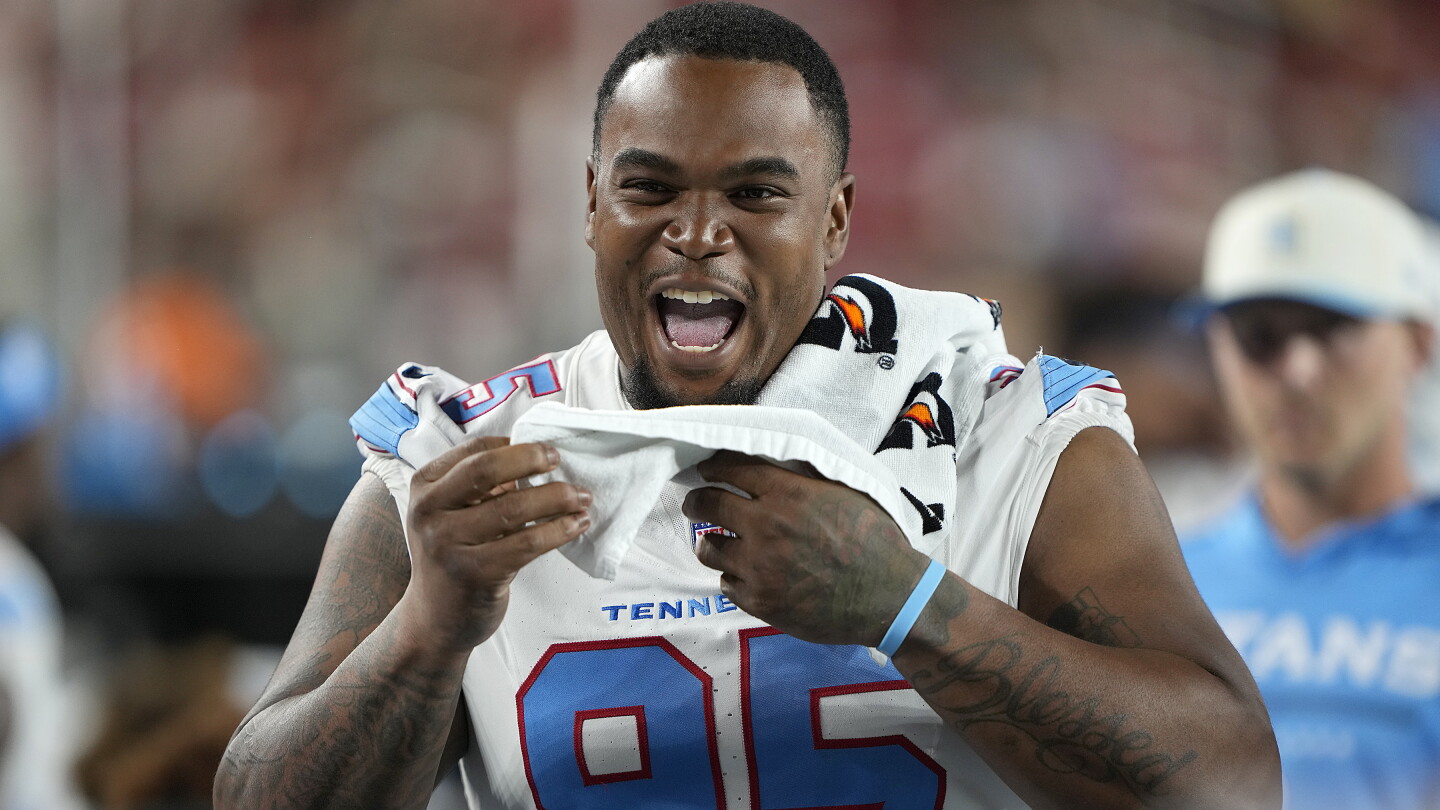
The Tennessee Titans did not just part ways with a defensive tackle on Tuesday. They severed ties with a situation that, by multiple reports, carried the ugly outline of something far more serious than a roster decision can contain. In a league where personnel moves are usually dressed in the language of fit, salary, and scheme, this one lands like a door slamming in an otherwise quiet house.
Jordan Elliott’s release, made without explanation by the club, arrives with the kind of silence that speaks volumes. The detail floating around the matter — that Elliott reportedly went to his car to get a gun — is the sort of account that drains the oxygen from a building before anyone has had time to find the exits. Whatever happened in that moment, the Titans were right to move quickly. Football can absorb a lot. It cannot afford to normalize a scene that brushes so close to catastrophe.
A roster move that reads like a warning
There are cuts in the NFL that feel tactical and cuts that feel moral. This belongs to the second category. A team can release a player because of performance, because of cap math, because of the cold arithmetic that governs professional sport. This was different. The message from Tennessee, even in its brevity, was unmistakable: whatever transpired, it crossed a line that a locker room cannot simply file away.
That matters because the NFL has long lived in the uneasy space between entertainment machine and public institution. Teams ask for trust, loyalty, and patience from fans, but they also occupy a place of influence far beyond the sideline. When a story drifts from personnel into weapons, into threat perception, into the possibility of violence, the league’s usual instinct to wait, to let the dust settle, looks less like prudence and more like a failure of imagination.
The Titans have been here before in a broader sense — as have many franchises — forced to answer for the behavior of players whose lives extend far beyond the game clock. And the truth is that the league’s culture still too often treats these episodes as isolated flashes rather than symptoms of a deeper, recurring brittleness. That is not a Tennessee problem alone. It is a football problem.
The human cost is the only part that really matters
The most important thing here is not what Elliott did on a depth chart. It is what could have happened in a parking lot, in a tense exchange, in a moment that may have taken only seconds to escalate but could have altered lives forever. Sports discourse is built to chase the procedural after the emotional shock: Who knew what? When did the team know? What does the roster move mean? Those questions matter, but they sit behind the larger one.
How close did this come to becoming a tragedy?
That is the shadow over the whole episode. A gun changes the geometry of any confrontation. It alters the temperature of a moment, the stakes of an argument, the math of an ordinary bad day. In professional sports, where young men are often surrounded by money, adrenaline, public scrutiny, and private instability, the presence of a weapon is never just another detail. It is the detail.
The football consequence is the smallest thing in this story, and that is precisely why the Titans had no choice but to act.
The NFL has made a habit of issuing broad statements about player conduct and community responsibility, but the league’s real test is not in the press release. It is in whether teams build enough support, enough intervention, and enough accountability to keep a dangerous moment from becoming a headline in the first place. That work is unglamorous. It does not move merchandise. It does not fill out a highlight package. But it is the work that keeps a season from being stained by something permanent.
What this means for the Titans’ locker room
For Tennessee, the immediate football impact is secondary, though not nonexistent. Losing a defensive tackle removes a body from the rotation, and depth on the interior line is never something a team can dismiss lightly over the long haul. Yet the deeper impact is cultural. Every locker room contains its own weather system, and this kind of episode can lower the barometer fast.
Players notice how a team handles crisis. Veterans notice whether leadership is steady or merely reactive. Younger players notice, too, and perhaps more keenly than anyone. A franchise that wants to build a disciplined identity cannot afford ambiguity around conduct that implicates safety. The Titans do not have to turn this into a public spectacle to make the point. They only need to be clear that the standard is higher than silence.
If you want a broader frame, look at how the league has been navigating a season filled with its usual swirl of injury news, trade chatter, and on-field urgency. In moments like these, the business of football can feel grotesquely adjacent to the business of human fallibility. That tension has been there for years, and stories such as this one force it into the open.
For readers following the Titans’ larger arc, this sits in the same uneasy universe as the league-wide roster churn tracked in NFL Trade Block Big Board: Week 7’s names to watch. But unlike a trade rumor, this is not about leverage or fit or future draft capital. It is about whether a club can keep its house in order when the stakes leave the field entirely.
The league’s bigger problem is the one it keeps meeting too late
I have covered enough professional sports to know how often organizations mistake speed for seriousness. A team releases a player, the front office declines comment, and everyone hopes the story shrinks under the weight of the next game. Sometimes it does. Too often, it simply waits for us to look away.
This one should resist that fate.
What gives me pause is not only the reported sequence of events, but the familiar pattern around it: a startling incident, a terse organizational response, and then a long stretch of public uncertainty in which the real facts remain scarce while the moral center of the story becomes obvious. No one needs to embellish what happened to understand its importance. The mere suggestion of a gun being involved in a team setting is enough to demand a more serious conversation about screening, support, and intervention.
I would like to think the modern sports enterprise has learned that talent is not a shield and fame is not a safety net. Yet the league keeps reminding us that it still often learns this lesson in public, after the fact, when the damage is already done or narrowly avoided. That is the bleak bargain here. Fans are left to reckon with what might have happened, and with the unsettling fact that the difference between an ordinary Tuesday and a nightmare can be startlingly small.
The Titans have moved on from the player. The harder question is whether the sport will move on from the habits that make scenes like this imaginable.
More will come out, or it won’t. Either way, this one already says enough.
More from Straight From The Bench
Comments
Join the conversation — sign in to leave a comment.
Sign in to commentRelated Stories

Chargers offense update: Los Angeles plans to simplify its scheme
Los Angeles is trimming the menu, not rewriting the meal. That choice says plenty about where the Chargers are and what they still are not.

Packers vs. Lions: Green Bay’s Surge Meets Detroit’s Big Test
Green Bay has cleaned up its mess and found its legs. Now the Lions walk into a division fight against a team that looks a whole lot more dangerous than it did a month ago.
NFL Trade Block Big Board: Week 7’s names to watch
Week 7 rarely feels like a pivot point, yet this season it does. The deadline looms, contenders are revealing their flaws, and the trade board is starting to take shape.