
Tour de France L'Alpe d'Huez Crowd Chaos: Stage 19 Warning
The mountain is beautiful. The human crush around it may not be.
 Beatrice Kensington6 min read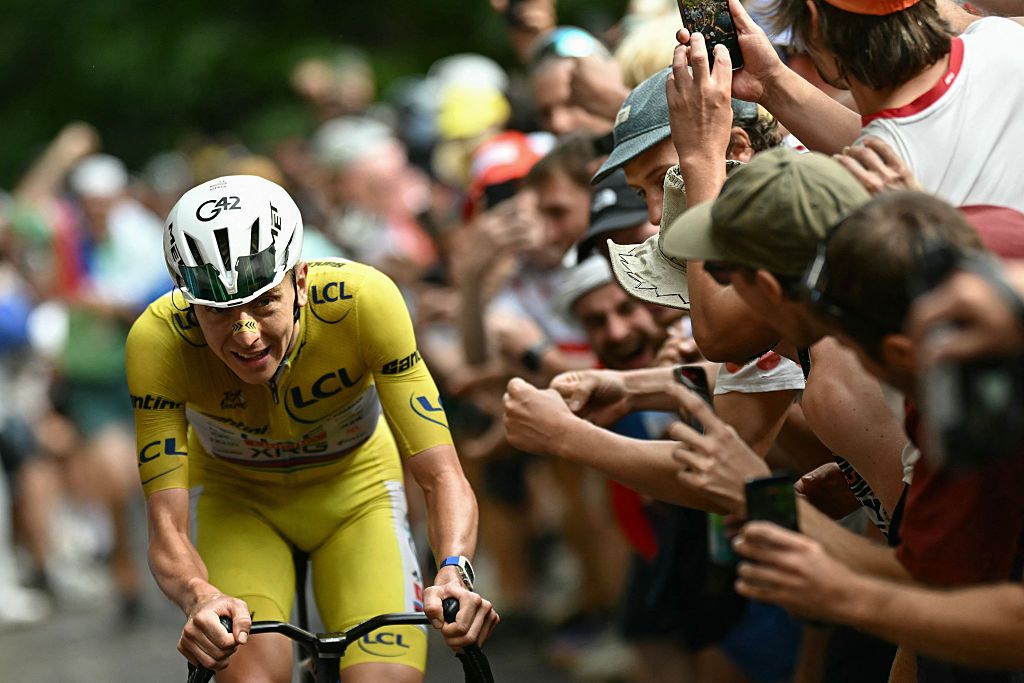
A famous climb, and a familiar Tour anxiety
L’Alpe d’Huez has always carried its own weather system. The hairpins, the roar, the Dutch Corner mythology, the sense that the road is less a route than a rolling amphitheater — all of it has made the climb one of cycling’s most prized stages. But this time the romance comes with a hard edge. Social media videos of fans camped along the mountain, partying through the night and crowding the roadway, have sharpened fears that stage 19 could become less a race than a bottleneck.
That is not idle hand-wringing. On a mountain stage, the race caravan is a living machine: team cars, medical vehicles, commissaires, broadcasters, mechanics, police, the whole caravan of modern sport. If the road narrows under bodies and beer cups, if supporters spill just a few feet too far, the spectacle can turn brittle in a hurry. The Tour de France has always sold hardship as beauty. Here, beauty may be the thing that endangers the hardness.
There is still joy in the scene, and plenty of it. Fans do not flock to the Tour de France merely to stand politely behind a rope. They come because this race has spent more than a century teaching the public that roads can become rituals. But the line between fervor and obstruction is not theoretical on a mountain like this. The road belongs to the riders for only a sliver of time. Everyone else is borrowing it.
The climb asks for order, even when the crowd wants chaos
The caution around L’Alpe d’Huez feels especially pointed because this is the sort of stage that turns on margins. A well-timed attack, a hesitant follow, a handful of seconds over the top — mountain racing can be decided by the smallest lapse. A packed roadside does not merely create drama; it can change the conditions under which drama is born. Riders need clear sightlines, clean passage, and at least the illusion that the road ahead is theirs alone.
That matters for the favorites, certainly, but it also matters for the workhorses, the team staff, and the men whose whole afternoon depends on being able to reach a rider in distress or deliver a bottle at the right moment. A blocked official vehicle is not a minor inconvenience. It is a warning that the crowd has swallowed the choreography the race requires.
Cycling has seen this film before. The sport has a long, fraught relationship with its own popularity: roadside exuberance can be part of the charm, and part of the problem. Mountain stages invite a pilgrimage mentality, and pilgrimages are rarely tidy. The very image that makes the Tour feel noble — the rider alone against the slope — is only possible because a great many invisible people keep the road functioning behind him.
Baptiste Veistroffer and the human side of a wild debut
For Baptiste Veistroffer, the first ride up L’Alpe d’Huez is not going to feel like a quiet introduction to the Tour’s grandest theater. By his own account, he is expecting something wild, and he is probably right. Newcomers to this climb do not simply learn the gradients; they learn the crowd. They learn how sound bounces off a mountainside, how a lane can seem to shrink as bodies lean in, how adrenaline and alarm can coexist in the same breath.
That is the part of this story that can be easy to miss if we talk only about safety protocol and route management. There are riders for whom this will be a career marker, a memory they will carry long after the yellow jerseys and television graphics have faded. There are also riders who will spend the day managing nerves they had not counted on — not just the fear of attack, but the uncertainty of being hemmed in by the very people who adore them.
The Tour can turn a mountain into a cathedral, but a cathedral still needs aisles.
As a column of fans swells along the slope, the organizers are left to do the unglamorous work that makes glory possible: fencing, stewarding, rerouting, pleading. It is not the sort of labor that makes highlight reels, yet it is the difference between a famous stage and a compromised one.
What this says about modern cycling’s bargain with its own audience
I have always thought the Tour’s greatest trick was convincing us that disorder could be part of its poetry. For decades, cycling has relied on the idea that proximity is virtue — that the public should be close enough to feel the grit on the wheels, close enough to hear the riders breathe. That intimacy gives the sport its old-world pulse. It also makes the sport vulnerable to the crowd’s worst instincts.
This is where the modern era has sharpened the problem. A century ago, a roadside gathering was local and limited by distance, weather, and inconvenience. Now a climb can be fed by viral clips, by the logic of the must-see moment, by the pressure to be where the image will be made. The mountain fills faster, earlier, and with a kind of self-conscious performance. People are not only watching the race; they are auditioning for it.
I do not write that as a scold. I write it as someone who understands the seduction. L’Alpe d’Huez is one of those places that turns spectators into believers. But the Tour cannot survive on reverence alone. It needs discipline. The governing bodies, local authorities, and riders’ teams all know this, even if they speak it in the dry language of logistics. If stage 19 goes smoothly, the crowd will be praised as passionate. If it goes badly, the same crowd will be called reckless. The difference may come down to a few yards of lane space and a few hundred people deciding that the race is the point, not their own place in the frame.
The real test is whether the mountain still belongs to the race
The Tour has always thrived on pressure, but pressure needs boundaries or it becomes a crush. L’Alpe d’Huez should be loud. It should be alive. It should feel like a place where history is being written in chalk dust and altitude. It should not feel like a road losing its shape.
What happens next will tell us whether the event can still hold its own authority over the crowds that love it so much. The climb is big enough for legend. The question is whether it is big enough for everyone who wants to stand inside it.
Stage 19 will not be remembered for silence. It should be remembered for control.
More from Straight From The Bench
Comments
Join the conversation — sign in to leave a comment.
Sign in to commentRelated Stories
Tadej Pogacar Tour de France Victory: Alpe d'Huez Blowout
Pogacar ripped Alpe d'Huez apart and put a fifth Tour within arm's reach. The race is all but over, and the rest are riding for scraps.
Tour de France Stage 18: Richard Carapaz Gives EF a Big Win
Richard Carapaz took control on the final climb and rode solo to victory on stage 18. For EF Education-EasyPost, it was the kind of day that changes a Tour from survival to respect.

Sophie Cunningham Trans Issues: Trump Officials Seize On Remarks
Sophie Cunningham’s comments are now part of a bigger political push. The WNBA, women’s sports advocates and the White House all just got pulled into the same lane.