
Trump Patriot Games for High School Athletes: What to Know
A shiny patriotic pageant with a scholarship prize and a whole lot of baggage.
 Leo Lupo6 min read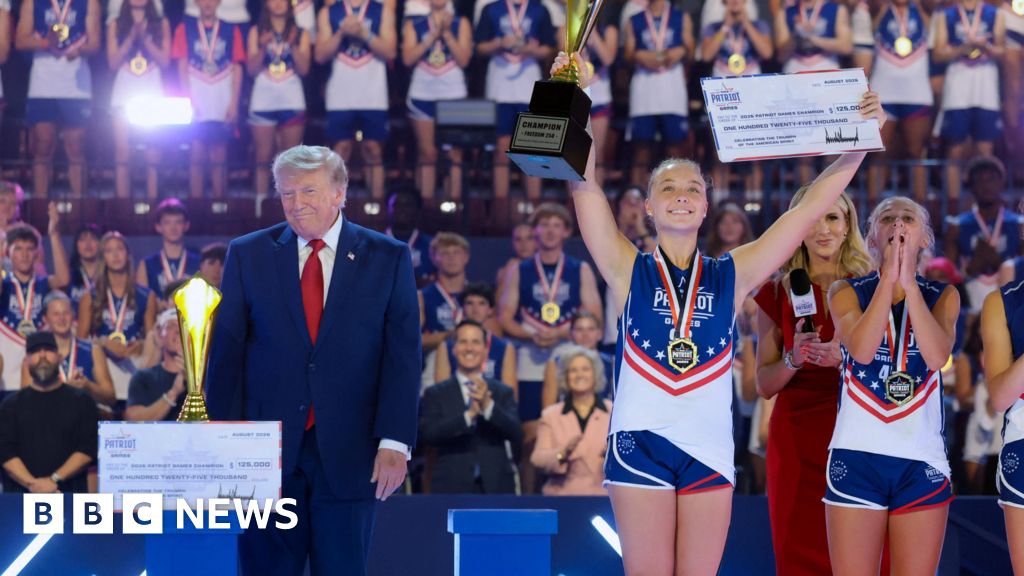
America’s 250th birthday is supposed to be a party, and now the government wants to hand out a scholarship to the teens who can best explain patriotism. That’s the setup behind the so-called Patriot Games, where two high school athletes from each state are competing for a prize that includes $125,000 in scholarship money apiece for the boy and girl winners. Nice round number. Nice patriotic wrapper. Real messy edges.
This thing is not a sports tournament in the usual sense, which is why folks trying to file it under “fun youth showcase” are already missing the point. The athletes are being asked to answer questions about American patriotism to qualify, and that turns the whole affair into part contest, part civic exam, part political branding exercise. That’s a lot to hang on teenagers who are still worried about homework, travel ball, and whether the coach is going to let them start on Friday night.
Patriotism, packaged like an event
The name does the heavy lifting here. “Patriot Games” sounds clean, shiny, and easy to sell on a banner. It also sounds like somebody in a suit spent too long in a conference room making sure the words fit a theme. The country’s 250th anniversary is a real milestone. Nobody’s arguing that. But once you start grading teenagers on patriotism, you’re not just celebrating America. You’re defining it.
And that’s where the trouble starts to creep in. What counts as a good answer? Who decides whether a kid from a farm town in the Dakotas and a kid from a city block in Philadelphia are speaking the same language about country, duty, and sacrifice? These are not small questions. They’re the sort of questions adults like to avoid because they’re harder than tossing a flag on a stage and calling it inspiration.
There’s also the plain old optics of it. A scholarship contest built around patriotism will always invite suspicion that somebody, somewhere, wants a tidy political message wrapped in a red, white, and blue ribbon. Maybe the event really is meant as a sincere nod to civic pride. Maybe it is. But sincerity and public relations often ride in the same car, and one of them usually steals the wheel.
What the scholarship means for the kids
For the teenagers involved, the money is the real bone. One hundred twenty-five grand is no pocket change. That can pay tuition, books, housing, and then some. For plenty of families, it changes the math immediately. College recruiting gets all the attention in sports, but the financial burden hits harder than any highlight reel ever will.
That’s why this deserves attention beyond the political theater. Teen athletes spend years being told to be leaders, role models, and ambassadors. Then the adults hand them a test about patriotism and make it part of the prize structure. Fair enough, maybe. But if you’re going to ask young people to perform values on cue, you’d better be sure the judging is tight and transparent. Otherwise it starts to look like a pageant with a scholarship attached.
And you can bet the families will notice every detail. They’ll want to know whether the questions are open to interpretation, whether the selection leans toward a certain kind of polished, canned answer, and whether a kid with a real, lived relationship to service or sacrifice gets boxed out by somebody better coached at sounding like a campaign speech. Adults can pretend these things are abstract. Parents never do.
If patriotism has to be graded, somebody already missed the lesson.
The other thing to watch is pressure. Fourteen to seventeen is a tough age to ask a teenager to stand up and define America in a way that won’t get him or her side-eyed by strangers online. Kids that age still trip over their own shoelaces, never mind the national conversation. Put a microphone in front of them and the whole country starts waiting for a mistake.
A familiar American habit: mixing youth, politics, and spectacle
I’ve been around long enough to know this country loves to turn kids into symbols when it suits the mood. Little League teams get paraded, high school quarterbacks get treated like elected officials, and every once in a while some bright idea comes along that asks the young to carry an adult argument on their backs. Same old American trick. Dress it up as inspiration and nobody notices the strain until later.
Here’s my take: the scholarship is the least controversial part of this whole setup, and that tells you plenty. The money is easy to applaud. It’s the test of patriotism that raises the hackles. Not because patriotism is bad. Because it’s broad, personal, and messy, and people with power hate messy. They prefer a neat little rubric. They prefer a scorecard. Sports people understand scorecards. Civic life doesn’t work like that, and the adults pushing this should know better.
I keep thinking about how often athletic events get used to sell some larger national mood. Sometimes it works. Sometimes it doesn’t. The trouble is that teenagers aren’t props, even when they’re standing on a stage in a clean polo shirt. They’re still kids. They can answer questions, sure. They can compete, sure. But once you make patriotism a gatekeeper, you’ve stopped celebrating the next generation and started auditioning it.
Who this really affects — and who gets to define success
The winners here get more than money. They get a public stamp of approval, a little national spotlight, and maybe a line on a college application that sounds better than half the junk adults tell kids to chase. The runners-up get something else: a reminder that in America, nearly every contest eventually turns into a branding exercise.
That doesn’t make the event meaningless. It means it needs adult supervision of the honest variety, not the ceremonial kind. If organizers want this to matter, they’ll have to show the judging is fair, the questions are clear, and the process isn’t tilted toward a single flavor of patriotism that fits one political wardrobe and not another. Otherwise this will age like cheap paint in summer sun.
And if the whole thing lands flat, don’t be shocked. Young people can smell a phony a mile away. They don’t always say it out loud, but they know when they’re being used to decorate somebody else’s message. That’s true in sports, true in school, true in politics. True everywhere the adults get sentimental and sloppy.
There’s no shortage of ways to mark 250 years of the republic. You can teach history. You can fund schools. You can support veterans. You can even honor student-athletes without making them recite a loyalty quiz to earn it. That would be the cleaner play.
The event will get its headlines and its applause, and probably some angry chatter too. The real test comes after the cameras move on. If this is about inspiring kids, the adults should prove it by letting them be kids first. That would be a patriotic idea worth keeping around.
More from Straight From The Bench
Comments
Join the conversation — sign in to leave a comment.
Sign in to commentRelated Stories

Derek Carr UCLA staff role: what it means for the Bruins
Derek Carr is back in football, this time on the UCLA sideline. The Bruins just added a veteran voice to the room, and that matters more than the fluff police want to admit.
College Football Playoff expansion: SEC, Big Ten, and TV fight
The CFP’s next move is being dragged around by the SEC, Big Ten, and TV suits. The December clock is ticking, and nobody’s pretending this is about purity.
Florida State Scrimmage Update: Ashton Daniels, Pass Rush, and More
Mike Norvell’s second scrimmage report offered a clearer look at Florida State’s temperament: Ashton Daniels’ progress, a pass rush trying to find its teeth, and a roster still being pressed into form