
World Cup Final: What You Missed in Five Weeks of Chaos
Messi, shocks, and the kind of tournament that never sits still.
 Zane Miller5 min read
The tournament has already written its own script
If you’re arriving late to the 2026 World Cup, you missed the part where the tournament stopped behaving like a clean bracket and started acting like a live wire. Five weeks in, this has been the kind of event that punishes anyone waiting for the “real” action to begin. It started early, stayed loud, and kept moving. The stars showed up. The underdogs did damage. And the group stage never really let the favorites get comfortable.
This is what an expanded 48-team field was always supposed to feel like: more nations, more pressure points, more teams with a chance to matter for a night or two before the heavyweight names take over again. Instead of the usual slow burn, the tournament came out swinging. The tone was set by Lionel Messi doing Lionel Messi things — carrying the gravity of the event on his back without needing the spotlight handed to him. Around that, the chaos kept building.
Messi still changes the temperature of the room
Messi doesn’t just play in a World Cup. He bends it.
That’s the part casual viewers miss when they jump in late. He’s not simply a great player in a big tournament. He’s the one name who still makes the whole thing feel bigger, older, and more serious. Every touch changes the camera angle. Every free kick changes the mood in the stadium. Every run from Argentina carries the weight of a nation that expects the finish line to come with a trophy in sight.
And because this is a final weekend setting, that aura matters. The World Cup always needs a central figure, someone the casual audience can latch onto without needing a spreadsheet. Messi remains that guy. He’s the bridge between the pure football crowd and everybody else who just wants to feel the stakes. If you’re just tuning in now, you at least know where the emotional axis of the tournament has been spinning.
Underdogs have been doing real damage
The other storyline has been the one that keeps the sport honest: upsets. Not cosmetic ones. Real ones.
This tournament has given underdogs enough oxygen to become more than a footnote. That’s the hidden benefit of a bigger field and a wider global footprint. The gap between “expected” and “possible” gets narrower fast when a team plays with no fear and a favorite spends 20 minutes trying to find rhythm. That’s why the first five weeks have felt so volatile. Teams that were supposed to survive and advance got dragged into street fights. Some did not survive.
That kind of chaos is great television, sure. It also tells you something about the modern international game. The scouting gap is smaller now. More players are active in top leagues. More federations are comfortable pressing high, defending in blocks, and turning one mistake into a tournament-defining moment. You don’t need a superteam to ruin somebody’s summer. You just need timing.
This World Cup hasn’t been waiting for the favorites to show up. It’s been daring them to keep up.
The USMNT mattered more than the casual crowd thinks
If you only checked in for the knockout phase, you also missed why the USMNT run deserves more than a shrug.
For American soccer, tournament credibility still matters. Not vibes. Not social posts. Credibility. The U.S. has spent years trying to turn talent into trust on the world stage, and every World Cup is a referendum on whether the program is getting closer or still just promising to get there later. Brave performances buy belief. They buy attention. They buy a little more patience from a fan base that always wants proof.
And that’s the real significance here: the U.S. doesn’t need to look like Argentina or France to move forward as a soccer nation. It needs to look hard to play against. Organized. Physically ready. Clear on roles. When that happens at a World Cup, it travels. It changes how young players see the team. It changes how the rest of the region sees the team. And yes, it changes what comes next in roster building, youth development, and how aggressively the federation thinks about the next cycle.
I’ll say it straight: the U.S. is still chasing the top tier, but the performance standard is no longer embarrassing. That matters. Programs don’t leap overnight. They stack tournament reps. They build a reputation one tense match at a time. You can’t fake that in a month-long event.
Why the expanded format is already leaving a mark
This is where the bigger-picture stuff kicks in.
The 48-team setup has changed the incentives. More countries believe they have a path. More fan bases stay engaged longer. More matches carry real stakes because more teams arrive with something to protect or prove. The old criticism was that expansion would water things down. What’s actually happening is messier and, honestly, better for the sport’s global footprint. The games are broader. The audiences are wider. The tournament feels less like a private club.
From an executive viewpoint, this matters because FIFA wanted scale and relevance in the same package. So far, they’ve gotten both. From a fan viewpoint, it means the early rounds weren’t a warm-up; they were the show. If you were waiting for the “good part,” you were already late.
There’s a reason tournament archives age well. The best World Cups become a collection of moments, not just a final score. This one already has enough of them. Messi’s gravity. Surprise results. American resistance. The kind of group-stage tension that tells you the knockout bracket isn’t starting from zero. It’s starting from the wreckage of five weeks of buildup.
The final weekend is here, but the story has been running for a while. If you just joined, fine. Catch up fast. The ending is going to mean more because of everything that already happened.
More from Straight From The Bench
Comments
Join the conversation — sign in to leave a comment.
Sign in to commentRelated Stories

World Cup Trophy Presentation: Trump Expected at Sunday Final
Trump is expected to attend Sunday’s final at MetLife Stadium and may help present the trophy after Argentina-Spain. FIFA’s brass is leaning into the spectacle, like it or not.
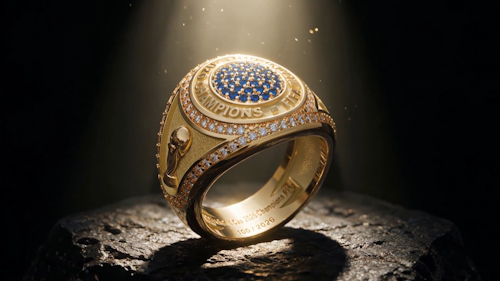
2026 FIFA World Cup Rings: Final Weekend Crowns More Than a Champion
The last two matches in the 2026 World Cup carry more than medals and pride. The winners — and even the fans — are set to leave with championship rings, a rare flourish for soccer's grandest stage.
Lionel Messi vs Lamine Yamal: World Cup final generational showdown
Lionel Messi and Lamine Yamal are no longer a viral image. They’re the center of soccer’s next passing-of-the-torch moment, with a World Cup title on the line.