
2026 FIFA World Cup Rings: Final Weekend Crowns More Than a Champion
A tournament built on memory, now rewarding the people who made it breathe.
 Beatrice Kensington6 min read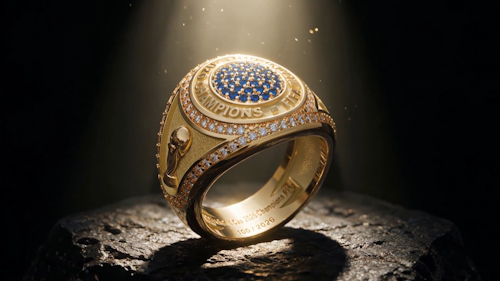
A final weekend with a little extra shine
The 2026 FIFA World Cup has reached its closing frame, and the decision to hand championship rings to the final winners — and, by the sound of it, to some of the fans who lived inside this month-long spectacle — gives the tournament a distinctly North American sheen. Soccer, for all its global reach, has often preferred solemnity: medals, trophies, flags, and the austere language of history. Rings are something else. They are jewelry as myth. A portable monument.
That choice tells you plenty about the 2026 edition. This was never going to be a tournament content to vanish neatly into the archive. With the United States, Canada, and Mexico sharing the stage, the event has worn a more expansive, entertainment-forward skin than any previous men’s World Cup. The ring gesture fits that logic. It says the final weekend is not merely a result to be filed away, but an experience to be remembered, displayed, and maybe — in the American way — marketed.
The ring is the point where soccer meets spectacle without entirely surrendering itself to it.
England, France, and the business of dignity
The bronze medal match between England and France carries the awkward burden that belongs to every third-place game: too meaningful to dismiss, too bruised to feel purely celebratory. One team will leave with a medal. The other will leave with the ache that has haunted summer tournaments since time immemorial — the sense of having traveled this far only to be denied the last room in the house.
And yet these games matter, especially now. In an era when international soccer is often reduced to a binary of champion or failure, a bronze match asks for a more human accounting. It offers a last chance for players to finish on their feet, for veterans to add a final line to the ledger, for nations to turn disappointment into something resembling grace. The rings, if they are indeed part of the final reward structure, only sharpen that feeling. Even the consolation prize has been dressed in ceremonial gold.
For England, there is always the shadow of expectation, that old and unshakable companion. For France, there is the cruel luxury of depth — a squad rich enough to make nearly any absence survivable, and therefore any miss feel like a moral failing. Both teams arrive at the final weekend with the same cold lesson attached: at this level, the margin between immortality and ordinary memory is a narrow, merciless corridor.
The final and the strange American logic of keepsakes
The championship match itself — the one game that will ultimately define this World Cup — is where the ring idea becomes most revealing. Soccer has long resisted the trappings of American championship culture, at least in its purest form, but it has also been drifting toward bigger ceremonial language for years. Expanded tournaments, commercial hospitality, curated fan zones, trophy tours, documentary crews shadowing every emotional twitch: the sport has learned how to package its grandeur.
The ring simply makes that packaging visible. It is a tangible object designed to say: you were there, and history happened near you.
That notion may irritate traditionalists, but it also recognizes something true about modern sport. Fans do not only want to witness a final; they want proof that their presence mattered. In an age of digital memory and disposable attention, physical artifacts carry unusual force. A ticket stub, a scarf, a medal replica, a ring. These are the small relics through which crowds turn into communities.
That is why this detail has resonance beyond novelty. The 2026 tournament has been built around scale — more teams, more cities, more inventory, more everything — but the championship ring brings the competition back to the intimate. One hand. One object. One moment held forever.
Why this matters beyond the trophy ceremony
The World Cup has always belonged to both extremes: the grand national pageant and the private family memory, the flag-waving and the kitchen-table silence after a loss. The ring idea bridges those worlds in a way the sport has usually avoided. It acknowledges that the final weekend is not only about the eleven on the field. It is about the substitutes who never played, the staff who slept less than they should have, the supporters who emptied their voices, and — if the reports hold — the fans who were invited into the closing ritual.
Beatrice Kensington, and I do not say this lightly, I think soccer has spent decades pretending that austerity is the same thing as dignity. It is not. Dignity can survive a little adornment. Sometimes it even needs it. The ring does not cheapen the World Cup; it reveals how modern prestige actually works. We live in an age that asks people to invest emotionally, financially, and geographically in shared events, then hands them only the memory afterward. A ring says the memory has weight.
I also think this may foreshadow where international tournaments are headed. Not toward crassness, necessarily, but toward greater ceremony around participation itself. The Olympics has long understood this. The Super Bowl certainly has. Soccer, slower to embrace the theater of keepsakes, may be learning that symbolism travels well — especially in a tournament spread across three countries and watched by a global audience trained to expect narrative as much as result. The danger, of course, is that the object overtakes the occasion. But if handled with taste, a ring can be a footnote with a pulse.
What to watch as the curtain falls
The remaining games will still decide the real matter: medals, status, legacy, and the right to be called world champion. That part has not changed. But this final weekend now carries a second story line, quieter and oddly fitting. Who will leave with the last serious prize of the competition? Which fan base gets to turn its summer into something it can wear?
As the FIFA show closes, the ceremony may outlast the final whistle in the public imagination. That is no small thing. Some tournaments finish with a trophy lift. This one may finish with a small circle of metal and the big American instinct to make memory tactile.
The stage is set. The medals will matter. The rings will glitter.
And when the lights go down, that will be part of the story too.
More from Straight From The Bench
Comments
Join the conversation — sign in to leave a comment.
Sign in to commentRelated Stories

World Cup Final Ticket Prices: Spain vs Argentina Smashes Records
Spain vs. Argentina at MetLife Stadium is pricing itself into a different universe. The 2026 World Cup final is already making U.S. sports history before kickoff.

FIFA Argentina Falklands Banner Probe: Why It Won't Go Away
FIFA is reviewing Argentina’s display of a Falklands banner after the semifinal win over England. The soccer gets buried fast when politics storms the pitch.
England vs Argentina: Has Thomas Tuchel Really Changed Anything?
Tuchel was supposed to rip up the script. Instead, England’s latest major-tournament letdown has the same old fingerprints all over it.