
Alexandra Eala First Title: Filipino History in Washington
A teenager carried a nation’s hopes and did not flinch.
 Beatrice Kensington6 min read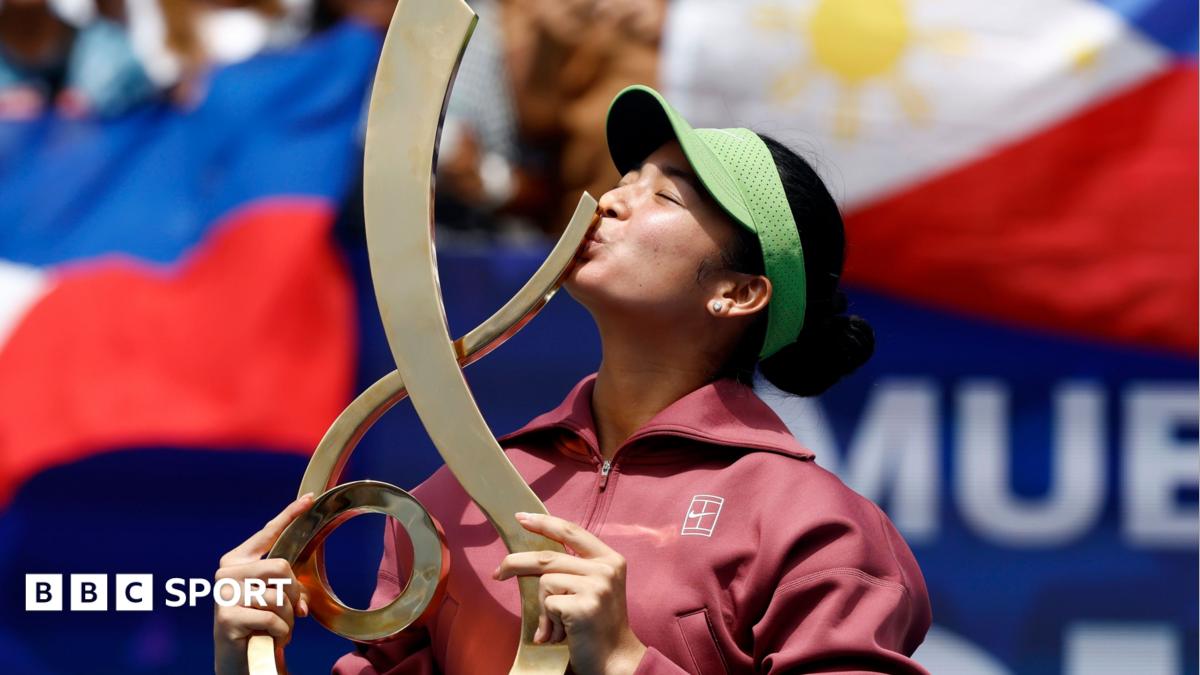
Washington gave Alexandra Eala a stage, and she filled it
The final point arrived, and Alexandra Eala did what athletes often do when the pressure finally breaks its last seam: she folded to the court, tears spilling fast, as if her body understood before her mind could catch up. There are victories that look tidy on a leaderboard and there are victories that feel like weather, all force and release. This was the latter. A first title is always a milestone. A first title that carries a country’s pride, after delays, disruptions, and the grinding awkwardness of a tournament week that refused to go smoothly, is something closer to a public unveiling.
Eala had already made history simply by getting this far in Washington. The title only sharpened the picture. It gave shape to what Filipino fans have been sensing for some time: that the game’s old assumptions about where elite tennis must be born are crumbling, one brave run at a time.
The significance reaches far beyond one trophy
Tennis is an individual sport, but no serious observer mistakes it for a solitary one. There is a federation behind every player, a travel schedule behind every forehand, a family budget somewhere in the shadows, and often a nation learning how to love a player before that player can fully explain herself. Eala’s run matters because it adds a new flag to the conversation around the sport’s geography. The Philippines has had beloved athletes, fierce competitors, and icons in other arenas, but women’s tennis has not often offered a figure who can pull a country’s imagination toward hard courts and late-round pressure.
That is what made the scenes in Washington feel larger than the trophy ceremony. This was not merely a young player peaking at the right time. It was proof that development pathways outside the traditional power centers can produce a champion with nerve, touch, and stamina. The win will be remembered for the title. It should also be remembered for the signal it sends to children playing on patchwork courts, to families wondering whether the dream is too expensive, too distant, too European, too American. It is not.
This was not just a title run. It was a demonstration that Filipino tennis no longer needs permission to believe in itself.
Weather, pressure and the quiet brutality of tournament tennis
The weather delays in Washington matter more than they might seem. Tennis players live in a kind of scheduled fragility; their rhythm is built around warm-ups, match times, rest windows, and the invisible architecture of routine. Interrupt it, and even the best can go stale. For a young player still learning how to carry a tournament week on her shoulders, that kind of stop-start chaos can become a test of temperament. Eala passed it.
That is where the human story lives. Talent gets you into the draw. Poise keeps you from unraveling when the day turns slippery. The best young players do not simply hit the clean shot; they absorb the disorder around it. They understand that the opponent is not always standing on the other side of the net. Sometimes it is the calendar. Sometimes it is the humidity. Sometimes it is the slow creep of expectation, that quiet thief of fluidity.
Eala’s triumph suggests a player who has begun to make peace with those conditions. That matters because the tennis season does not forgive fragility. One strong week can lift a ranking, yes, but it can also distort the public imagination, making everyone rush to declare arrival before the player has collected enough miles to deserve the label. The smarter reading is more restrained. This was not a fluke. It was a foundation.
What this means for the Philippines and for the sport
For the Philippines, Eala’s title offers a rare kind of sporting capital. It creates a face, a reference point, a reason for young athletes to see tennis as more than a distant television sport reserved for other countries’ children. That matters in places where visibility can be as valuable as coaching. Representation does not solve the structural problems of access and funding, but it changes the emotional math. Once a nation can point to a champion, even a new one, the possible begins to look less abstract.
For the sport, her win nudges the conversation toward a broader truth: tennis keeps being remade by players whose stories do not fit the old map. We have seen this in the rise of champions from countries that once felt peripheral to the sport’s center of gravity. We saw it in the way the women’s game has widened, sharpened, and become more globally textured. Washington was another brushstroke in that larger canvas.
There is also the matter of style. Eala is not just being celebrated because she won. She is being noticed because she appears to play with a kind of competitive intelligence that audiences remember. The phrase “most exciting player” is rarely earned by caution. It belongs to players who make you lean forward. For now, she seems to have that effect.
My own view is that we are watching the early stages of a career that could alter how tennis is discussed in Southeast Asia, where so many gifted athletes have had to fight for visibility against better-funded traditions elsewhere. I have seen enough so-called breakthrough moments to know how quickly the applause can outpace the infrastructure. The real test comes next: can the title be supported by the right coaching, the right scheduling, the right patience from everyone eager to crown her before she has finished learning? The history books adore a first chapter. They are less sentimental about the middle.
The road ahead is the real measure
Washington will not be the end of this story. It should not be. A first title can be a lantern or a trap, depending on what follows. For Eala, the task now is to turn a beautiful week into a durable habit, to keep the confidence without letting the moment harden into expectation. That is the work. That is always the work.
But for one bright, rain-interrupted week, Alexandra Eala made the court feel bigger than itself. She did it with nerve, with skill, and with the unmistakable trace of a nation in her chest. The next matches will ask different questions. For now, she has already answered the one that mattered most.
More from Straight From The Bench
Comments
Join the conversation — sign in to leave a comment.
Sign in to commentRelated Stories

Commanders training camp offense: pads spark sharper Monday practice
The pads came on at Commanders camp Monday, and the offense looked a little more honest for it. That’s when the easy talk ends and the football starts talking.

Ohio State preseason Top 25: Coaches Poll puts Buckeyes No. 1
Ohio State opens No. 1 in the US LBM Coaches Poll for the first time since 2015, with the Big Ten and SEC stacked near the top. The preseason pecking order already has playoff implications.

Zay Flowers Extension: Ravens lock up their young receiver
The Ravens didn’t wait around with Zay Flowers. They paid him now, and they paid him like a pillar. That tells you exactly what they think of their offense.