Big Ten NIL rules: schools get squeezed out of third-party deals
The conference is drawing a line before Congress draws it for them.
 Zane Miller6 min read
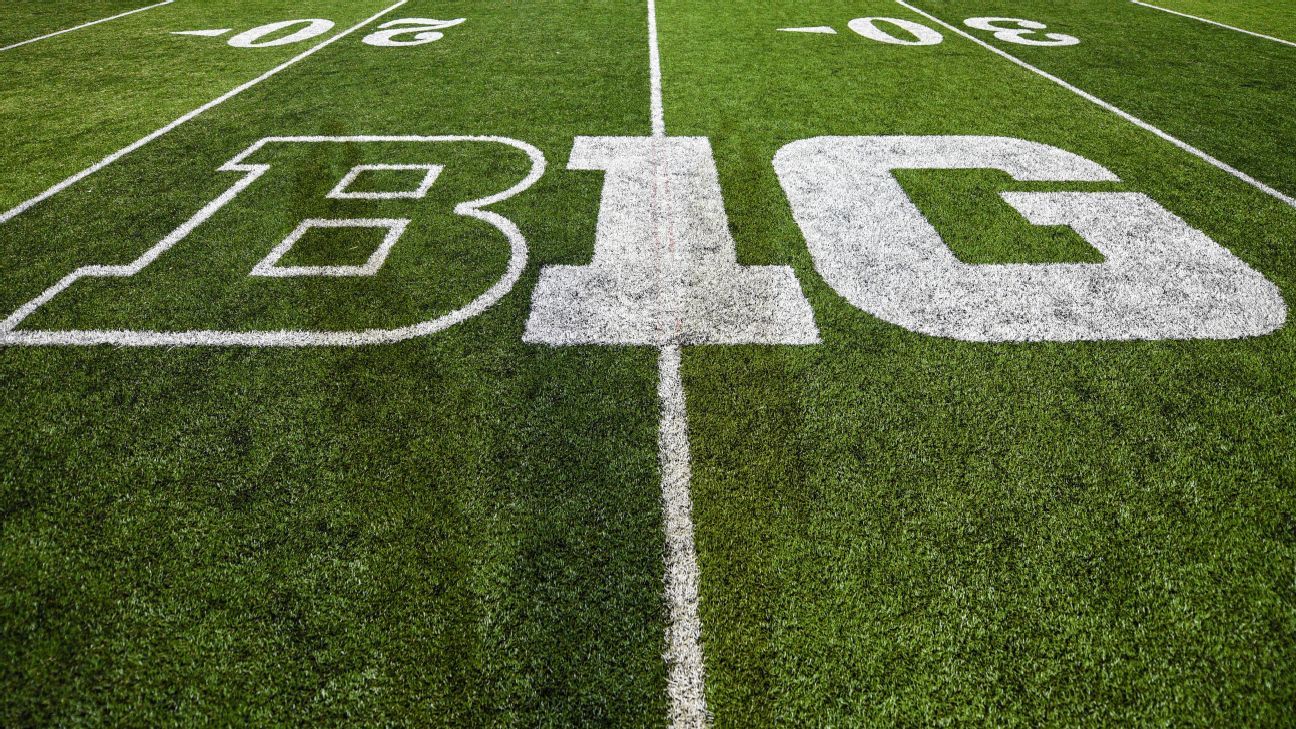
The Big Ten just made a move that tells you exactly where this sport thinks the wind is blowing. Schools are getting pushed back from third-party NIL deals, and that is not a small administrative tweak. That is a conference trying to get ahead of the next wave of regulation before someone else writes the rules for them.
This is the same conference that has spent years acting like the adult in the room, even while college sports kept sprinting past the guardrails. Now it is trying to draw a clean line: schools can’t be as involved in outside NIL arrangements as they’ve been, and the timing says plenty. With the Protect College Sports Act lurking in the background, the Big Ten is clearly reading the board and deciding it would rather self-police than get policed.
The Big Ten is trying to control the mess before it controls them
This is less about morals and more about survival. Once schools get too deep into third-party NIL deals, the whole thing starts looking less like athlete compensation and more like managed recruiting infrastructure. That’s where the legal headaches live. That’s where the federal scrutiny starts. And that’s where athletic departments get stuck trying to explain why one deal was “organic” and another was basically a soft salary cap with a logo on it.
The Big Ten knows that NIL has already bent the recruiting market into a shape nobody predicted three years ago. The richest collectives still matter. The biggest brands still matter. But if schools are openly steering third-party money, you’re not talking about endorsement ecosystems anymore. You’re talking about a conference walking right up to the line of inducement.
That line matters. A lot.
The practical impact here is simple: less room for school personnel to be involved in the handshake layer of NIL. Coaches, administrators, compliance staffs, everyone in the chain is going to have to be cleaner about who is talking to whom, and why. The conference is not trying to eliminate NIL. It is trying to reduce the smell coming off the process.
Why this matters for recruiting, collectives, and the power schools really have
Let’s not pretend schools are passive observers in the NIL era. They’ve been the gravitational force behind a lot of these deals, even when the paperwork said otherwise. That’s why this rule lands with real force. The Big Ten is basically telling its members that the old workaround culture is getting riskier by the day.
For recruits, this changes the temperature more than the headline. The money is still out there. The NIL market is still alive. But the coordination between a school and the outside money machine may get harder to navigate. That doesn’t mean the sport gets cleaner overnight. It means the best programs are going to have to get more disciplined, more careful, and probably more creative.
For collectives, this is the kind of rule that forces a reckoning. Some of them have always existed in a gray zone, operating like quasi-front offices for roster building. If the Big Ten schools are now more restricted in how directly they can participate, the collectives that survive will be the ones with real independence and real staying power. The flimsy ones? They’ll crack under the compliance pressure.
And for the conference itself, this is a positioning play. The Big Ten is not waiting for Congress to clean up the sport. It is signaling that it wants to be seen as a conference that can regulate itself before someone in Washington does it for them.
The Big Ten isn’t banning NIL. It’s trying to stop schools from acting like the payroll department.
What the Protect College Sports Act changes in the background
The congressional piece hanging over this is the real pressure point. The conference is not doing this in a vacuum. It is moving with the expectation that federal action could reshape the entire college sports landscape, especially around revenue sharing, athlete rights, and institutional involvement.
That’s the part a lot of fans miss. NIL was sold as freedom. In practice, it’s turned into a fight over control. Who can negotiate? Who can direct? Who can facilitate? Who gets blamed when a deal looks suspiciously like pay-for-play with better branding?
If the law changes, the conferences that already tightened their process will have a cleaner defense. If the law doesn’t change, they still get to say they were trying to preserve competitive integrity. That’s the kind of bureaucratic two-step athletic departments love. It buys time. It buys cover. It buys the appearance of order in a system that still feels wildly uneven.
The Big Ten has always had the market power to shape national conversations. Ohio State and its peers don’t just compete in games; they compete in policy gravity. If the biggest conference in the country decides third-party NIL needs tighter boundaries, other leagues will notice. Some will follow. Some will complain. Either way, the ripple reaches everywhere.
My read: this is the first real step toward a cleaner NIL firewall
I think this is the right move, and not because I’m romantic about “amateurism.” That ship is gone. The reason this matters is simpler: if schools keep getting deeper into outside NIL deals, the sport will never stop arguing about whether recruiting is being bought, facilitated, or just intelligently marketed.
I’ve said this before, and it applies here too: the most powerful people in college sports are rarely the ones making the loudest public statements. They’re the ones writing the compliance language. They’re the ones deciding what kind of gray area can still be defended in a deposition. This feels like one of those moments.
The Big Ten is not curing the chaos. But it is trying to ring-fence it. That’s a meaningful distinction. The conferences that survive the next era won’t be the ones pretending NIL is simple. They’ll be the ones that can live with the reality of NIL without letting it swallow the institution whole. That’s the market now. Clean lines. Less improvisation. More defensible process.
And the schools that can’t adjust? They’ll be the ones making noise later about competitive imbalance while everyone else figured out how to comply first.
Watch the fallout, because this won’t stay a Big Ten story for long
The next move to watch is how individual schools react behind the scenes. Compliance departments will tighten. Collectives will rework their language. Coaches will be told, again, to stop freelancing around the edges. And if this becomes a model for other power leagues, the third-party NIL market is about to get a lot more structured, whether the people in it like that or not.
The Big Ten just made it clear: the free-for-all era is getting boxed in. The only question now is who adjusts fast enough to stay ahead of the line.
More from Straight From The Bench
Comments
Join the conversation — sign in to leave a comment.
Sign in to commentRelated Stories
Trevor Goosby Knee Surgery Update: Texas LT Faces Long Recovery
Trevor Goosby’s successful knee surgery steadies the medical report, but not the larger Texas picture. For a draft prospect and a line built on timing, the recovery clock now matters as much as the de
Alabama CB Dre Kirkpatrick Jr. dismissed after arrest for doxxing
Dre Kirkpatrick Jr. is out at Alabama after an arrest tied to doxxing and harassment. The dismissal speaks to more than discipline; it speaks to the standard a program must protect.
Florida State football update: McCullough answers fan frustration
FSU’s president says he understands the anger, but understanding isn’t the same as fixing. Florida State fans want a course correction, and fast.