
Cardinals Joshua Báez Promotion: Power, Patience, and Risk
St. Louis is betting the loud tools finally outweigh the loud whiff rate.
 Beatrice Kensington6 min read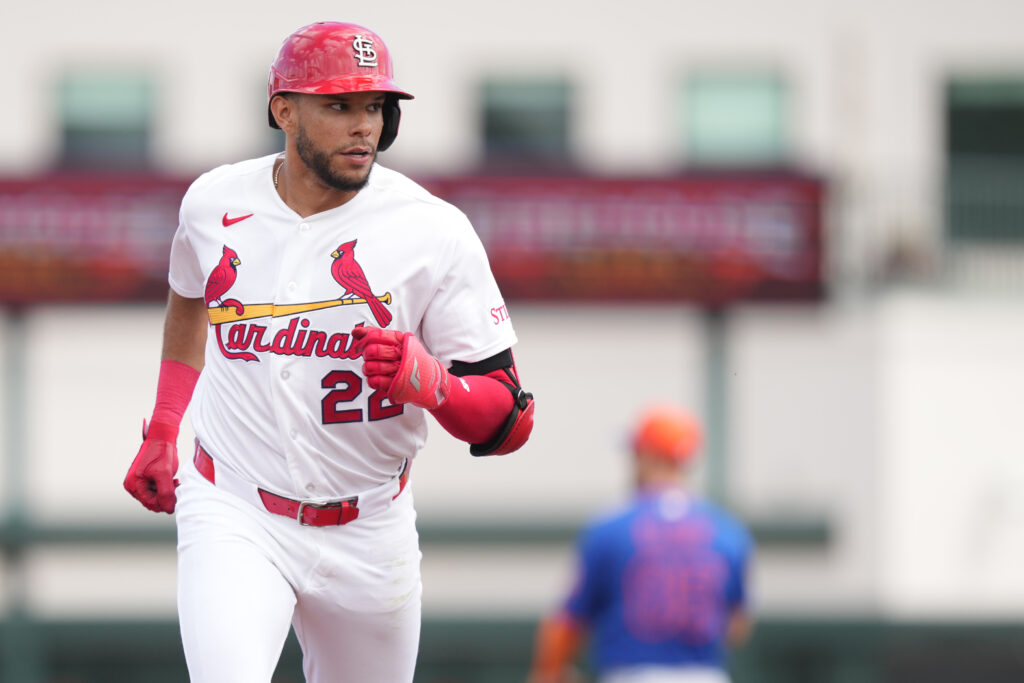
The Cardinals are sending Joshua Báez into the bright, unsentimental air of the majors, and there is always something a little bracing about that moment. A prospect’s résumé looks different once it leaves the shelter of the minors and is pinned to a lineup card at Busch Stadium, where the crowd can hear every swing miss and every ball that jumps off the bat like it has someplace urgent to be.
Báez arrives carrying the sort of scouting report that can make a front office linger over the dream a little longer than it should. There is real power there, the kind that can erase a scouting notebook entry with one violent cut. There are also the strikeouts, those stark little reminders that upper-level pitching does not hand out second chances like a benevolent coach in spring training. The Cardinals are not pretending otherwise. They are choosing to find out whether the thunder matters more than the noise around it.
The Cardinals are choosing ceiling over comfort
This is the kind of promotion that says something about a team’s present tense. St. Louis is not simply rewarding a hot streak or filling a temporary hole. It is inviting a player with significant swing-and-miss in his profile to test his game against the sport’s oldest exam: can you do it here, under these lights, against pitchers who have read the same scouting report and intend to weaponize it?
That is the wager. And it is not a foolish one.
The modern game has grown comfortable with strikeouts, almost too comfortable. Organizations know that a bat with enough impact can survive a few empty at-bats if the contact is loud enough when it arrives. The Cardinals have long tried to keep one foot in tradition and one in the present, and Báez’s promotion feels like a test of that balancing act. Do they want the disciplined, polished player who can keep the inning moving, or the younger, riskier athlete whose ceiling can alter the shape of a game in one swing?
The answer, for now, is clearly the latter.
Big power travels; minor-league patience does not
There is a seductive mythology around power hitters, especially in the minors. The ball jumps, the body looks built for damage, and each home run can make a scouting director sound like a prophet. But minor-league pitching is full of accidents, loose command, and the occasional pitch that belongs in a batting-practice bucket. Major-league arms, by contrast, are a machine built to exploit impatience.
That is why Báez’s profile matters. It is not enough that he can hit the ball hard; a lot of players can do that in a controlled environment. The question is whether the damage survives contact with better sequencing, better breaking stuff, and the emotional grind of an 0-for-12 stretch that can turn promise into burden in a hurry.
Fans tend to romanticize the call-up as the beginning of a fairy tale. It is usually something harsher and more useful. It is an audit.
The majors do not ask whether a prospect looks ready in the mirror. They ask whether he can survive being solved.
That is the central tension here. Báez can help the Cardinals if his raw power becomes a usable major-league weapon, even in a limited role. But if the strikeouts swallow too many trips to the plate, the club will be left with the same old problem: tools that photograph beautifully and produce inconsistently. A roster can carry that kind of player only so long before the equation turns cold.
What this means for St. Louis right now
The immediate impact is practical. A promotion like this can stir the lineup, force opposing pitchers to pay attention, and give a team a jolt of urgency. It also tells the rest of the clubhouse that opportunity is still alive, still being handed out to the player who makes the strongest case, not merely the safest one. For a Cardinals organization that has spent enough recent time searching for offensive spark, that matters.
It also speaks to the broader state of the farm system and the franchise’s mood. Teams do not usually rush a bat like this unless they believe the cost of waiting may be greater than the cost of learning on the job. Sometimes that decision is rooted in necessity. Sometimes it is faith. Often it is both.
The next few weeks will reveal whether Báez can do enough damage to keep pitchers honest. Can he avoid looking overmatched when they go soft away and hard in? Can he turn on mistakes instead of just missing them? Can he stay in the lineup long enough for the game to adjust to him instead of the other way around? Those are not small questions. They are the whole thing.
Beatrice Kensington: the danger of mistaking tools for a finished player
I have always been wary of how eagerly baseball falls in love with raw power, as though the sound of the ball leaving the bat can substitute for the harder work of becoming a hitter. There is a kind of glamour in the unfinished slugger, a romance to the idea that one more season, one more tweak, one more honest conversation with the strike zone will unlock the player everybody hoped for. Sometimes that happens. Often it does not.
What makes this promotion interesting is not just Báez’s bat speed or his ability to punish a mistake. It is what the Cardinals believe they can teach him once he is exposed to the better version of the game. Baseball history is littered with prospects who could hit the ball far but not often enough to matter, and with late bloomers who needed the major leagues to reveal the shape of their careers. The line between those two fates is thinner than teams like to admit.
I think St. Louis is making the correct kind of bet here, which is to say the uncomfortable one. Safe players keep benches tidy. Risky players can change a season. The Cardinals have spent too many stretches looking like a club waiting for offense to arrive by mail. Báez at least gives them a live package.
The watchability factor is part of the calculation
There is also the plain entertainment value, which front offices often discuss less than they should. Baseball survives on the possibility that one swing can alter an evening, and a player like Báez drags that possibility into every plate appearance. Even the strikeouts carry a charge, because they come wrapped in the chance that the next pitch might disappear into the seats.
That is how young sluggers keep managers, scouts, and fans leaning forward. They make you believe the at-bat could matter before it has even begun.
For the Cardinals, the best outcome is not perfection. It is proof. Proof that Báez’s rawness can be managed, that his power can survive higher-class pitching, and that the club has found another bat worth keeping in the frame. If not, they will have learned something equally valuable, if less romantic.
The majors are waiting. The count starts now.
More from Straight From The Bench
Comments
Join the conversation — sign in to leave a comment.
Sign in to commentRelated Stories
Giants 2028 All-Star Game: MLB Chooses Oracle Park Again
Major League Baseball is bringing the 2028 All-Star Game back to Oracle Park, a nod to San Francisco’s place in the sport’s civic memory. The timing, though, carries a bigger shadow: the Olympics.
Field of Dreams Game: Hall of Fame Night Puts Cooperstown on the Corn
MLB turned the Field of Dreams into a rolling shrine, with 26 Hall of Famers walking out of the corn before Phillies-Twins. The night had more history than hype, and that’s saying something.

MLB Field of Dreams Game: Elle Duncan Backlash Overshadows Netflix
The Field of Dreams game had Hall of Famers, nostalgia and a big-league spotlight. But once Elle Duncan got on the mic, the internet did what it always does.