
Cedric Mullins Free Agency: Rays Decline Mutual Option
Tampa Bay just opened the door. Now the market decides how wide it swings.
 Zane Miller5 min read
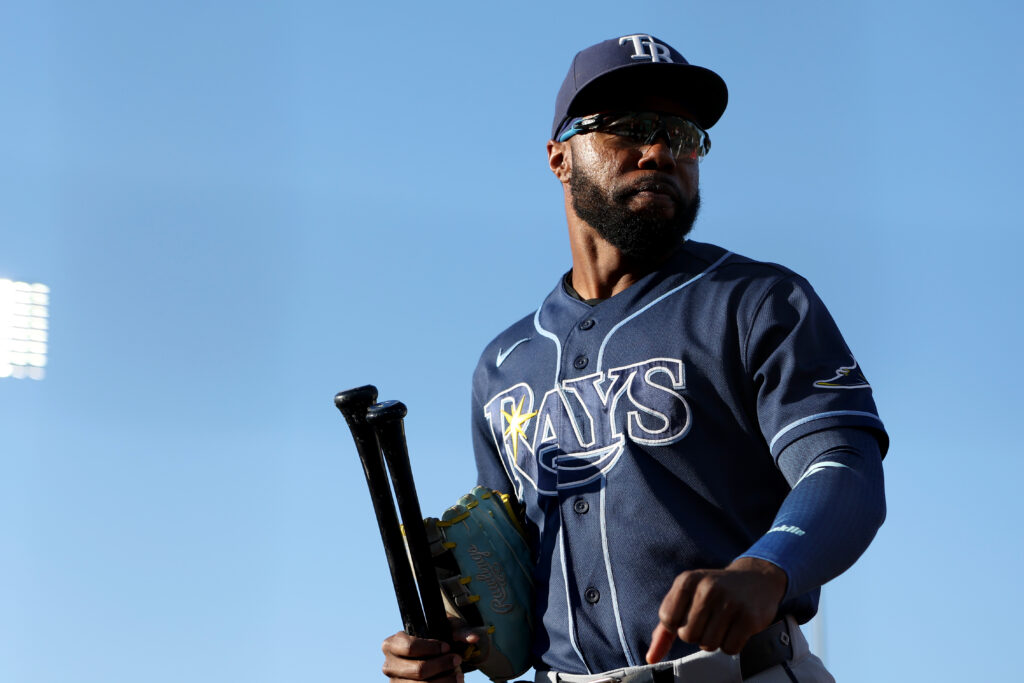
Cedric Mullins is free again, and that is the kind of move that tells you exactly where a front office’s priorities sit in late October. The Rays declined the mutual option on the veteran center fielder, and now the conversation shifts from Tampa Bay’s roster math to the rest of the market. Mullins is not just a body in center. He’s a left-handed bat, a defensive fit, and a player whose value changes depending on who is buying and what kind of roster hole they are trying to plug.
Tampa Bay being Tampa Bay, this is not a shock. They live in the margins, and the margins are where players like Mullins get squeezed. Mutual options rarely function like true mutual decisions anyway. If a player has even a decent shot at stronger money or a better fit elsewhere, he’s not walking back into the room for the same arrangement. The Rays know that. So does everyone else.
Mullins now joins a winter market that always seems to reward competent center fielders more than the public expects. Contenders love stability up the middle. Rebuilding clubs like upside and volume. The players who can actually handle center field and still give you a serviceable offensive profile do not linger long. That’s the lane Mullins is in. He won’t be sold as a star, but he can absolutely be sold as a lineup piece that makes the rest of the roster cleaner.
Tampa Bay kept the flexibility. That was the point.
The Rays have never been sentimental about roster spots, especially when the option structure gives them a clean exit. Declining a mutual option is front-office speak for “we like the player enough, but not at that number, and not with that level of commitment.” That’s not a knock on Mullins. That’s the business model.
Tampa Bay has spent years making the same calculation with different names: what is the most efficient use of a roster spot, and how much value can we replace internally or more cheaply? That process tends to push out veterans who are useful, but not indispensable. Mullins fits that category. He brings real MLB value, but the Rays don’t operate on sentiment or reputation. They operate on fit, price, and optionality.
For a club like this, it also says something about the direction of the outfield mix. If you are declining a mutual option on a center fielder, you are signaling either a cheaper internal plan or a broader willingness to reshuffle the market. The Rays always want to keep their decision tree wide. This move does exactly that.
Mullins gives the market a clean center-field answer
This is where the rest of the league starts paying attention. A player does not need a monster platform year to matter in free agency if he fills a premium defensive position and can still make a lineup less awkward. Center fielders with experience are not growing on trees, and clubs know it. The teams that are one injury away from scrambling are the same teams that wind up bidding on this type of profile.
Mullins also has the sort of profile that tends to get a little more interesting once the market starts sorting itself out. If a team misses on a bigger name, a player like this suddenly looks a lot more attractive. If a club wants a more balanced roster and doesn’t want to block a younger outfielder, he becomes the cleaner solution. That’s how these winters work. The real money usually follows scarcity.
The fit matters, too. Mullins can help a club that wants defensive competence without giving away the offensive gains it has already built elsewhere. And because he is a left-handed bat, he fits neatly into the kind of roster construction front offices love to talk themselves into in December.
The Rays’ move also clears the board for what comes next
This is not just about one player leaving Tampa Bay. It’s about how the Rays keep turning over pieces without ever letting the roster go stale. They have built a machine that always seems to have another lane open, another platoon option ready, another evaluation cycle waiting.
That’s why moves like this matter more than they look at first glance. They are not dramatic. They are not the stuff of splashy offseason graphics. But they shape the depth chart, the payroll, and the way the organization approaches the next wave of moves. Every open spot is a choice. Every choice says something.
For Mullins, the market now gets to decide whether he is viewed as an everyday center fielder, a strong side platoon piece, or a veteran stabilizer for a club trying to keep itself afloat through the summer grind. The answer will probably depend less on his name and more on who gets desperate first.
The Rays didn’t lose a cornerstone here. They declined a cost, opened a lane, and handed the market a useful player with no strings attached.
My read: this is the kind of move contenders make, too
I like these transactions because they expose the real temperature of a front office. This is not the move of a club chasing headlines. It is the move of a club that knows a mutual option is often just a polite fiction. If the player has leverage, he uses it. If the team has a cleaner path, it takes it.
And honestly, this is how a lot of smart organizations operate now. They do not cling to names. They cling to flexibility. That is especially true for teams with postseason ambitions, because outfield defense, bench balance, and payroll breathing room all become harder to fake once the season starts. The clubs that win in October are usually the ones that made their ugly little decisions in November and December.
Mullins should have a real market. Not a fake one. Not a “let’s see what happens” market. A real one. There are enough teams with center-field uncertainty to make this worthwhile, and enough value attached to competence at a premium position to get him paid somewhere.
The next move will be the telling one. If the Rays replace him quickly, you’ll know this was pure roster engineering. If the market moves fast, you’ll know the league still respects what a dependable center fielder is worth.
More from Straight From The Bench
Comments
Join the conversation — sign in to leave a comment.
Sign in to commentRelated Stories
Tampa Bay Rays Free Agency: World Series Hangover Hits the Roster
Freddy Peralta, Gavin Lux and Jorge Mateo are free agents, with Nick Martinez and Cedric Mullins likely to follow. The Rays’ roster is shifting fast.

Milwaukee Brewers World Series gear: championship celebration starts now
The Brewers finally broke through, and the merch wave is here fast. This is more than souvenirs — it’s Milwaukee cashing in on a historic sports moment.
Bo Bichette Mets Opt-In: Queens Gets Another 2027 Run
Bo Bichette is sticking with the Mets and giving Queens another year to cash in on the upside. The contract choice says plenty about where both sides think this thing is headed.