
Tampa Bay Rays Free Agency: World Series Hangover Hits the Roster
The parade confetti is barely settled, and the next phase of baseball business has already begun.
 Beatrice Kensington5 min read
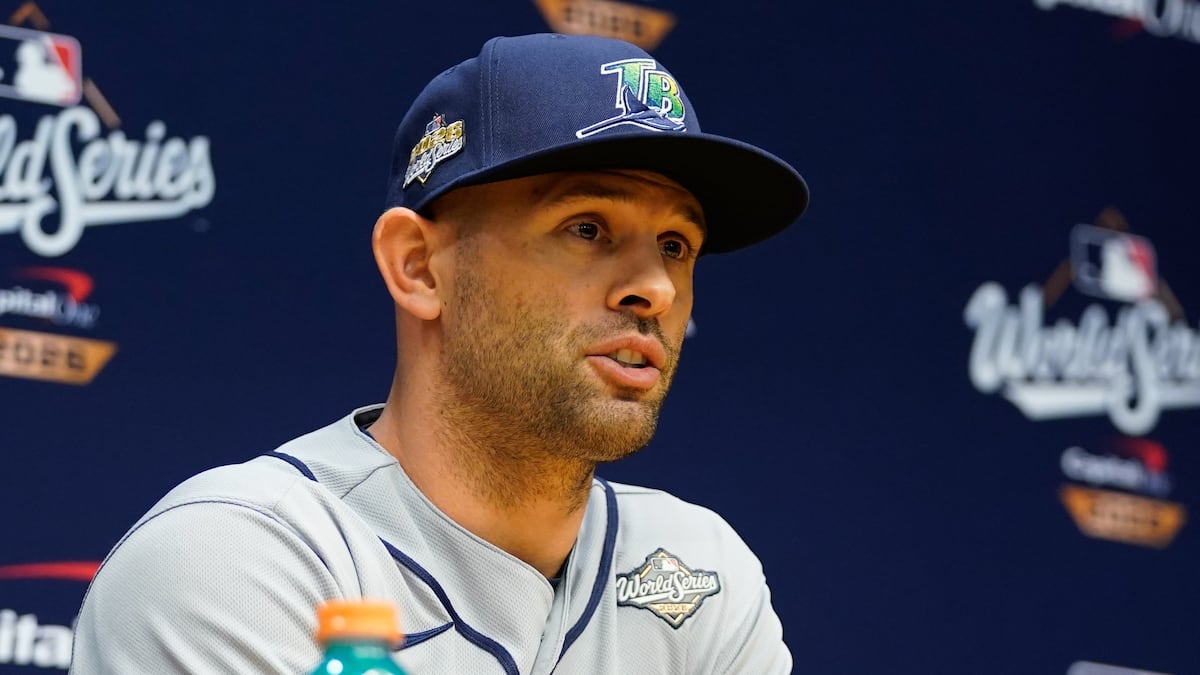
The calendar turns, and the roster starts to loosen
The season ended with the bright, bruising theater of a World Series, but for Tampa Bay, the morning after has arrived with its usual hard edges. Free agency declarations are not glamorous. They do not come with champagne or a citywide parade. They arrive like winter light through a crack in the blinds, revealing what time has taken and what the front office must now decide.
Freddy Peralta, Gavin Lux, and Jorge Mateo have entered free agency, and Nick Martinez and Cedric Mullins are expected to join them soon. That is not a cosmetic change. That is the kind of roster churn that reminds you baseball is less a single season than a long series of negotiations with reality.
The Rays have built a modern identity on this truth. They do not treat continuity as a birthright. They treat it as a luxury, one that must be earned, maintained, and sometimes surrendered. The organization’s genius has always been its willingness to move before the market moves first. But even for a club accustomed to constant motion, this is a significant stretch of uncertainty.
What these exits say about Tampa Bay now
Peralta’s name stands out first because starting pitching always does. A quality arm changes the temperature of a winter. It changes the mood in March. A club can survive a great many things; it can even survive a thin lineup for stretches. Starting depth, though, is the spine. Lose enough of it, and the season begins to bend.
Freddy Peralta has long represented the kind of pitcher front offices love and managers trust: electric enough to miss bats, sturdy enough to carry meaning in a rotation. If he is out the door, Tampa Bay loses not merely innings, but tone. The staff gets younger, thinner, or both.
Then there is Gavin Lux, whose appeal has always lived in the space between promise and production. Infielders like Lux matter in October and in the daily grind alike, because they allow a team to keep moving when injuries or matchups start nibbling at the edges. Jorge Mateo brings a different sort of value: speed, defensive range, the kind of athletic chaos that can tilt a game with one sharp turn or one stolen base. Lose him, and you lose a particular strain of energy.
Nick Martinez and Cedric Mullins would deepen that sense of subtraction. Martinez can smooth over the rough spots on a staff; Mullins, when right, brings a center-field presence that is both practical and emotional. A good defender in center can make a stadium feel smaller. A trustworthy bat at the top or middle of a lineup can make the dugout feel less anxious. The Rays know this better than most.
The cost of a title chase is often paid in the quiet, ordinary departures that follow it.
Tampa Bay’s machine depends on movement — but not all movement is equal
This is where the Rays’ model becomes both admirable and vulnerable. Their front office has spent years proving that roster renovation can be a competitive advantage. Their player-development system, trade discipline, and valuation of marginal gains have allowed them to punch above their payroll weight, and often without apology. They do not cling to names. They cling to function.
Still, there is a difference between smart flexibility and too much turnover. Baseball teams are living organisms. They need familiarity in the room, voices that know the tempo of a six-month season, players who understand the strange little language of a clubhouse in late July, then again in the pressure chamber of October. When too many pieces drift away at once, even an efficient machine can start to sound hollow.
That is why this moment matters beyond the names themselves. It is a test of whether Tampa Bay can replace production without replacing identity. The Rays have passed that test before. They have also felt its sting when the margins went thin and the replacements arrived just a beat late.
If you want the broader frame, this is what baseball has become for many smart teams: a constant attempt to rebuild the same car while it is still moving. The best organizations do it without obvious panic. The rest do it with excuses. Tampa Bay has usually belonged to the first group.
My read: this is less a collapse than a warning flare
I’ve always believed the most revealing days in baseball are not the days of victory, but the ones that follow it. Championships and near-misses alike can disguise fragility. They paint over structural stress. Then the offseason starts, the accounting begins, and the truth walks in wearing ordinary clothes.
The Rays are not suddenly becoming something they are not. They are not abandoning their identity, nor should they. But there is a point at which relentless roster efficiency can begin to resemble a kind of self-inflicted amnesia. Teams need a heartbeat as much as they need optimization. They need a few players the room recognizes before the spreadsheets are opened.
Tampa Bay’s challenge now is not philosophical so much as practical: can it keep enough pitching, enough athleticism, enough versatility, and enough continuity to make the next season feel like a continuation rather than a reset? That is the real question hiding beneath the free-agent filings. Not who is leaving, exactly. What, if anything, remains stable once they do.
What to watch as the market opens
The next few days should tell us whether these departures are the start of a larger exodus or simply the first visible seam in the offseason fabric. The Rays may already have replacements in mind, because they usually do. They may view these exits as painless, even planned. But the league has a way of punishing teams that overestimate how easily one useful player can be swapped for another.
Watch the pitching depth first. Watch whether Tampa Bay commits to preserving veteran steadiness or leans even harder into youth and improvisation. Watch the outfield and infield flexibility, too, because teams that lose interchangeable pieces are often the ones that later discover how hard it is to assemble them again.
The confetti is gone now. The winter work has begun. And for the Rays, the real season may have started the moment the signatures stopped.
More from Straight From The Bench
Comments
Join the conversation — sign in to leave a comment.
Sign in to commentRelated Stories
Cedric Mullins Free Agency: Rays Decline Mutual Option
Cedric Mullins is back on the market after Tampa Bay declined its mutual option. The Rays keep the flexibility; the rest of MLB gets a left-handed center fielder with a real track record.

Milwaukee Brewers World Series gear: championship celebration starts now
The Brewers finally broke through, and the merch wave is here fast. This is more than souvenirs — it’s Milwaukee cashing in on a historic sports moment.
Bo Bichette Mets Opt-In: Queens Gets Another 2027 Run
Bo Bichette is sticking with the Mets and giving Queens another year to cash in on the upside. The contract choice says plenty about where both sides think this thing is headed.