
IndyCar D.C. Race: Freedom 250 Rolls Past the Museums
Speed and culture are set on a collision course beneath the marble and the flags.
 Beatrice Kensington6 min read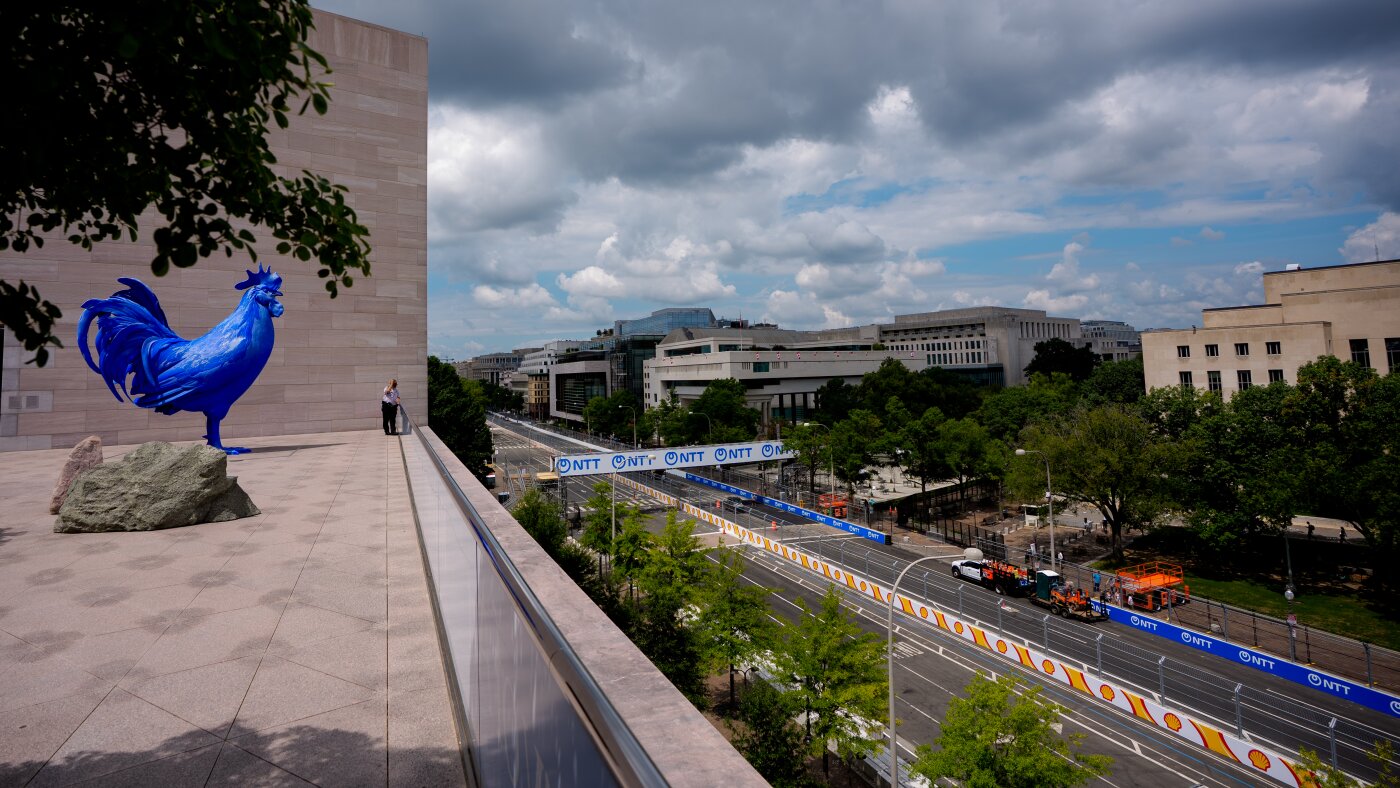
A race built to dazzle, and to unsettle
Washington has seen its share of pageantry, but this weekend’s IndyCar procession around the National Mall carries a peculiar charge: more than two dozen drivers, 147 laps, and a ribbon of asphalt laid through the symbolic center of the republic, with the National Gallery of Art and three Smithsonian Institution museums standing close enough to feel the tremor of the thing.
The Freedom 250 Grand Prix is being sold as a celebration, a high-octane salute to the country’s milestone birthday. That part is easy to understand. America has always loved to drape itself in motion, to turn speed into metaphor and machines into spectacle. But there is another American habit at work here too: the conviction that if something can be staged in front of a monument, it should be.
The art world, predictably, hears a different music. Not alarmism, exactly. More the cautious intelligence of institutions that have spent generations defending fragile objects from fire, flood, vibration, humidity and the casual confidence of people who assume stone buildings are immune to human error.
A celebration meant to honor the nation should not leave its cultural memory holding its breath.
What the museum concern is really about
The worry is not that a car will brush a canvas hanging in a gallery window. It is subtler than that. Museums live with a thousand small vulnerabilities, and the most important ones are often invisible to spectators standing outside in summer heat with a camera in hand. Sound pressure, ground vibration, temporary changes in traffic patterns, crowd density, even the peculiar strain of a weekend built around spectacle — all of it can matter when the objects inside are centuries old and often irreplaceable.
That is why the caution from art experts should not be waved away as elitism or pearl-clutching. The institutions clustered around the Mall are not decorative extras in the capital’s landscape. They are part of the country’s civic inheritance, houses of memory holding everything from American portraiture to natural history, from the intimate to the monumental. A race course passing near them is not merely a logistical choice. It is a statement about what gets priority when the nation stages itself for public consumption.
And yet organizers say they do not expect damage. They are right to insist on planning, engineering and safeguards. Modern sports does not move forward on vibes alone. Barriers are built, routes are inspected, crowds are managed. But confidence is not the same thing as certainty, and certainty is the one luxury museums can never afford.
Washington as backdrop, and as participant
There is a reason this event feels larger than a calendar item on the IndyCar Series schedule. Washington is not a neutral venue. It is a stage already loaded with meaning, where every parade, protest, ribbon-cutting and military flyover carries its own argument about the country.
A race on the Mall turns the capital into a civic amphitheater. That may thrill some people precisely because it fuses two American religions: horsepower and heritage. The gleam of the cars against the limestone facades, the blur of motion beside monuments meant to suggest permanence — it is a visual contrast made for television and phone screens. The images will be irresistible.
But spectacle always asks a bill to be paid somewhere. In this case, the payment may not be physical harm. It may be something less measurable: the slow dilution of sacred space into event space, the habit of treating national institutions as props for a weekend campaign to generate awe.
We have seen this pattern before in other forms. Stadium districts swallowing neighborhoods. Historic districts pressed into service for marketing campaigns. Public spaces recast as “activation zones,” as if civic life were just another branding problem. It is never only about the event itself. It is about what kind of city, and what kind of country, gets normalized once the barricades come down.
The human cost hidden inside the fanfare
There is a temptation, especially in motorsport, to romanticize risk. The roar, the precision, the thin line between control and catastrophe — it all comes wrapped in adrenaline. Drivers understand that bargain. Fans do too. What gets lost is that the places we choose for these displays do not consent in the same way.
The museums around the Mall exist to protect what survives us. They are the opposite of speed: patient, archival, deliberately out of time. That is why the tension here feels so pointed. A race can honor ambition, engineering and celebration. It can also reveal how lightly Americans sometimes treat the institutions charged with preserving beauty and truth after the cameras leave.
I have no quarrel with making space for sport in public life. Sport belongs there. It is one of the few things left that can still draw strangers into a common mood. But I do quarrel with the notion that every iconic square inch of the country must be made useful to entertainment. Some places should remain difficult to use, precisely because they are valuable.
That is the old civic bargain, though we seem to forget it whenever we get dazzled by a strong enough image. A museum is not a backdrop. A monument is not a traffic island. And a national capital is not a theme park for whatever event can best sell the feeling of America for two days in late summer.
What to watch when the green flag drops
If the weekend goes off cleanly, organizers will claim vindication and probably deservedly so. The race will have delivered on its promise of novelty, and plenty of viewers who would never tune into a standard oval or street circuit may discover something new about the sport. That matters. Motorsports, like all sports with a niche-to-mainstream hunger, needs fresh audiences.
Still, the real verdict will not come from lap times. It will come from the afterimage: did the event make Washington feel expanded, or merely commandeered? Did the city gain a memorable civic moment, or did it surrender one more slice of public space to the logic of spectacle?
For readers who have been following the broader sports conversation, this debate rhymes with the unease around how modern athletics uses place and power — whether in a practice-field setup like the one in our Patriots joint practice vs. Eagles coverage or in the way fans react when tradition collides with showmanship. Different sports, same pressure: what does the event owe the place that hosts it?
The answer, if we are being honest, is more than a few permits and a reassuring press statement.
Washington deserves a race worth watching. It also deserves museums that do not have to brace for impact just because America wants a prettier postcard.
Sunday will tell us whether those two truths can coexist. If they can, splendid. If they cannot, the country should think carefully before mistaking noise for national pride.
More from Straight From The Bench
Comments
Join the conversation — sign in to leave a comment.
Sign in to commentRelated Stories
Carlos Sainz Williams contract: F1 team locks 2027 lineup
Sainz is staying put, Albon is already extended, and Williams has its 2027 driver pairing set. That is not noise — that’s a front office building around a plan.

Isack Hadjar Dutch GP Injury Update: Lawson Steps In
Isack Hadjar will miss Zandvoort after a wrist injury in the break, and Liam Lawson gets the call. In Red Bull land, even temporary seats come with permanent consequences.

NASCAR driver home break-in case: Cobb County accusations deepen
A metro Atlanta man now faces accusations tied to two separate home break-ins, including one involving a NASCAR driver who died in a plane crash.