
Mariners Blowout Loss: Seattle’s Rotation Worry Deepens After Cubs Rout
A second ugly start in six days leaves the Mariners staring at a harder truth.
 Beatrice Kensington6 min read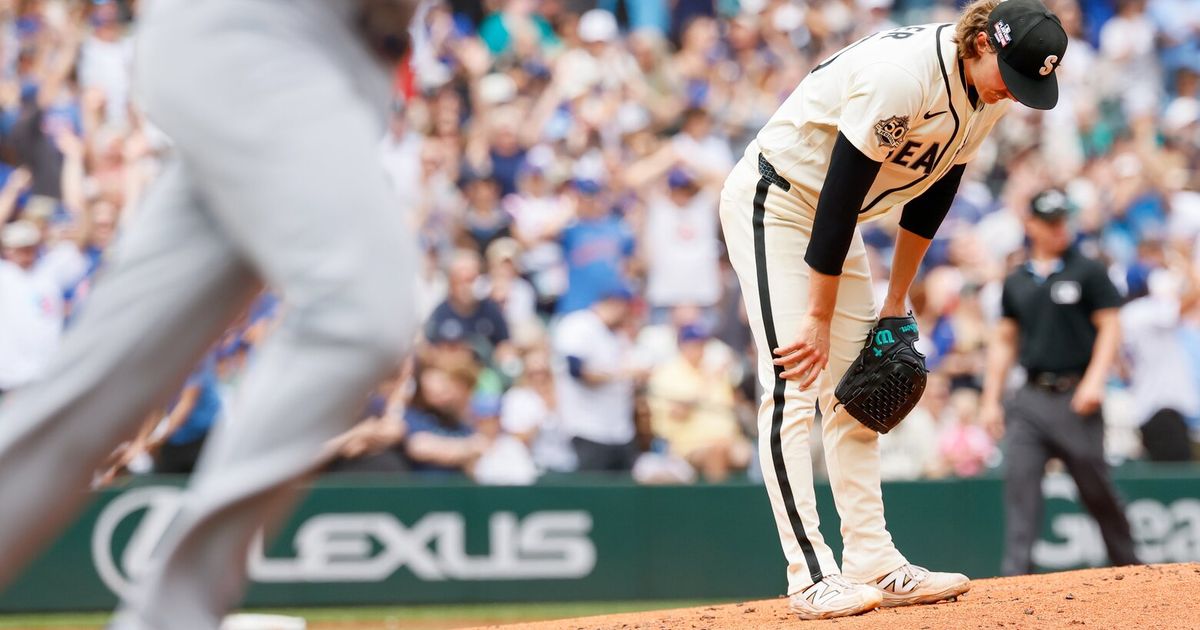
Bryce Miller’s night turned into another warning flare
The scoreboard at Wrigley did more than bruise the Mariners. It stripped away the comforting illusion that one bad night was just a bad night. Seattle’s 19-2 loss to the Cubs arrived as the second time in less than a week that a Bryce Miller start ended with the club taking on water from the first inning onward, and this one had the sour smell of a team not merely beaten, but exposed.
Miller, who is not entirely healthy and has not sounded eager to pretend otherwise, was never going to be the whole story. Yet in baseball, the starting pitcher is often the weather vane, the first body to catch the wind. When he tips sideways, everybody else spends the evening fighting the storm.
The Mariners have lived for years with the tension between front-line pitching and a lineup that can go cold at exactly the wrong time. What happened against the Cubs was worse than ordinary imbalance. It was a reminder that even good teams can start to look brittle when the rotation’s rhythm is broken and the offense cannot buy a crooked number before the game tilts into a rout.
A club built on pitching cannot absorb too many nights like this
Seattle’s identity has been defined by arms, by the promise that the mound can carry the burden even when the bats are slow to arrive. That is not just a baseball philosophy; it is organizational muscle memory. The Mariners have long asked their rotation to be both shield and salvation, and for stretches that has worked. But shields crack when they are struck repeatedly.
Two blowouts in such close proximity do more than ruin a box score. They test the emotional temperature of a clubhouse. They ask whether the team is merely stumbling through a rough patch or whether the deeper structure is being stressed by injuries, workload, and the simple grind of a long season. A healthy Bryce Miller gives Seattle a chance to set the tone; a compromised Miller turns those chances into early exits and quiet dugouts.
And the rest of the roster feels it. Bullpens can be emptied in a hurry during nights like this, which means tomorrow’s manager’s card is written with fatigue in mind. Offenses, too, start pressing, trying to erase deficits with one swing instead of stringing together the patient innings that usually decide a season.
A club that claims pitching as its religion cannot keep walking into the church with a cracked bell tower.
The Cubs did not just win; they revealed the seam
Chicago’s Cubs were not interested in drama or mercy. They kept adding, and adding, until the game stopped looking like a contest and started looking like a cautionary exhibit. In blowouts, the opponent’s quality matters less than the manner of the surrender. Seattle did not merely lose; it lost shape.
That distinction matters. A tight defeat can be filed under bad breaks or a bullpen hiccup or a line drive at somebody’s shin. A 19-2 beating is different. It is the kind of result that lingers because it speaks to every layer at once: the starter’s condition, the bullpen’s availability, the lineup’s inability to answer, the defense’s frustration, the manager’s options narrowing by the inning.
For a team with postseason ambitions, embarrassment is not the only cost. So is the invisible math of confidence. A dugout can survive one rough skid if the next day feels like a reset. It becomes harder to reset when the same script keeps reappearing in a different uniform.
Why Miller’s health is the real plotline now
The baseball season has a cruel way of turning a single body part into the axis on which an entire month turns. Miller’s health is not a side note. It is the central question. If he is trying to pitch through something, Seattle must weigh short-term competitiveness against the longer view of preserving a starter who matters to the club’s ceiling.
That is where the modern game lives now: in the ache between what a team needs tonight and what it might need in September. The Mariners do not have the luxury of treating rotation health as an afterthought. Their margin is too thin, their division too unforgiving, their road to October too dependent on stable starting pitching.
I have spent enough seasons watching clubs pretend they can out-tough a physical problem to know how that movie ends. The body usually wins. The calendar always does. Seattle would be wise to remember that a pitcher who insists on grinding through discomfort is not proving devotion; he may be paying interest on a debt the club will be billed for later.
I think this is the kind of stretch that separates a team with ambition from a team with just enough narrative to sound ambitious. The former responds by protecting the pitcher, stabilizing the bullpen, and making peace with the occasional ugly decision. The latter keeps chasing the appearance of resilience until the season’s useful parts are worn thin. The Mariners are not there yet. But they are standing uncomfortably close to that line.
What Seattle has to clean up before the next series
First, the club needs clarity on Miller, because ambiguity is where rotations go to rot. Second, it needs its offense to stop treating early innings like a warm-up lap. Falling behind before the lineup has even settled into the game invites exactly the kind of avalanche Seattle just suffered.
There is also a broader clubhouse lesson here. Teams that pride themselves on professionalism can still become careless in the face of repeated failure. They start to chase the one big swing, the one emphatic answer, the one emotional release. Baseball rarely rewards that impulse. It usually asks for restraint.
Seattle has seen adjacent examples of how quickly a season can be bent by one health issue or one roster imbalance, whether it is a sudden injury scare such as the Ashton Jeanty injury update in a different sport’s calendar or the kind of lineup churn that forces teams to rethink their assumptions. The details change, but the lesson does not. Depth is not a luxury. It is the tax you pay for playing long enough to matter.
The Mariners will have to answer quickly, because the next loss does not care how embarrassing the last one felt. The season keeps moving. And the cracks, if left alone, tend to widen in the dark.
More from Straight From The Bench
Comments
Join the conversation — sign in to leave a comment.
Sign in to commentRelated Stories
Yankees Place Ryan Weathers On 15-Day IL: Bellinger Returns
Cody Bellinger is back where the Yankees need him, but Ryan Weathers landing on the injured list keeps the rotation ledger messy. One step forward, one sore elbow away from trouble.
Luis Robert Jr. Home Runs: White Sox Return Turns Loud
Luis Robert Jr. returned to Rate Field and answered a rough night with two home runs, reminding Chicago what leaving can sound like.
Kade Anderson MLB Debut: Mariners Prospect Relishes Special Day
Kade Anderson’s debut at T-Mobile Park was less a cameo than a rite of passage. For the Mariners, it was a glimpse of the future with the present watching closely.