
Marshall Manning scholarship offers: Peyton's freshman son draws eyes
The surname opens doors, but the arm, timing and burden are real.
 Beatrice Kensington6 min read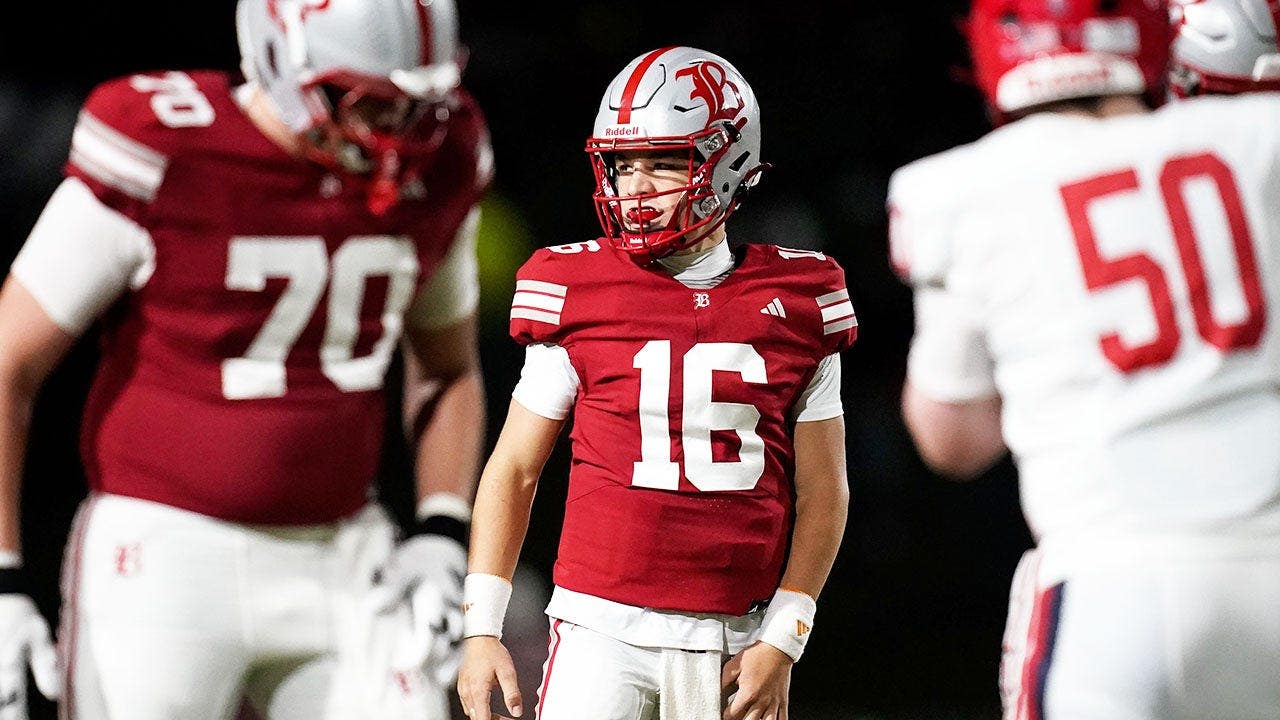
The Manning name still bends gravity
Marshall Manning has hardly settled into the ordinary work of a high school freshman quarterback — the classroom juggling, the weight room grind, the long afternoons learning what the defense is taking away — and already the college game has started circling. Four Division I offers, including Miami and Ohio State, tell you this is no ordinary recruiting story. They tell you the name on the back of the jersey still arrives with its own weather system.
That is the first truth here, and maybe the least interesting one. The Manning family has spent decades living inside the architecture of American football’s memory. Peyton was the precision artist, Eli the bruised survivor, Archie the elder statesman whose grace made the whole line feel inevitable. Now Marshall is being discussed before he has had the chance to accumulate the basic evidence that usually earns attention: reps, film, scars, a body of work. He is not just a prospect. He is a forecast.
Why schools are recruiting so early
Early offers are no longer unusual, but they are still revealing. Programs do not hand out Division I invitations to a freshman quarterback unless they believe the upside is real enough to justify the noise. In this case, the noise is enormous. A Manning on campus can change the temperature of a recruiting room, and the programs that move first are often betting that the family name will attract not just talent but habits — preparation, resilience, the expectation that football is a craft rather than a hobby.
The other piece, of course, is the modern recruiting economy. Schools now chase ceilings far earlier than they once did, hoping to plant a flag before rivals can do the same. Quarterbacks are especially prized because the position is half mechanics, half command, and all projection. If a young passer shows poise, size, arm talent, or just enough flashes to let evaluators squint and imagine what he could be at 18, the offers begin to stack up. Marshall Manning fits the kind of profile colleges have learned to treat like a startup investment: risky, premature, potentially transformative.
For readers who follow the longer football theater, this is the same logic that has made family names matter in other corners of the sport. The son of a famous player does not inherit greatness, but he often inherits the operating manual. And in a profession that punishes the unprepared, that can be enough to set off a bidding war.
The burden that comes with a famous last name
There is a tenderness people often miss when they turn a teenager into a headline. Being Peyton Manning’s son may sound like a luxury, and in one sense it is. But it is also a form of constant comparison, a life lived with a ghost at your shoulder. Every throw is measured against a myth. Every coach’s compliment gets translated into, “Yes, but what about Peyton?” That is a hard room to grow up in.
A famous surname can open the gate. It can also make the walk through it lonelier.
Marshall does not need to be Peyton Manning to justify his own path, though the sports industry has never been especially gentle about allowing that distinction. It wants lineage to become sequel. It wants the son to resemble the father so cleanly that the whole thing feels like a rerun with better lighting. But football does not work that way. Arm angles change. Bodies mature differently. The game moves faster, hits harder, and asks for a sturdier emotional center than genealogy can provide.
That is why the most interesting part of this story is not the offer count. It is the timetable. We are talking about a freshman who has scarcely begun to show us who he is. There is something almost comic about the speed of the attention, but there is also something revealing about it. American football, more than most sports, remains addicted to inheritance — to the comforting idea that talent can be tracked through family trees the way certain nose shapes or eye colors can. It is romance, and it is commerce.
Miami, Ohio State and the recruiting machine
The schools already involved are not decorative names. Ohio State and Miami Hurricanes do not offer quarterbacks for the wallpaper. They offer because they think they can win the room, the family dinner, the long game of trust that decides these things years before signing day.
And that is what makes this so fascinating: the colleges are not merely evaluating Marshall Manning, they are evaluating the ecosystem around him. Can they handle the spotlight that arrives with the surname? Can they build a recruiting relationship without turning it into a pageant? Can they persuade a young quarterback that he will be developed as a player and not merely showcased as a brand?
That distinction matters more than ever. College football has become a marketplace where image and identity are often packaged before a player has earned either. The Manning attention brings more cameras, yes, but it also brings the temptation to mistake visibility for readiness. Some prospects are too young to be crowned, even as the crown is being fitted.
If you want a nearby comparison, look at how we now talk about marquee quarterbacks in the broader college landscape, whether it is the constant pressure on top passers or the way programs sell future greatness before the future has even taken shape. Our own recent look at Sean Payton’s Broncos reset ahead of the Chargers had a different sport and a different level, but the same principle humming underneath it: football organizations are always chasing certainty in a game that keeps punishing them for believing they’ve found it.
What this means for Marshall Manning — and for everyone around him
Here is my read, and I say it as someone who has watched enough football families to know how quickly public affection can become public entitlement: Marshall Manning should be allowed to become interesting on his own timeline. The offers are real news, yes. They are also the beginning of a long and uneven rite of passage. The first scholarship is not a verdict. It is a starting gun.
And if you are looking for the larger cultural signal, it is this: the sport still craves dynasties because dynasties make fandom feel hereditary, almost civic. They reassure people that football has memory, that excellence can be passed down like a watch or a porch swing. But the game has changed. The recruiting machine is faster. The scrutiny is harsher. The adolescence is more public. In Peyton Manning’s day, a quarterback could develop in relative shadows before the nation started asking questions. Marshall Manning will not enjoy that luxury.
I do not think that is automatically a tragedy. It can sharpen a player, if the people around him keep the noise in its proper place. But it can also flatten a young athlete into a family logo, which is a cruel thing to do to a kid still trying to learn the difference between promise and prophecy. The colleges making early moves would do well to remember that they are not just recruiting a surname. They are recruiting a teenager.
The offers will keep coming. The chatter will grow louder. The comparisons will arrive whether anyone invites them or not. Marshall Manning does not need to outrun the legacy today. He only needs to keep building a life strong enough to carry it.
More from Straight From The Bench
Comments
Join the conversation — sign in to leave a comment.
Sign in to commentRelated Stories

LJ Martin Injury Update: BYU Star RB Out 4-6 Weeks
LJ Martin’s lower-body injury changes the math for BYU fast. The Cougars now have to survive a brutal stretch without their bell cow.
Lamar Jackson Ankle Sprain Update: Ravens Face Unusual Wait
Lamar Jackson’s ankle sprain has landed in the gray area no contender wants. Baltimore now has to plan for uncertainty, not certainty.
Penn State coaching search: Franklin firing becomes a warning
Penn State went chasing a ceiling and found a hole in the floor. This is what happens when a proud program swings big and misses the timing, the fit, and the fallout.