
Michigan Athletics Investigation: Warde Manuel’s Tenure in Jeopardy
The spotlight has widened, and the man at the top is no longer standing outside the frame.
 Beatrice Kensington6 min read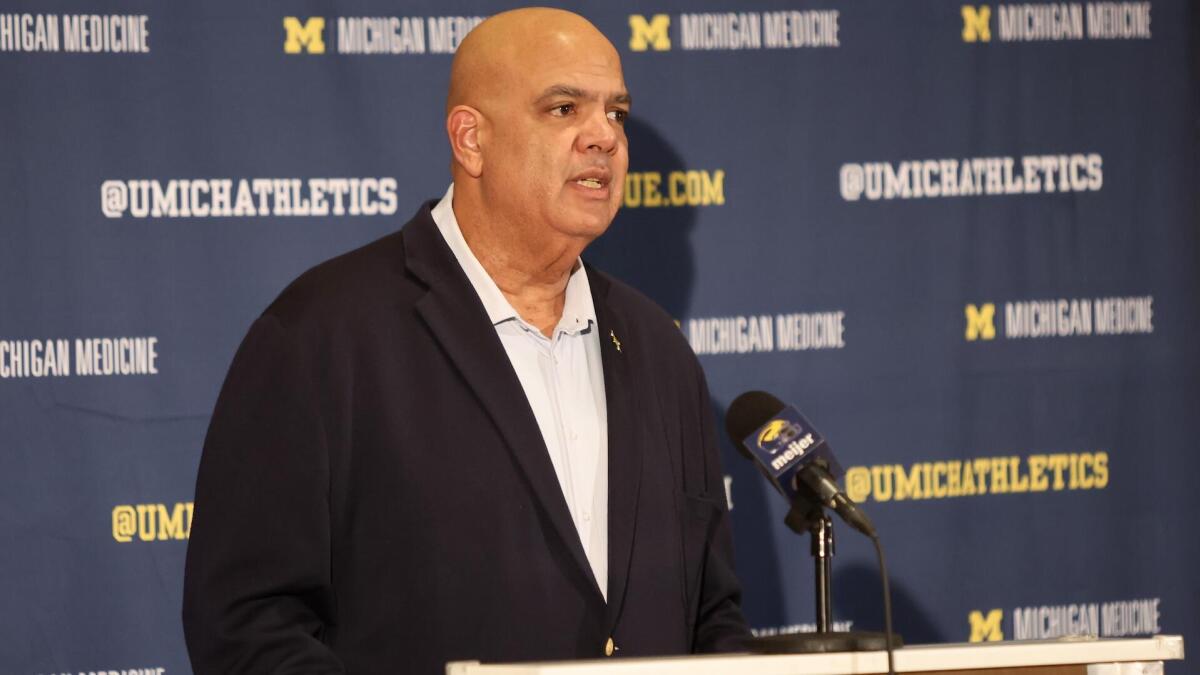
Michigan has arrived at one of those institutional moments that feels less like a headline than a reckoning. The Board of Regents is set to review the findings of an independent investigation into the culture inside the athletic department, and with that comes the uncomfortable truth that the inquiry has climbed all the way to the top. Warde Manuel, the athletic director who once represented stability, now finds his own future under the same gray light that has been cast over the program around him.
This is not just about one administrator’s job security. It is about what kind of place Michigan wants to be when the applause dies down, when the maize and blue is folded back into the drawer, when the banners in the rafters stop doing the talking. Big-time college athletics has always trafficked in contradiction — noble rhetoric wrapped around ruthless ambition — but certain universities still insist on believing their own mythology. Michigan is one of them. That is what gives this moment its sting.
The Regents Are Not Reviewing a Spreadsheet
A board meeting can sound procedural, even bloodless, until you remember what sits underneath the agenda item: people, careers, silence, and the long afterlife of bad decisions. The regents are not merely being asked to sign off on a report; they are being asked to decide whether the athletic department’s leadership can be trusted to shape the institution’s future.
That matters because athletics at Michigan is not some decorative side wing of campus life. It is a civic engine, a cultural export, and a pressure cooker all at once. The department is tethered to the school’s identity in a way that most universities can only envy. That kind of prominence brings scrutiny, and scrutiny brings consequence. Michigan Wolverines fans know this well. Success buys patience, but not forever.
The fact that Manuel’s tenure is now part of the conversation tells you the investigation has not stopped at the level of assistant coaches or isolated incidents. It has touched the architecture of authority.
What a Culture Investigation Really Means
In college sports, “culture” is one of those words administrators reach for when the language of rules and violations no longer feels adequate. It can mean behavior. It can mean leadership habits. It can mean who gets protected, who gets heard, and who is left to absorb the damage. Most of all, it means the atmosphere that allows certain things to fester in plain sight.
There is a reason these reviews feel so consequential even before every detail becomes public. A department does not drift into dysfunction overnight. It acquires it gradually, through tolerance, through loyalty mistaken for virtue, through the belief that winning can launder weak judgment. When an independent investigator begins pulling at those threads, the fabric seldom survives unchanged.
In college athletics, the most dangerous word is often “family,” because it can turn accountability into a betrayal.
Michigan is not alone in this. Schools across the country have spent the past decade learning that winning programs can also be environments where oversight gets softened, where complaints get muffled, where the people tasked with protecting the institution become invested in protecting the image instead. The difference here is scale. At a place like Michigan, every internal fracture echoes far beyond Ann Arbor.
Warde Manuel and the Cost of Being the Face
Manuel has long been treated as the sort of athletics director universities covet: composed, connected, and capable of managing a sprawling department that includes football, basketball, and all the Olympic sports that rarely get the same oxygen. He has stood at the intersection of money, tradition, and expectation. That role is always precarious. It becomes dangerous when the institution decides it needs not just answers, but a reset.
My own view is that college athletics has entered a period where the title “administrator” carries less immunity than it once did. We have watched enough institutions hide behind process while the culture remained untouched. At some point, the keeper of the process becomes part of the story. That is the burden Manuel now faces. Not guilt by association, exactly. Something closer to stewardship by implication.
I have covered enough athletic departments to know this much: the public usually sees a scandal as a discrete event, a flare in the night. The people inside the building experience it as weather. It changes the temperature in every room. Coaches start speaking more carefully. Staffers weigh every hallway conversation. Alumni ask what they are not being told. The institution, which once projected certainty, begins to sound like it is clearing its throat.
There is a historical pattern here that should make Michigan uncomfortable. When universities delay hard decisions in the name of continuity, they often end up paying twice: once in reputation, again in the longer-term repair bill. The smartest institutions understand that accountability is not anti-competitive. It is what keeps a competitive machine from rotting from the inside.
The Ripple Effect Across Michigan Sports
If Manuel’s position changes, the impact will not stop with one office suite. A university athletic director is the connective tissue between coaches, donors, compliance staff, campus leadership, and the broader machinery of ambition. When that node becomes unstable, every branch feels it.
Coaches want clarity. Recruits want confidence. Donors want reassurance that their checkbooks are supporting more than a headline. And the athletes themselves — the ones whose labor powers the whole enterprise — deserve to know that the adults in the room are not treating culture as a branding exercise.
This is where the human cost of these episodes often gets obscured. People talk about optics, but the real issue is trust. Once trust goes, even the wins feel thinner. A stadium can still fill. A trophy case can still shine. But the room changes.
Michigan will try to project steadiness this week, because institutions always do. Yet the board meeting is not just a review. It is a measure of whether the university believes accountability must reach as high as the pressure did.
For a program with as much history as Michigan football and as much public weight as the broader NCAA landscape, the standard ought to be simple: leadership either owns the culture or answers for it.
The next move will tell us whether Michigan is serious about that standard, or merely fluent in the language of it.
This story is not finished. The decisions made in that room will shape the department’s tone for years, and perhaps its conscience too. Watch the board. Watch the language. And watch whether the university chooses repair over delay.
More from Straight From The Bench
Comments
Join the conversation — sign in to leave a comment.
Sign in to commentRelated Stories

NASCAR Cup Series Atlanta Race: Quaker State 400 Live Updates
Atlanta is back in its usual role as a draft-race headache with weather lurking nearby. The Quaker State 400 should be messy, fast and worth every lap.

Mardy Fish wins American Century Championship for third time
Mardy Fish closed with control and beat out Joe Pavelski to take the American Century Championship again. Three wins now, and the celebrity golf field still belongs to a guy who knows how to handle pr
Orioles Blaze Alexander Hand Injury: Baltimore’s Break Gets Ugly
Blaze Alexander’s breakout run got clipped by a fractured left hand, leaving Baltimore with another roster puzzle and a familiar kind of bad luck.