
Nick Kyrgios cocaine positive: wake-up call after provisionally suspended
A gifted career keeps colliding with the harder work of staying whole.
 Beatrice Kensington5 min read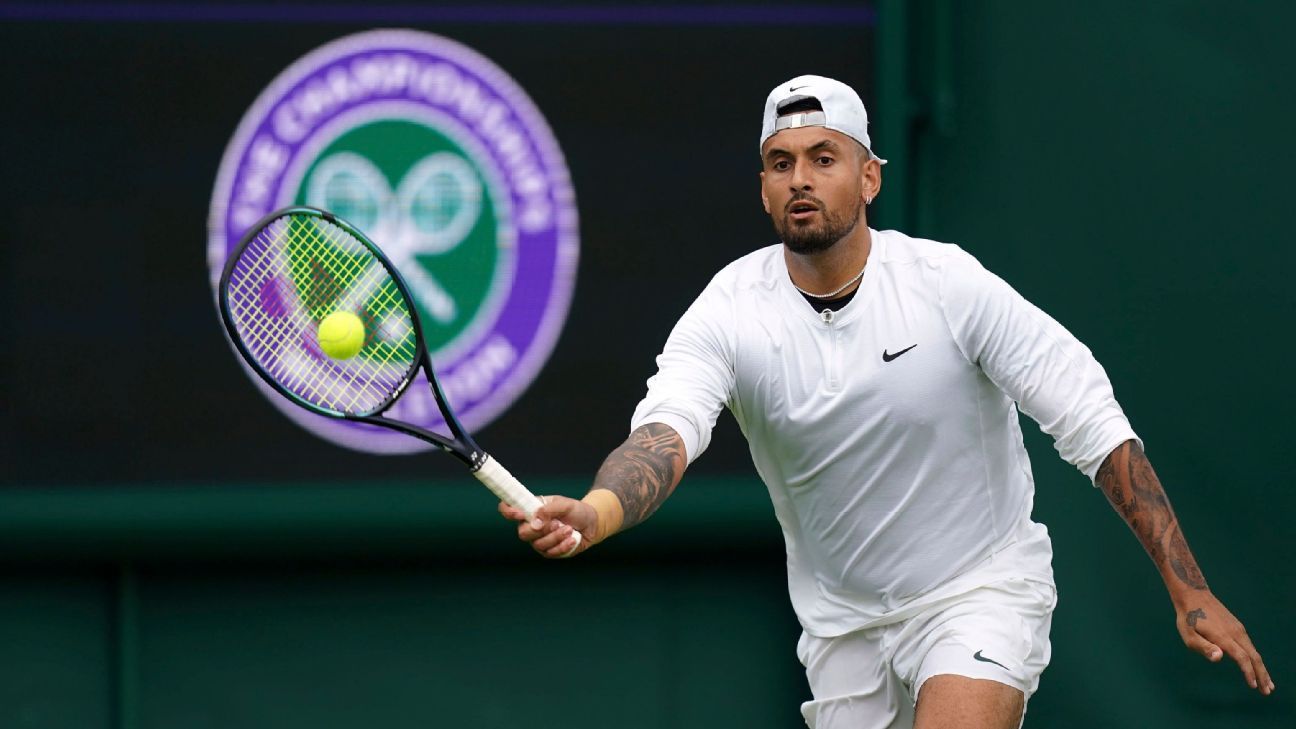
A talent too bright to ignore, and too often shadowed
Nick Kyrgios has spent years turning tennis into theater, and not always the graceful kind. The serve, the shrug, the mercurial genius at full throttle — all of it has made him one of the sport’s most magnetic figures since his run to the Wimbledon final in 2022. Now, the story around him has shifted again, and this time the stakes are not about missed returns or a bad afternoon on grass. They are about a positive test for cocaine and a provisional suspension, a sentence that lands with the dull force of something far more serious than another Kyrgios headline.
There is no easy way to dress this up. A player who has lived for years at the edge of control has acknowledged crossing into a place tennis cannot ignore. The sport, for all its elegance and self-mythology, has long had to grapple with the human beings inside the white lines — brittle, brilliant, messy, vulnerable. Kyrgios has never pretended to be a monastery on two legs. But even by his standards, this is a hard fall.
What the provisional suspension means for Kyrgios
A provisional suspension is not a final verdict, but it is not a formality either. It is tennis saying the machine must stop while the paperwork, science and discipline of anti-doping rules run their course. For Kyrgios, that means uncertainty, reputational damage and the kind of public scrutiny that follows him more closely than most players would ever tolerate.
The immediate question is less about rankings or fixtures than it is about trust. Tennis depends on a fragile bargain with its audience: the notion that what happens on court is earned in daylight, by training and nerve and craft. When that bargain is tested, even by a case that may not carry the same moral weight as performance-enhancing drugs, the sport has to enforce its rules cleanly or watch its credibility fray.
For fans, the discomfort is obvious. Kyrgios has always asked people to separate the art from the chaos. That becomes harder now. A player can be beloved for honesty, for fire, for not sanding down his edges to fit the ballroom manners of the tour. But there is a difference between defiance and self-destruction, and tennis has reached the point where it must say so plainly.
The wider cost: to tennis, to his peers, to the brand he built
Kyrgios was never merely a tennis player. He was a controversy engine, a ratings boost, a walking argument about whether the sport still had room for unpredictability. That has always made him valuable and exhausting in equal measure. He could turn an otherwise ordinary match into must-see television with a flick of the wrist and a raised eyebrow. He could also drain the oxygen from a tournament with a single outburst.
This episode hits harder because it risks turning a complicated athlete into a cautionary tale. Tennis has seen its share of damaged prodigies, but Kyrgios occupied a particularly modern niche: part showman, part truth teller, part wounded talent who seemed to know exactly how much the game needed him and how little patience it had for his behavior. That is a dangerous place to stand for long. The applause gets expensive.
For a broader look at how fragile athlete narratives can become, there’s a parallel in the way other sports treat reputation once the medical and disciplinary machinery begins to move. The NFL, for example, has a long memory for talent interrupted, as the fascination around comebacks like Najee Harris’ return path shows. But tennis is less forgiving in one crucial way: it is solitary. There is no huddle to hide in, no bench to soften the silence. When a player is suspended, the stadium spotlight follows him all the way out the door.
Kyrgios has never been tennis’s problem to solve. He has been tennis’s mirror, and right now the reflection is ugly.
The wake-up call he says he needed
Kyrgios described the doping case as a wake-up call and said he had felt helpless. Those words matter because they point beyond the tabloid frame. Whatever else he has been, Kyrgios has often sounded like a man wrestling with his own volatility in public, which can be both painfully honest and deeply destabilizing. In a sport that prizes stoicism, his emotional exposure has always made him unusual. Not better. Not worse. Just harder to package.
I’ve spent enough years around elite sports to distrust neat redemption arcs, especially the kind written before the facts are fully settled. Still, there is a difference between sentimental forgiveness and adult seriousness. If Kyrgios wants a future in this sport — and the money, attention and relevance still attached to his name suggest that he does — he will need more than regret as performance. He will need discipline as habit. That is the part celebrity never does well on its own.
And I’ll say this plainly: tennis can survive one more scandal. What it cannot survive is pretending that every crisis is just a personality quirk with better lighting. Kyrgios has been marketed, argued over, defended and denounced for so long that the sport sometimes seems to mistake spectacle for immunity. It isn’t. The rules do not bend because the player is compelling.
What happens next now matters more than the noise
The next steps will be procedural, but they will carry real weight. Kyrgios and his team will have the chance to respond. The authorities will have to do their work. And the public, predictably, will rush to judgment before the ink dries. That is the modern contract: every scandal becomes instant content, every athlete a battlefield for our assumptions.
But the larger lesson is older than social media. Great gifts do not excuse bad choices, and pain does not erase responsibility. Kyrgios has long lived in the narrow corridor between brilliance and self-harm, and this latest revelation suggests that corridor has narrowed again.
The sport will move on. It always does. Kyrgios may yet return, and if he does, every serve will sound a little louder, every silence heavier. For now, the question is not whether tennis can handle his chaos. It is whether he can.
And that answer, unlike the headlines, is still unwritten.
More from Straight From The Bench
Comments
Join the conversation — sign in to leave a comment.
Sign in to commentRelated Stories
Carlos Sainz Williams contract: F1 team locks 2027 lineup
Sainz is staying put, Albon is already extended, and Williams has its 2027 driver pairing set. That is not noise — that’s a front office building around a plan.
Fantasy Football Breakout Players 2026: the names worth chasing
Draft season is creeping up, and the smart money starts with breakouts. Here’s where the real fantasy profit lives in 2026.
Isack Hadjar Dutch GP Injury Update: Lawson Steps In
Isack Hadjar will miss Zandvoort after a wrist injury in the break, and Liam Lawson gets the call. In Red Bull land, even temporary seats come with permanent consequences.