
Red Sox trade Connelly Early for Curtis Mead: grades and fallout
Boston bought a bat, Washington bought a left arm, and both are betting on tomorrow.
 Beatrice Kensington6 min read
The trade market rarely gives you poetry. It gives you arithmetic, and sometimes a little panic dressed up as planning. On this one, the Red Sox sent left-hander Connelly Early to the Nationals for infielder Curtis Mead, a swap of two players who arrive with different kinds of unfinished business. Boston bought itself a bat. Washington bought itself another arm. Each side made a choice that tells you exactly where it thinks the pain lives.
Boston chose the bat, and that choice carries a price
The Red Sox have spent too many recent summers pretending patience is the same thing as progress. It is not. A club with playoff aspirations cannot forever talk about the future while the present keeps leaking runs, at-bats, and opportunity. Mead is the sort of pickup that makes sense when a front office looks at the roster and sees a thin infield, a lineup that can go cold too easily, and too many innings where the bottom third becomes a soft landing strip for opposing pitchers.
He is not a thunderclap. That matters. Boston is not bringing in a finished middle-order force, the kind of acquisition that alters pennant math by himself. What the Red Sox are doing is subtler and, in its own way, more revealing: they are betting that a controllable major league infielder is more useful to them right now than a 24-year-old lefty starter who still lives in the fog between projection and proof.
That is the commerce of contention. Young pitching is precious, yes, but so is the daily weight of an offense that keeps asking too much of too few bats. If Boston believes Mead can stabilize even a corner of the lineup or give them better matchup flexibility, the trade becomes less about a headline and more about survival.
In a season shaped by margins, Boston just spent a starter’s upside on the chance to win a few more innings with the bat.
Washington keeps collecting arms, and that is not a small thing
The Nationals have been living through a long, patient reconstruction that has not always felt patient to the people sitting through it. Deals like this are how a teardown becomes a scaffold. Washington can afford to look at Early and think not just about now, but about a rotation picture that still needs volume, cheap innings, and a few pitchers who might grow into something more than placeholders.
Early is appealing because left-handed starters who are young and still developing always carry a certain market weather system around them. There is a reason teams keep reaching for that profile. It is the dream of a useful starter becoming a better one, and the Nationals, who have spent years searching for durable pitching identity, can afford to dream in that direction while the standings remain a distant concern.
This is where the deal gets interesting from a roster-building angle. Washington did not simply dump an infielder for a live arm; it translated one kind of uncertainty into another. That is often how smart rebuilding works. You do not need certainty yet. You need options with future value.
For a club still sorting its next real competitive window, that is not nothing. It is the grammar of a rebuild: accumulate, evaluate, repeat.
Curtis Mead brings hope, but Boston still needs more than hope
Mead’s attraction is obvious enough. He has a major league body, a major league approach, and enough pedigree to make a front office wonder whether there is untapped offense waiting in a different uniform and a cleaner opportunity. The Red Sox are banking on fit as much as talent, which is exactly why this move feels both sensible and slightly dangerous.
Sensible, because Boston has not had the luxury of waiting for every internal answer to ripen on schedule. Dangerous, because deadline fixes have a way of looking tidier on a whiteboard than in the pressure cooker of Fenway Park, where every lost inning is amplified by the building itself. Fenway Park does not merely host baseball; it exposes it.
The old truth remains. A team can collect useful players and still never quite get the feeling of a contender unless the move answers the correct question. Mead helps if the problem is depth, versatility, or a lineup lacking one more competent right-handed presence. He helps less if the real issue is a broader shortage of top-end production. Boston’s front office has placed a careful bet here, but careful bets are not the same as bold answers.
And yet, there is a reason clubs make trades like this when they believe the window is open: they are chasing the uncomfortable, fragile belief that one more competent hitter can change the tone of an entire month.
My read: Boston is acting like a team that knows the clock is loud
I have always believed the most revealing trades are not the ones that transform a roster overnight but the ones that expose how a club sees itself. This one tells me Boston sees urgency, maybe even a little impatience, under the public language of competitiveness. That is not a criticism. It is an admission of reality. The Red Sox have too much history, too much expectation, and too many scar tissue memories to drift through another summer waiting for young players to become older and better on their own schedule.
Washington, by contrast, is behaving like a franchise that understands the long middle of a rebuild can be mined for value if you are willing to wait out the uglier parts. I respect that. It takes discipline to trade for arms when your calendar is not yet marked by October. It takes even more discipline to resist the temptation to call every acquisition a shortcut.
There is a broader baseball lesson here, and it is one that clubs with restless fan bases forget at their peril: contenders are often built less by the star move than by the accumulation of sensible ones. That is why a trade for Mead can matter more than it first appears. Not because he is a savior, but because teams that know who they are tend to spend with a cleaner hand.
Boston is trying to prove it belongs in the race. Washington is trying to make sure it is ready when its own race arrives. Those are different tempers, different calendars, different bargains with time.
What to watch next
The immediate question in Boston is whether Mead gets enough runway to matter before the next roster shuffle pushes him into the background. If he plays, the Red Sox have signaled they want the offense to be less brittle. If he sits, this starts to look more like depth theater than true reinforcement.
For Washington, Early’s path will say plenty. If the Nationals believe they found a starter they can shape, the trade will age well even without a splashy early return. If not, they still did what rebuilding clubs must do: turned surplus into possibility.
The season will keep moving, indifferent as ever. But these are the deals that quietly redraw the edges.
Boston just chose motion. Washington chose time. The bill, as always, comes later.
More from Straight From The Bench
Comments
Join the conversation — sign in to leave a comment.
Sign in to commentRelated Stories

Jeff Kent Hall of Fame: Cooperstown salute for an overlooked star
Jeff Kent built a Hall of Fame case the old-fashioned way: power, production and persistence. Cooperstown has now given his career the frame it always deserved.
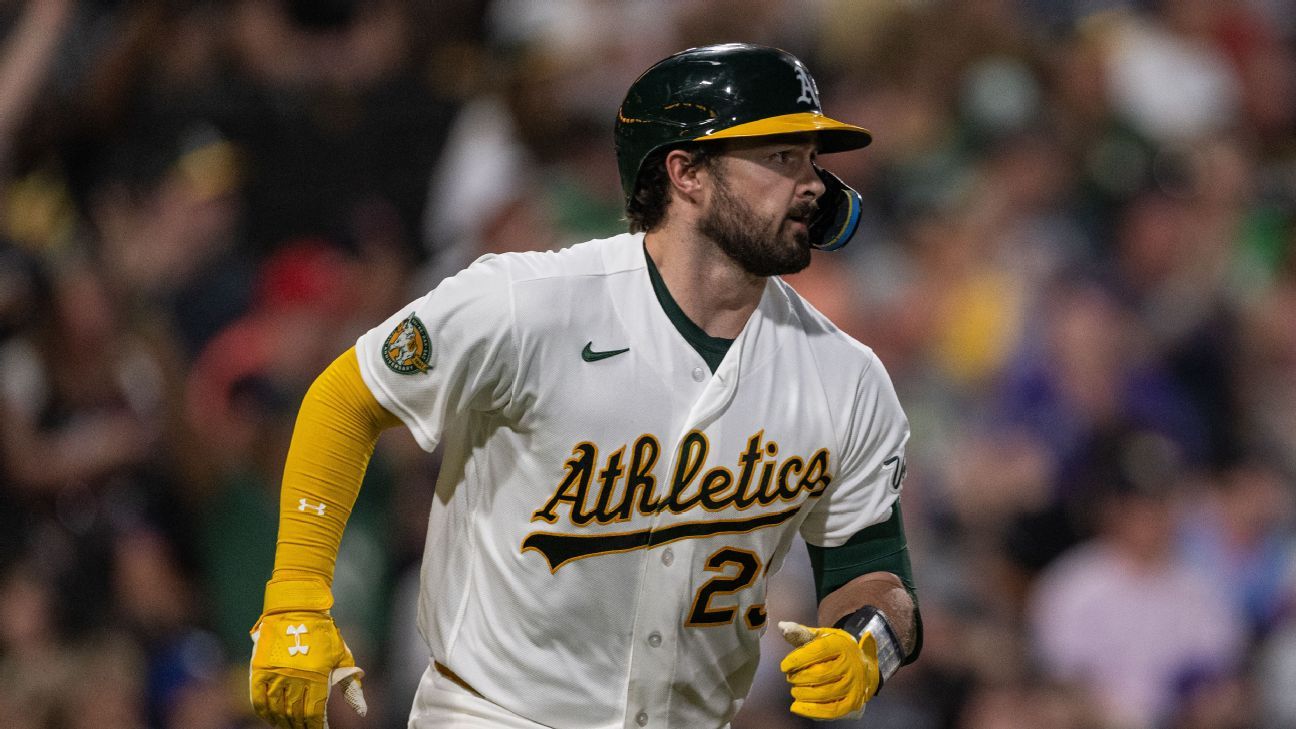
Athletics Shea Langeliers Meniscus Injury: 2026 season blow
Shea Langeliers’ torn meniscus is the kind of injury that doesn’t just trim a roster — it changes the temperature around it. For an Athletics team already taking hits, this stings hard.

Red Sox trade Connelly Early for Curtis Mead: deadline logic
Boston dealt Connelly Early to Washington for Curtis Mead, betting the elbow question and roster math favor the bat. It’s a clean deadline-style wager.