
Red Sox vs Blue Jays: Rule check on strange run-scoring play
A 15-minute pause, a fourth out, and the old chaos of baseball in Toronto
 Beatrice Kensington7 min read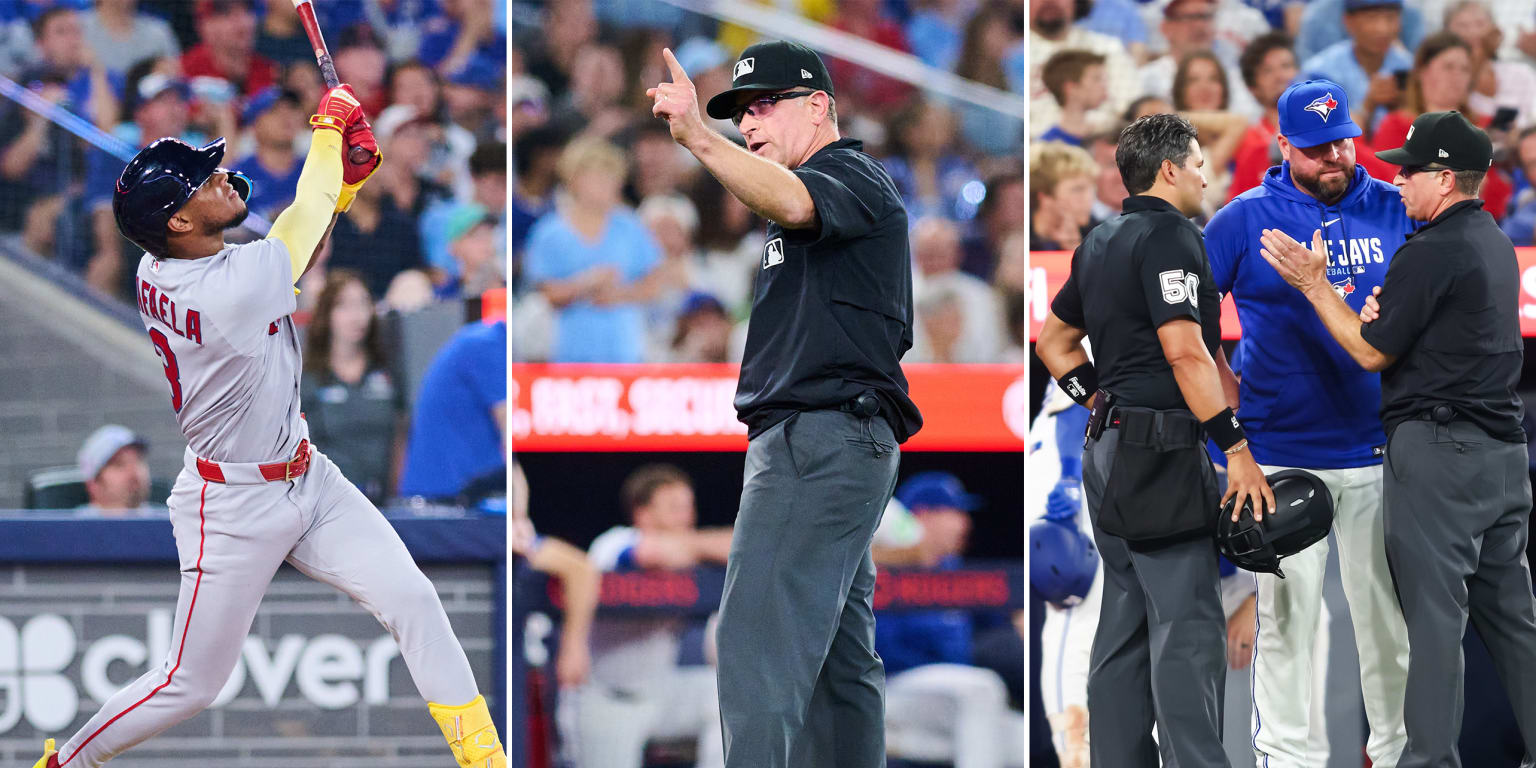
The scoreboard at Rogers Centre did not tell the whole story Monday night, and for a while neither did the men paid to keep it honest. For 15 minutes after the top of the seventh in the Red Sox-Blue Jays opener, players stood in the cold arithmetic of uncertainty while umpires sorted out a strange run-scoring sequence that left everybody asking the same blunt, old-fashioned baseball questions: Did the run count? How many outs were there? And what, in the name of the game’s stubborn little bureaucracy, is a fourth out?
Baseball has always been a sport that invites argument because it is built on layers. A pitch can be a strike in one count and not another, a runner can be safe for an instant and dead a beat later, and a ball can ricochet from the outfield wall into a ruling that feels less like athletics than jurisprudence. This one had that particular smell to it: the smell of a rulebook being thumbed open in a hurry while 40,000 people wait for someone to find the exact page.
A delay that turned a routine inning into a courtroom
The official action here matters, but so does the atmosphere around it. The game was paused because the umpires had to determine whether a run scored on the play should count, and whether an extra defensive out — the so-called fourth out — could erase it. That phrase alone has the kind of eerie charm baseball fans either love or loathe. It sounds impossible until it is not.
For those who live outside the game’s rule labyrinth, the “fourth out” is one of baseball’s stranger legal devices. On a play involving an appeal, the defense can sometimes record a later out that becomes the one that matters for scoring purposes if it prevents a run from counting. The sport does not merely allow such a thing; it expects its participants to know that the chain of outs can bend around a scoring play like wire around a fence post.
That is not a bug. It is the game.
And yet, even for a sport famous for its antiques, this kind of sequence can feel almost theatrical. Players are trained to keep playing until told otherwise, but the pause itself changes the temperature of the night. A ballgame that was moving on instinct becomes a lecture hall. The dugouts lean on the rails. The crowd buzzes with the peculiar indignation of people who know they are being asked to wait for a sentence they may not agree with once it arrives.
What the fourth out means — and why it rattles fans
Baseball’s appeal has always rested partly on its precision. Fans complain about the length, but the length is tied to the sport’s belief that every ounce of context matters. A dropped third strike is not just a missed pitch. An appeal is not just a protest. An out can be counted, uncounted, or re-counted depending on what happened before and after, and that chain reaction is what makes the game feel at once ancient and unforgiving.
This is why a play like Monday’s reaches beyond the one game. It reminds us that baseball still places enormous trust in human interpretation at the exact moment technology has made fans less willing to accept ambiguity. Replay has not simplified the sport so much as it has changed the shape of the arguments. Now the debate is not merely whether the call was right, but whether the rule itself makes sense, whether the game should still be so willing to hide its logic inside footnotes.
The Red Sox and Blue Jays were not the first teams to be caught in that machinery, and they will not be the last. But there is a cultural sting in seeing a seemingly ordinary divisional game stop dead while officials sort out an outcome that can hinge on a runner’s touch of a base, a tag, an appeal, and the order in which those things happened. The sport asks for patience. It also tests it.
Baseball doesn’t just produce drama; sometimes it produces paperwork with cleats on.
Toronto’s night, Boston’s frustration, and the league’s old habit of complication
There is a reason this kind of ruling always lands with extra force in a place like Toronto, where the building is loud, the stakes feel immediate, and the home crowd can smell a dead inning from the upper deck. The Rogers Centre is not a quiet place to begin with. Add a confusion delay and you get the sort of ambient noise only baseball can make: half outrage, half curiosity, all of it suspended until someone with authority speaks.
For the Blue Jays, any such delay can feel like a hinge moment in a season that often seems to live on its margins. For the Red Sox, it is the sort of episode that can sharpen the old grievance that baseball sometimes asks its players to compete against not just an opponent, but the sport’s own procedural fog. That is not unique to Boston, of course. Every club in the league carries its own folder of grievances. But the Red Sox, with their history and their market and their permanent place in the sport’s national argument, tend to attract these moments as if they were magnetized.
It also bears saying that the people most inconvenienced by these rulings are often the players, who have to sit in uniform while a decision is made in some interior room, and then restart the game as though their pulse has not been interrupted. That is no small thing. Baseball players are creatures of rhythm. Interrupt that rhythm, and you do not merely delay a contest; you alter the shape of what comes next.
I’ve covered enough baseball to know this: the rulebook is part of the theater
I have always believed baseball’s charm and its curse are the same thing. The game insists on a logic so intricate that it can become beautiful, then at the worst possible moment turns that logic into a public nuisance. I do not mean that as an insult. I mean it as a confession of affection. The sport’s deepest promise has never been ease. It has been the idea that order can be found inside chaos if you are willing to sit still long enough to see it.
But there is another truth here, one the modern game cannot entirely escape. Baseball is selling itself to younger viewers, to shorter attention spans, to a public that will tolerate complexity only if it feels earned. A 15-minute rules delay is earned, in a narrow sense. The sport must get the call right. Still, each pause chips away at the old romance unless the explanation is clear, visible, and swift. Fans do not mind the weirdness nearly as much as they mind being left in the dark.
And that is the real lesson of Monday night. Not the run itself. Not the ruling alone. It is the gap between what baseball knows and what baseball explains. The more elaborate the rules become, the more generous the game must be in translating them.
Boston and Toronto will move on to the rest of the series, and the standings will swallow this night the way they swallow most strange things. The box score will hold the official record, neat as a ledger. But anyone who watched the inning stall under the lights will remember the feeling: a game pausing to consult its own memory.
Baseball does that. Then it asks you to keep score.
The next inning will come quickly enough. The explanation may take longer.
More from Straight From The Bench
Comments
Join the conversation — sign in to leave a comment.
Sign in to commentRelated Stories

Bryce Harper betting video: Congress presses MLB to act
Lawmakers want Major League Baseball and its union to ban betting-fueled promotional deals after a personalized Bryce Harper greeting surfaced. The sport’s moral line is getting harder to draw.
Tim Anderson Retirement: Former MLB All-Star Hangs Up Spikes
Tim Anderson is retiring, closing the book on one of the most volatile and fascinating peaks of the modern White Sox era. The bat speed was real, the swagger was louder, and the slide from star to exi
NFL Replay Challenges: Coaches Can Now Delegate the Trigger
The league is handing coaches a little less chaos and a little more help. It might save a timeout, or it might just save a grown man from looking like he forgot his own job.