
Rockies Hunter Goodman Injury Update: Colorado loses its best bat
A shoulder strain is a small diagnosis with a very large shadow in Denver.
 Beatrice Kensington6 min read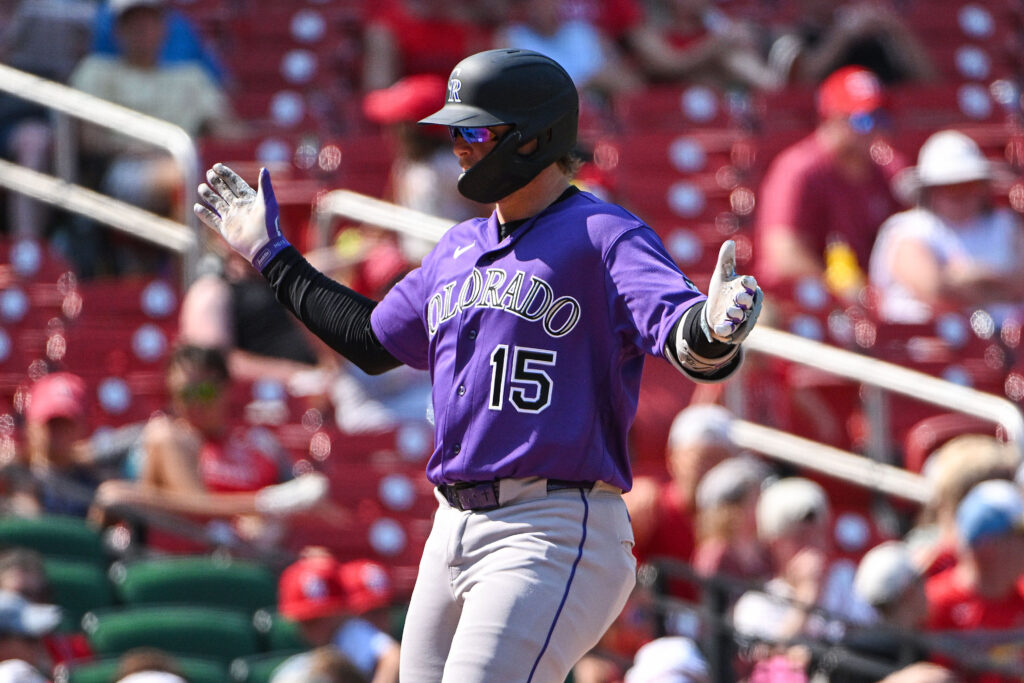
The Rockies have spent much of this season chasing the illusion that one hot week can cover a thousand structural flaws. Now they have lost the player who most often made that hope look less delusional. Hunter Goodman, their most productive bat and one of the few Colorado hitters who can change the temperature of a game with a single swing, has been placed on the 10-day injured list with a left shoulder strain, retroactive to Aug. 15. The timing is cruel in the practical way baseball is often cruel: quiet, procedural, and deeply consequential.
Braxton Fulford is up from Triple-A Albuquerque, and for the moment that is the kind of move teams make when they need a body, a glove, and a prayer. But this is not merely a catching-depth story. It is a reminder of how few everyday pieces the Rockies can afford to lose without the whole operation wobbling. Colorado’s lineup has already lived too long on thin ice; taking Goodman out of it is like pulling one of the load-bearing beams from a porch that was never built to withstand much weather.
Goodman’s absence changes the shape of the lineup
Goodman’s value to the Rockies has never been subtle. He is not just a catcher who can survive behind the plate; he is one of the rare players in this clubhouse whose offense has forced opposing pitchers to treat Colorado with a little more caution. That matters in a lineup that often leans too heavily on matchups, streaks, and good intentions. It matters even more because the Rockies play half their games at Coors Field, where raw contact can turn into damage faster than anywhere else in the sport, provided the hitter can actually find the barrel.
With Goodman shelved, Colorado loses a middle-order presence who gives at-bats some shape. The Rockies now have to ask different players to do more important things than they were hired to do. That is where clubs begin to pay the tax on roster fragility.
This is also why the Baker Mayfield injury update resonated beyond football fans: every team with ambitions, however modest, discovers that injury news is really structure news. When the best available player steps away, everybody else gets asked to become a little better than he is.
Braxton Fulford gets the immediate test
Fulford’s promotion from Triple-A Albuquerque is a chance for him to show that he can survive the shuffling demands of a major league bench. At this stage, Colorado is not asking for glamour. It is asking for competence, for a catcher who can receive the ball, work with the staff, and keep the innings moving. That sounds mundane until you realize how often mundane is the first thing to disappear when a contender, or a rebuilding club pretending to be one, loses a key piece.
There is always a romance attached to the call-up, the smell of fresh tape and new opportunity. The less romantic truth is that this kind of promotion often means the organization is shifting from one kind of problem to another. Fulford may be adequate. He may even surprise. But Colorado is not replacing Goodman’s impact; it is merely redistributing the burden.
The Rockies have spent years trying to make the most of limited margins, and the roster has a habit of exposing its own seams. That is why stories like Terrion Arnold’s exempt-list situation and the Chargers’ Tyler Biadasz injury update feel familiar across sports: when a team is already leaning hard on a few reliable names, a single absence can send the whole operation into improvisation mode.
A club with a thin roster does not merely lose a player when injury strikes; it loses the freedom to be wrong.
What Goodman means to a Rockies team short on certainties
Colorado’s problem is not just that Goodman is injured. It is that he has become one of the clearer answers on a team that has too many questions. He has represented a kind of offensive foothold, the sort every weak club needs to keep the season from dissolving into a purely academic exercise. You can live with inconsistency if you can identify a few anchors. Goodman has been one of them.
That makes this injury more than a week-to-week headache. It interrupts rhythm. It interrupts planning. It pushes a team that already needs creative run production into a more awkward version of itself. The Rockies can survive on passing storms; what they cannot do is keep losing the players who make the lineup seem worth writing out in ink.
And there is a larger, almost civic sadness to that reality. Baseball in Denver has long existed in a tension between natural advantage and organizational underachievement. Coors Field still glows in the evening light like a promise the franchise has not quite kept. Losing Goodman removes one of the few players making that promise feel momentarily tangible.
The bigger picture: Colorado cannot keep doing this to itself
Here is my view, and I do not offer it lightly: teams like this are judged less by the injuries they suffer than by what those injuries reveal. Goodman’s shoulder strain is unfortunate in the ordinary way; the deeper issue is that his absence exposes how little room the Rockies have built around their best talent. That is not a medical problem. It is an architectural one.
I keep thinking about clubs that mistake proximity to competence for actual depth. A team will produce one or two players worth protecting, then spend the rest of the roster construction acting as if health were a luxury item reserved for richer franchises. The result is familiar. One injury becomes two. One replacement becomes a carousel. The season starts to feel like a room with a cracked window in winter: every fix buys you time, but none of them stop the draft.
That is where the Rockies are now. Not ruined by this move, not even defined by it, but made a little more vulnerable by it. And in a sport where vulnerability compounds quickly, that can be enough to flatten whatever faint momentum a club had left.
The ESPN co-founder Bill Rasmussen story was about legacy, memory, and the long arc of sports institutions. The Rockies, in their own quieter way, are still trying to decide what kind of institution they want to be. Moves like this do not answer that question. They only underline it.
What to watch next in Colorado
Keep an eye on how the Rockies manage Goodman’s shoulder over the next 10 days and whether this becomes one of those injuries that lingers beyond the minimum stay. Monitor whether Fulford can stabilize the catching rotation, and whether Colorado uses the open at-bats to audition more than one backup plan.
Mostly, watch the lineup card. That is where this will show itself first. The Rockies do not need another slogan. They need someone to take Goodman’s place in the batter’s box and make pitchers sweat a little.
Until then, the most important number in Denver is not a batting average or an ERA. It is the calendar, and how slowly it turns when a team is waiting for its best player to come back.
More from Straight From The Bench
Comments
Join the conversation — sign in to leave a comment.
Sign in to commentRelated Stories

Baker Mayfield Injury Update: the Bucs QB’s long road back
Baker Mayfield is trying to put his body back together while carrying the weight of a family strain that reaches past football. The Bucs need his arm, but they may need his steadiness even more.
Cubs Fans Brawl at Wrigley Field: Bleachers Cross the Line
A summer afternoon at Wrigley turned ugly in the bleachers, where baseball’s oldest ritual met the oldest failing: forgetting there are other people in the frame.

Rays stadium contractor: AECOM Hunt returns to a familiar site
The Rays’ proposed stadium plan has a familiar footprint: AECOM Hunt, the builder behind several local landmarks, is back in the room. That matters more than it sounds.