
Roger Federer Hall of Fame Induction: Tears, Legacy, and Farewell
A champion who spent two decades making elegance look inevitable finally let the emotion show.
 Beatrice Kensington5 min read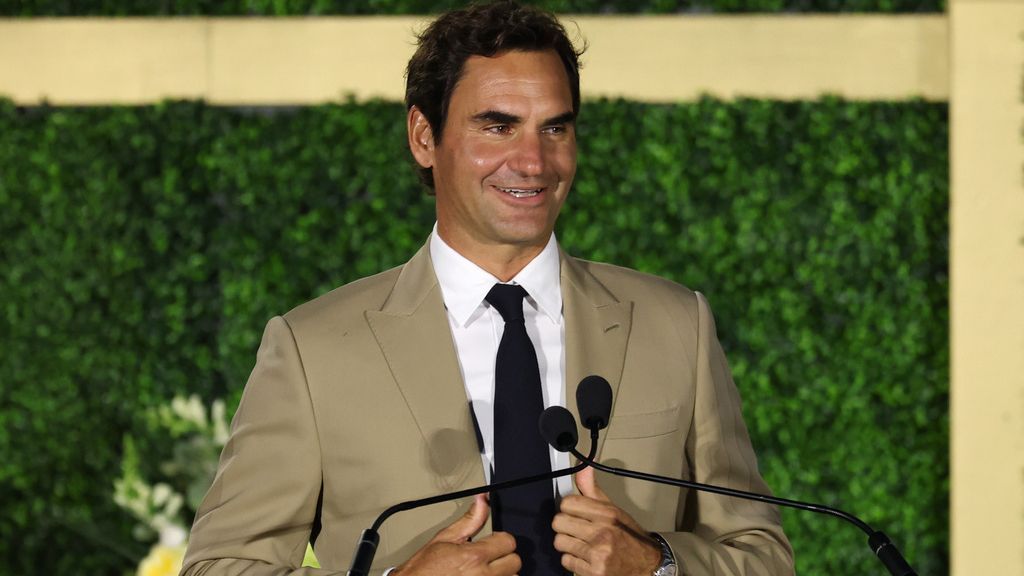
Roger Federer did not enter the International Tennis Hall of Fame as a man looking to bask in the glow of his own reflection. He arrived in Newport carrying something heavier and rarer than a trophy case: the accumulated meaning of a career that made grace seem almost architectural, as if tennis itself had been re-drafted around his touch. And when the tears came during his induction speech on Saturday, they did not feel like a detour from the script. They felt like the point.
The scene at the International Tennis Hall of Fame was not built for spectacle in the modern, clattering sense. Newport has the salt air, the old bones, the sort of setting that asks for reverence without quite saying so. Federer, the man who spent two decades making pressure look like poise, was visibly undone by the tribute and by the people in the room who had known him best in the ways that matter most: not as a brand, not as an era, but as a son, husband, rival, friend, and constant presence in a sport that devours its own before it knows how to honor them.
Tears in Newport, and the old human truth beneath them
The public imagination has long treated Federer as a polished thing, almost sealed off from ordinary weather. That has always been the lazy reading. What made him singular was never only the footwork, the velvet backhand, the impossible ease of his movement around the court. It was the way he carried pressure without letting it harden into performance art. The tears in Newport only clarified what was already true: that greatness is not the absence of feeling, but the discipline to survive it in full view.
This was Roger Federer meeting the end of a chapter that has already been heavily footnoted by history. Twenty Grand Slam titles. A style that became doctrine. A rivalry web with Rafael Nadal and Novak Djokovic that dragged men’s tennis into one of its most exacting and profitable golden ages. Yet Hall of Fame nights are not really about inventory. They are about distillation. What remains once the numbers stop talking?
In Federer’s case, the answer is nearly impossible to separate from the feeling in the room. You could hear the weight of a generation acknowledging that its most elegant standard-bearer had finally stepped into the archive.
What Federer means to tennis, beyond the silverware
For all the talk about titles, Federer’s most durable legacy may be cultural. He expanded the sport’s global grammar without bludgeoning it. He made tennis feel cosmopolitan, and for a long stretch he made winning look like a natural consequence of balance rather than force. Children copied his forehand before they understood his résumé. Sponsors chased his calm. Tournaments built their own self-image in relation to him. That kind of gravitational pull is rare in any sport, and almost never sustained for as long as Federer sustained it.
This is where the Hall of Fame induction matters more than a ceremonial lap around memory. It frames Federer not just as a champion, but as a steward of the sport’s aesthetic conscience. He helped tennis sell itself to people who did not grow up with rackets in their hands. He made the game legible to the casual viewer and still demanding for the devoted one. That is not a small thing. It is the difference between a star and an institution.
Federer’s greatness was never merely that he won. It was that he made winning look like a form of quiet intelligence.
The emotional tenor of the speech also served as a reminder that sports history is made of nerves as much as highlights. The polished image we inherit is only the surface. Beneath it sits the private cost: the injuries that accumulate, the absences from home, the years spent turning one’s body into a machine and then discovering that the machine has an expiration date. Federer’s tears did not diminish the legend. They gave it depth.
The era he leaves behind is still arguing with itself
Federer’s induction lands at a moment when tennis remains in transition, pulling between its old aristocracy and a younger order that wants to claim its own language. The sport still sells nostalgia as effectively as it sells novelty. That tension will not disappear because one beloved figure has moved into the ceremonial wing. If anything, his exit from the competitive center makes the contrast sharper.
Beatrice Kensington speaking plainly: I have always believed Federer’s greatest gift to tennis was not domination, but proportion. He understood the scale of the stage without letting the stage swallow the performance. That distinction matters now more than ever, because modern sports culture often confuses volume with importance. Federer’s career argues for something older and sturdier. The loudest thing in the room is not always the most enduring.
And yet there is a bittersweetness here that no tribute can fully smooth over. Every sport eventually has to decide what to do with its elegant ghosts. It can flatten them into marketing copy or preserve them as living standards. Federer has earned the latter. His induction should be read not as an ending but as an instruction manual for how tennis ought to remember excellence: with rigor, with gratitude, and without sanding off the emotion that made it human.
Why this night will linger for fans who lived through it
For the fans who watched him rise through the early 2000s, then survive Nadal’s brutal geometry and Djokovic’s relentless engineering, this was not just another honor on an already crowded shelf. It was the first truly quiet moment in a life built around movement. The standing memory now is not a forehand or a trophy lift, but a champion blinking through tears while trying to say thank you without fully losing the line.
That may prove more durable than any montage. Sports eventually run out of superlatives, but they never run out of human moments, and Federer’s induction offered one of the cleanest in recent memory: a great athlete realizing, perhaps belatedly, how deeply he has been loved.
The record books will stay intact. Newport added something else. A softer ending. A fuller truth. And for tennis, that may be the richest prize of all.
More from Straight From The Bench
Comments
Join the conversation — sign in to leave a comment.
Sign in to commentRelated Stories
Roger Federer Hall of Fame Induction: Tears, Legacy, and Farewell
Federer’s Newport speech turned the polite old tennis ceremony into something raw. The cleanest player of his era wore his heart on his sleeve.
Steelers Trade Kaleb Johnson: Packers Land RB Before Cut Day
Kaleb Johnson is headed to Green Bay, while the Steelers keep pruning the roster with cutdown day looming. The moves say plenty about where this team thinks it stands.
Keenan Allen Arrested: Colts WR Faces DUI Charges
Keenan Allen’s arrest on drunken driving charges lands hard in Indianapolis, where the Colts now face an uncomfortable test of standards, timing, and trust.