
Roger Federer Hall of Fame Induction: Tears, Legacy, and Farewell
The ice-cold genius finally let the room see what the game meant to him.
 Leo Lupo6 min read
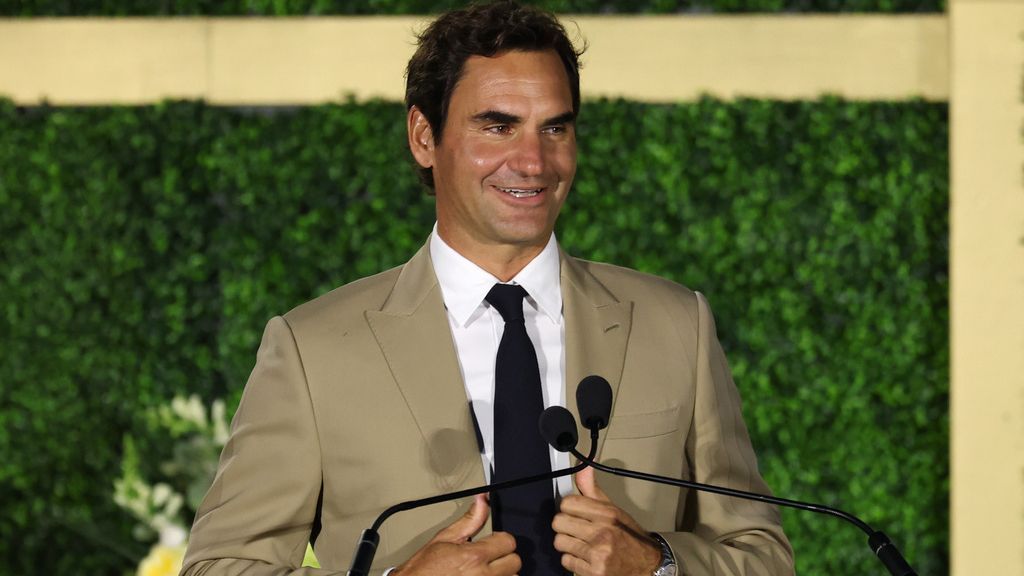
Roger Federer spent two decades making tennis look neat, almost too neat, like he’d ironed the wrinkles out of the sport. Newport changed that for a night. The man who used to float through five-setters with that calm, Swiss stare got choked up, wiped his eyes, and let the whole room see the cost of a career that looked effortless from the outside.
That’s the thing with Federer. Folks remember the one-handed backhand, the velvet footwork, the suits, the silence before the serve. What they forget is how much of a battering that body took, how many times he had to rebuild the same old machine after the knees barked, the foot acted up, the years started filing down the edges. Hall of Fame night wasn’t about trophies. He has enough of those to open a museum. It was about the strange business of saying goodbye to a life spent chasing a yellow ball across every bright court in the sport.
Newport gave Federer the one thing tennis never really gave him: stillness
The International Tennis Hall of Fame sits there in Newport, Rhode Island, a polished little shrine to a sport that still likes its manners. Grass court, sunset, the whole postcard job. Fitting place for Federer, who always looked born for the clean lines of the game. But even a man that smooth doesn’t get through a speech like that without the emotion leaking out.
And why should he? He was talking about a career that stretched from wunderkind to elder statesman, from the young Swiss kid with the temper to the polished master who became the sport’s global ambassador whether he asked for the job or not. Tennis loves its mythmakers. Federer became one without trying too hard, which is usually how the best ones do it.
The ceremony also served a reminder that the Hall of Fame is not just a trophy case. It’s a ledger. It records style, yes, but also endurance, influence, and the kind of gravity that bends a sport around one person. Federer was that gravity for a long time. He made elegance feel inevitable.
Why Federer’s tears hit harder than another polished tribute
Plenty of greats give the safe speech. Thank the family. Salute the rivals. Nod at the crowd. Keep it moving. Federer didn’t stay in that lane, and good on him. The tears mattered because they cracked the statue a little. That’s what fans respond to, not the marble version of greatness but the human cost underneath it.
Greatness looks cleaner from the seat in row 12 than it does from inside the body that had to carry it.
That line ought to be engraved somewhere in every Hall of Fame room.
Federer’s era was built on pressure from every angle. Rafael Nadal dragged him into the most punishing rivalry in modern tennis. Novak Djokovic showed up and made the ceiling higher. The whole sport got meaner, more athletic, less polite. Federer didn’t just survive it; he kept his own face on the game while the game was changing shape under his feet.
That’s why the tears land. Not because he was sentimental. Because the years meant something.
The old maestro, the rival years, and the burden of being “the standard”
Tennis players talk a lot about perfection, and most of it is hot air. Federer got closest because his version was never about flawless numbers. It was about control. Tempo. Variety. The sense that if he wanted to, he could turn a point into a little act of architecture. That style made him adored in places where tennis is usually an afterthought and respected in the locker room where beauty counts for less than answers.
He also carried a load the casual crowd likes to ignore. Being the standard is a racket. Every young player wants to beat you. Every old head wants to see you fade. Every broadcaster wants to compare your prime to everybody else’s. Federer lived in that spotlight so long it became weather. And even now, with his playing days behind him, he still draws the kind of reaction that separates icons from stars.
This is where the whole Hall of Fame exercise gets a little broader than one man. Federer’s induction says something about what tennis still prizes. It still honors grace, yes. But it also honors reach. Federer was not only a champion; he was the sport’s most bankable face for a generation. That matters, whether purists like the commercial side of it or not. The game grew richer because he sold it to people who couldn’t tell a slice from a shank but knew they were watching something rare.
I’ve watched enough enshrinements to know the script by heart. There’s the applause, the gratitude, the old clips, the family in the front row trying not to look too proud. This one cut deeper because Federer never seemed like a man built for public unraveling. That’s exactly why it worked. The sport asked him for perfection so long that seeing him break a little felt like the truth finally getting its turn.
What Federer leaves behind for tennis — and for the next polished kid
The next generation will inherit the Federer problem, and I mean that as a compliment. Every elegant kid with a clean forehand will get compared to him. That’s the tax. If you play pretty, you better win ugly now and then too, because the bar Federer set isn’t just stylistic. It’s about carrying yourself like the moment belongs to you, even when it doesn’t.
And tennis, being tennis, will keep trying to manufacture another one. Good luck. There’s only one Federer. There was only ever one. The sport will find other champions, maybe even better statistical ones in some corners, but it won’t find another player who made the court look that calm while the whole thing was burning around him.
That’s why Newport mattered. Not because it closed the book. It didn’t. Federer’s book is already on the shelf, heavy enough to stop a door. The ceremony just reminded everybody why people still talk about him like this game had a golden age and he held the key.
More tears, more applause, more reverence. Fair enough. Roger Federer earned the whole soft-focus finish. Now the sport gets to live with the standard he set, which is a burden and a gift all at once. That’s tennis. Beautiful when it’s clean, brutal when it isn’t, and rarely honest enough to admit both.
If you want the rest of the sport, you start there.
More from Straight From The Bench
Comments
Join the conversation — sign in to leave a comment.
Sign in to commentRelated Stories
Roger Federer Hall of Fame Induction: Tears, Legacy, and Farewell
Federer’s Hall of Fame night in Newport was less a ceremony than a reckoning with a career that changed tennis’s grammar. The tears said what the trophies never could.
Steelers Trade Kaleb Johnson: Packers Land RB Before Cut Day
Kaleb Johnson is headed to Green Bay, while the Steelers keep pruning the roster with cutdown day looming. The moves say plenty about where this team thinks it stands.

Keenan Allen Arrested: Colts WR Faces DUI Charges
Keenan Allen’s arrest on drunken driving charges lands hard in Indianapolis, where the Colts now face an uncomfortable test of standards, timing, and trust.