
Saints owner Gayle Benson on Saints play: standard has slipped
In New Orleans, patience is thinning and the Superdome is feeling it
 Beatrice Kensington5 min read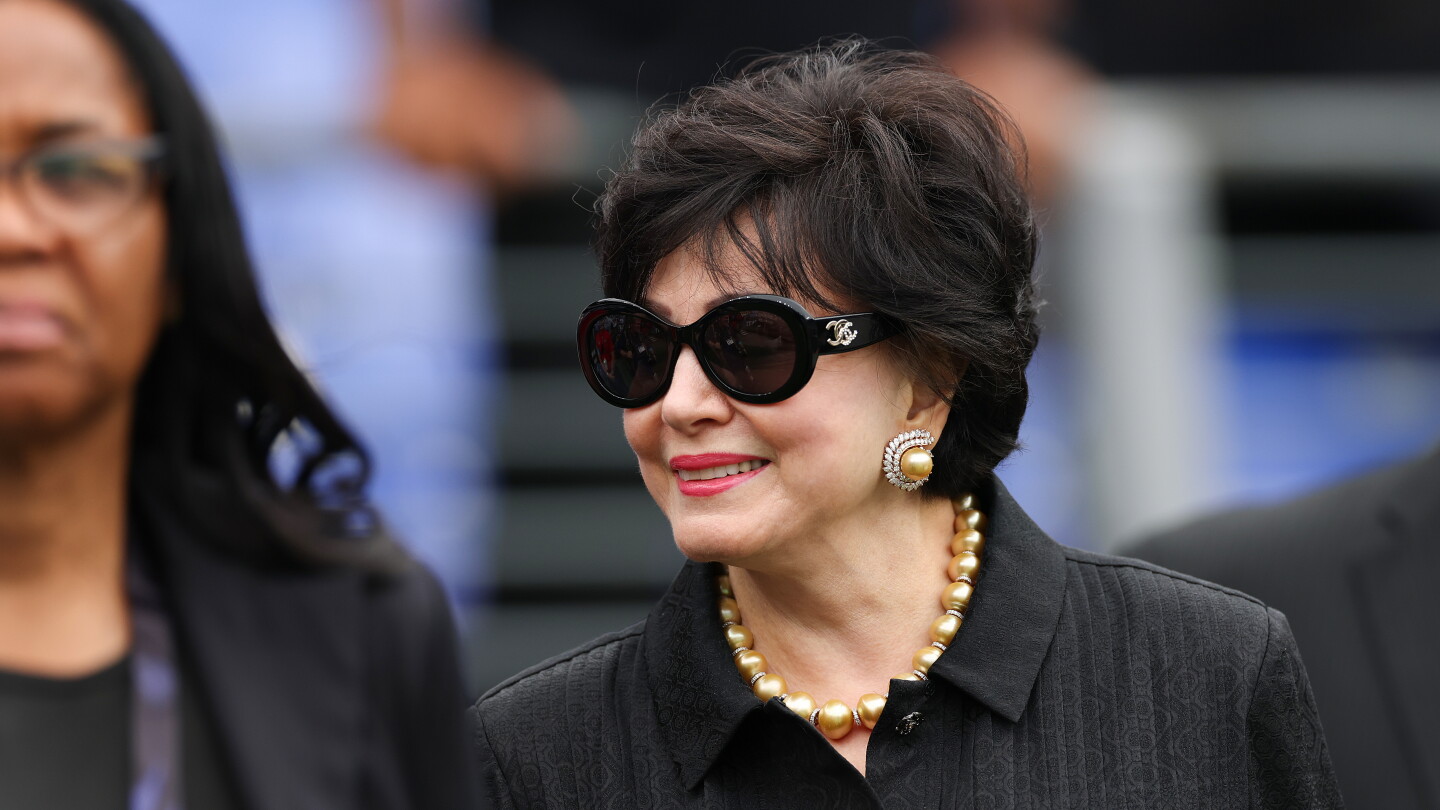
The warning from the top in New Orleans
The Saints have not merely lost three straight games. They have done it at home, under the bright dome lights, in a city that treats football like weather and expects its own forecast to hold. That is why Gayle Benson’s blunt line — that she won’t accept this level of play as the standard — matters more than a routine owner’s grumble. It is not a public-relations note. It is a warning shot.
The Saints sit at 1-4 after the loss to the Minnesota Vikings, and the record alone would be enough to stir the room. But the deeper problem is uglier than a bad September. The team has been losable in ways that feel familiar: uneven offense, mistakes that arrive in clusters, and a home field that has begun to lose its old menace. In New Orleans, that is no small thing. The Caesars Superdome has long been a place where visiting teams felt the building lean against them. Lately, it has felt more like a venue waiting for a verdict.
When the owner starts talking about standards, the season is no longer being measured only in wins and losses.
Why Benson’s words carry real weight
Owners can be decorative in some cities, present in name and distant in practice. Benson is not that kind of owner, and New Orleans is not that kind of sports town. Her voice matters because it reaches the football people above and below the sideline, from the front office to the locker room, and because it tells everyone inside the building that patience is not infinite.
That does not automatically mean heads are about to roll. But it does mean the Saints are moving from concern into scrutiny. For a coach, that changes the temperature of every decision. The fourth-down choice looks different. The conservative punt looks different. Even the way a roster is managed on the margins begins to feel like evidence in a larger case.
The Saints have lived through this sort of pressure before, of course. This franchise has known boom years, hard resets, and the long shadow that falls after a team grows accustomed to being relevant. The standard in New Orleans was set over time by Sean Payton, by championship expectation, by the idea that the Saints were not merely a local diversion but a civic ritual. Once a team has worn that badge, losing no longer feels like a detour. It feels like a betrayal of the agreement.
The Superdome is supposed to be an asset, not a witness
Three straight home losses do something beyond the standings. They erode the emotional contract between a team and its crowd. Fans in New Orleans do not ask for prettiness. They ask for fight, for clarity, for evidence that the people in black and gold understand the stakes of the uniform. When that is absent, the building changes shape.
That matters in practical terms, too. Home-field advantage is not just noise; it is the accumulation of expectation. Opponents feel it. Officials feel it. So do home teams, even if they would never say it aloud. If the Saints keep turning the Superdome into a place where doubt gathers early, they will surrender one of the most valuable edges in the sport.
The loss to Minnesota fits a broader pattern that teams around the league know too well. A sluggish September can become an identity by October if the correction never arrives. The Rams have been wrestling with their own internal accounting after a messy stretch, and you can see the same theme across the league: when a team’s baseline slips, everyone around the organization starts asking whether the problem is temporary or structural. Sean McVay’s overtime call and the Rams’ postgame regret showed how quickly one poor night can become a referendum. The Saints are entering that same dangerous territory, just with a different accent and a more unforgiving stage.
This is now a coaching-and-culture test
There is a temptation, after any public rebuke from ownership, to make the story about job security alone. That is too small. The larger question is whether the Saints know what they are on offense, whether they are able to impose a style instead of reacting to one, and whether the weekly plan reflects competence or merely hope.
That is where coaching comes in. The best NFL teams do not just make adjustments; they create an environment where adjustment is possible without panic. When that breaks down, the team starts to look like a collection of parts rather than a machine with a purpose. Players feel it. Coaches feel it. The crowd certainly feels it.
I’ve covered enough seasons to know that an owner’s public dissatisfaction does not fix a thing by itself. What it does is force honesty into the room. I have always believed that the first casualty of prolonged mediocrity is not pride; it is language. Teams begin speaking in evasions, in soft excuses, in the careful grammar of almost. Benson’s statement cuts through that fog. Good.
The Saints have spent too long behaving like a team waiting for a solution to reveal itself. In a league this ruthless, solutions have to be built, not awaited. And if the people running the building do not demand the standard loudly enough, the standard will continue to drift downward, one ordinary loss at a time.
There is still time to pull this back. The talent remains enough to make the season salvageable. But the Saints no longer have the luxury of being merely disappointing. They are being watched now, and not just by the fans in the stands. Every snap from here has a little more weight. Every drive does, too. That is how seasons harden.
The next game will not solve the larger problem. It will only reveal whether the Saints heard the warning.
More from Straight From The Bench
Comments
Join the conversation — sign in to leave a comment.
Sign in to commentRelated Stories

Rams Alaric Jackson suspension: fallout after Bills loss
Alaric Jackson’s suspension and Harrison Mevis’ release turn one ugly loss into a bigger roster reset for the Rams. The pressure is on Sean McVay to steady the room fast.
Micah Parsons on Jayden Daniels: Daniels Cost Dan Quinn His Job
Micah Parsons lit the match on a familiar Texas fire, blaming Jayden Daniels for the chain reaction that helped end Dan Quinn’s run. The remark says as much about Dallas as it does about Washington.

49ers vs Seahawks: San Francisco's defensive line finally woke up
The 49ers' pass rush picked the perfect night to look like itself again. Against Seattle, the defensive line flipped the tone of the game and might have reset the season's mood.