
Venus Williams: Guangzhou Open loss extends painful skid
The scoreline matters less than the stubborn dignity of the fight.
 Beatrice Kensington5 min read
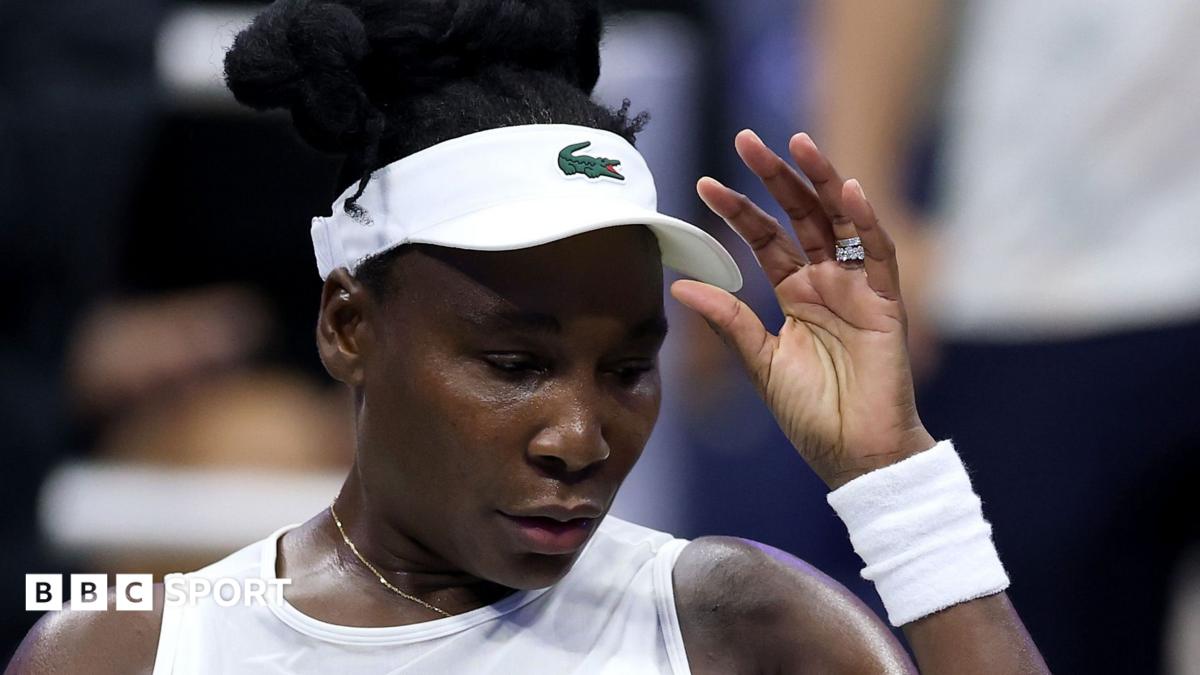
Venus Williams arrived in Guangzhou with the kind of presence that has long made scoreboards feel secondary. Even now, at 46, she carries the memory of six Grand Slam singles titles and 30 WTA trophies like a second shadow, a history that enters the court before she does. But history, for all its glamour, does not bend the net cord. And on this night, the match belonged to Lilli Tagger, the 18-year-old Austrian whose birth came years after Williams had already remade women’s tennis.
The result was Williams’ 16th straight defeat, a number that can sound harsher than it is unless one remembers the scale of the climb. She is not merely losing matches. She is contesting time itself, one more rally at a time, in a sport that tends to prize the fresh and the fast above the weathered and wise. That she keeps showing up is both admirable and, in its own way, bracingly honest.
A champion measuring herself against the calendar
There are defeats that diminish a player, and there are defeats that simply confirm the arithmetic of age. Williams’ loss here feels like the latter. Her game, once built on explosive serving and violent authority off the ground, now has to be negotiated through the body’s quieter terms. The reflexes are a fraction slower, the recoveries longer, the margins thinner. Tennis is merciless about such things. It does not care what a name once meant.
And yet the name still matters, because Williams is not just any former champion trying to squeeze one more chapter out of a monumental career. She is one of the defining figures of modern tennis, a player whose influence stretches beyond trophies and rankings into questions of race, pay, fashion, power and the simple right to occupy space at the center of the sport. The WTA Tour has changed around her; in many ways, it changed because of her.
That is why this losing streak is not the whole story. It is the visible surface. Underneath it sits a far more complicated truth: great athletes often struggle most when their bodies no longer obey the memory of their own greatness. The crowd cheers anyway. Sometimes especially then.
Lilli Tagger gets the night, Venus keeps the story
Tagger deserves the cleanest reading of this match: she beat a legend who was 28 years older, and she did it without the burden of sentiment. That matters. Too often, the opponent becomes a footnote in the narrative of an aging icon. Tagger, coached by Francesca Schiavone, was not there to participate in nostalgia. She was there to win, and she did.
There is a useful old tension in tennis between succession and reverence. The sport loves to coronate the new while still asking the old to perform one last miracle. Sometimes that produces a memorable passing of the torch. Sometimes it produces a beloved champion receiving one more reminder that the torch has already been passed.
Williams has spent so much of her career as the future that it is almost disorienting to watch her in this late phase, where every match becomes a referendum on persistence. But the point is not to wonder whether she should stop; that is hers alone. The point is to recognize what her continued presence gives the game: a living link to eras most players now know only through clips and legend, a reminder that tennis is not simply a treadmill for the young.
Venus Williams is no longer playing against opponents alone. She is playing against time, and time has a deep bench.
What a 16-match skid really says
A streak like this can tempt observers into easy cruelty. It should not. Losing 16 in a row at this level is not the same as being washed clean from the sport’s significance. It is, instead, evidence of how exacting the professional game becomes when age arrives with no apology and no soft landing.
For Williams, each appearance now carries a different kind of pressure. She is not chasing a ranking climb or a season-long arc. She is chasing competence, rhythm, the sensation of belonging on the same court as athletes young enough to have grown up watching her win. That pursuit is harder than it sounds. For athletes of her stature, declining is rarely private. It is televised, debated and endlessly interpreted as symbolic.
The broader tennis world should be careful here. There is a kind of cultural laziness in treating aging champions as curiosities once the wins dry up. Williams has earned more than that. She has also earned the freedom to define her own threshold for enough. If that threshold includes more nights like this, then the discomfort belongs to everyone else, not to her.
My read: the victory lap was never the point
I have always believed the hardest part of watching a giant athlete age is not the loss itself, but the public’s impatience with the process. We love our icons best when they are efficient, when they deliver memory in tidy packages, when the final image matches the myth. Venus Williams has never really been a tidy package. She has been power, style, defiance, elegance, and at times, stubbornness sharpened into principle.
That is why these late-career matches still matter. Not because they restore the old order. They do not. But because they ask us to sit with a more difficult idea: greatness does not vanish the moment the wins do. It changes shape. It becomes something less about domination and more about endurance, about the courage to keep stepping into a bright, public space where the odds are no longer kind.
In another era, we might have demanded retirement as the proper exit from the stage. Now we understand, or should, that some athletes need no permission to remain visible. Venus Williams is one of them. If her career has entered its coda, it is a coda written in full sentences, not apologies.
The next result will matter less than the next appearance, and even that is not the point. The point is that she is still here, still refusing to leave the center of the frame quietly. In a sport obsessed with succession, that alone remains its own kind of statement.
One more court. One more chapter. The rest is for the record books.
More from Straight From The Bench
Comments
Join the conversation — sign in to leave a comment.
Sign in to commentRelated Stories
Rays vs Brewers World Series: Tampa Bay forces Game 5
The Rays dragged this thing back from the grave with a 12th-inning rally, turning Milwaukee's celebration into a long, miserable wait. Baseball is cruel like that.

Anthony Edwards Knee Surgery Update: Timberwolves Face Long Absence
Anthony Edwards is headed for knee surgery and could miss more than two months. For Minnesota, this is more than an injury update; it’s a test of identity.

Atlanta Dream WNBA Finals Game 6 Schedule Change Sparks Backlash
Atlanta isn’t hiding its frustration over Thursday’s early Game 6 start. The timing raises bigger questions about TV, leverage, and how the league values its showcase.