Oregon QB Dante Moore Injury Update: Season Over After Concussion
The Ducks lose their brightest light, and college football loses a little of its autumn drama.
 Beatrice Kensington6 min read
Oregon’s season just lost its clearest signal
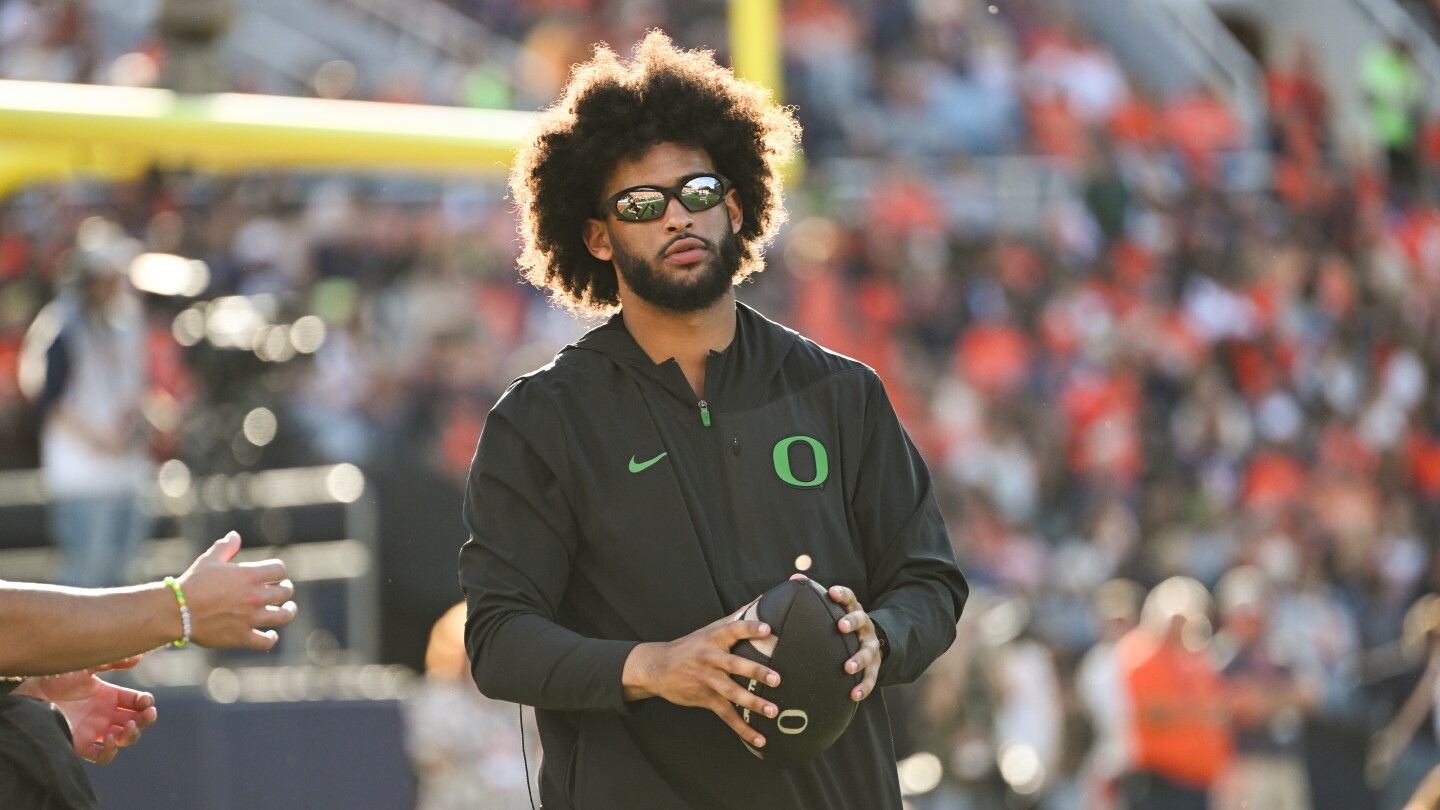
In Eugene, where the uniforms shine and the expectations usually arrive before the leaves turn, Oregon has been asked to absorb an ugly truth: Dante Moore will not play again this season after suffering a concussion. That is not a footnote. It is a structural event. For a team built to live in the thick of the College Football Playoff race, losing the quarterback who was supposed to steer the whole enterprise changes the temperature in a hurry.
Moore entered the year with the kind of résumé and projection that cause scouts, coaches and fans to lean in. He was not merely the next man up; he was the next possible franchise face, a player spoken of in the breathless grammar usually reserved for the rare ones. Oregon’s offense, under Dan Lanning, has not been designed around nostalgia. It has been designed around speed, power and the ruthless expectation that the Ducks can outclass most Saturdays before halftime. A quarterback of Moore’s caliber was meant to make that machine hum. Now the machine has to improvise.
And improvisation, in college football, is rarely elegant.
The human cost behind the depth chart
The public will talk first about timing. About rankings. About how this affects Oregon’s path through the Big Ten Conference and, by extension, the playoff picture. Fair enough. Those are the loudest consequences, the ones that show up in bracket talk and television panels and the nervous arithmetic of November.
But there is a quieter and more important layer here. Concussions do not politely fit into a competitive calendar. They interrupt. They complicate. They ask a young athlete to stop being a weapon for a while and become a patient, which is a hard transformation for any competitor to accept. Moore’s season ends not with a final drive or a dramatic fourth-down stand, but with the far less cinematic reality of health protocol and caution. That matters. It matters more than the standings do.
A season can be rebuilt. A quarterback’s health cannot be rushed.
That line should hang over every reaction to this news. Oregon can still win games. Oregon can still recruit. Oregon can still present itself as one of the sport’s most formidable brands. But the player at the center of the hope map has been removed from it, and there is no tidy substitute for that kind of loss.
What it means for Oregon’s offense
Oregon’s identity under Lanning has been aggressive, modern and deeply athletic, which is another way of saying the Ducks have lived comfortably with pressure and expectation. The quarterback is supposed to be more than a distributor; he is supposed to be the accelerator. Moore’s absence strips away a layer of ceiling.
The staff now has to ask a familiar but unwelcome question: how much of the playbook can survive without its most naturally gifted interpreter? Some teams can absorb a quarterback injury because their offense is built on brute force and repetition. Oregon has been built on pace, space and the ability to stretch defenses until they crack. That kind of system can be resilient, but it rarely feels identical with a backup at the controls.
There is also the matter of perception. For a program with championship aspirations, every loss to injury invites a broader narrative about durability and fate. That can be unfair. It can also be unavoidable. If you have watched enough seasons, you know that one injury can reveal how thin the margin really is between contender and merely good.
If you want a reminder of how fragile these arcs can be, consider how other high-profile programs have been forced to recalibrate around injuries at the worst possible times. Our recent look at Oregon QB Dante Moore Injury Update: Season Likely Over already hinted at this storm gathering. Now it has arrived.
Draft stock, development and the long shadow of 2027
Moore’s name was already circulating with the kind of anticipation usually reserved for quarterbacks who have yet to finish writing their college story. That is the cruel paradox of modern scouting: the less complete the sample, the more intense the projection. A player can be judged not only by what he has done, but by the silhouette he casts on a screen.
For Moore, this injury does not erase the talent. It does not suddenly turn scouting notes into ash. But it does interrupt something valuable: repetition. Quarterback development is a craft of rhythm and accumulation, and missing an entire season steals both. Pocket feel dulls without live reps. Timing slips without real rush. Even confidence, that fragile currency, can become harder to handle when it has to be stored for months instead of exercised every Saturday.
That is where the long game begins to matter. NFL teams, and those who pretend not to think like them, will watch closely not only how Oregon survives but how Moore returns, how he moves, how he heals, how he reclaims the ease that makes a quarterback look inevitable. The University of Oregon has always sold forward motion. This is one of those moments when the future pauses and asks for patience.
I have long believed that the sport’s most dangerous illusion is that talent protects itself. It does not. Talent only buys opportunity. Health, timing, and organizational care do the rest. Moore’s case is another reminder that the path from prospect to professional is not a ladder; it is a narrow bridge, and sometimes the bridge disappears beneath your feet.
What Oregon must prove now
The Ducks do not get to mourn for long. That is the business of major college football. A team can lose a quarterback and still keep its season intact if the culture is sturdy enough and the roster is built with real depth, not just marketing depth. Oregon has recruited for exactly this possibility, and now the test is here in plain daylight.
Dan Lanning’s task is partly tactical and partly emotional. He has to steady the locker room without flattening the ambition. He has to insist on urgency without letting urgency curdle into panic. That is coaching at its hardest: not Xs and Os alone, but the management of disappointment.
The other players will feel it too. Wideouts who were expecting certain throws. Linemen who know the rhythm of a quarterback’s drop. Defenders who understand that when the offense stalls, they are asked to carry more of the emotional burden. A season can fray in small ways after an injury like this. The best staffs prevent the fraying from becoming a tear.
For Oregon, the next month will reveal whether this is a title contender with depth or merely a team with a handsome ceiling. There is a difference. The sport tends to make it plain when the weather turns.
Moore’s season is over. Oregon’s is not. But the Ducks have lost the player who made the future look easiest to trust. Now they must prove they can keep flying without him.
More from Straight From The Bench
Comments
Join the conversation — sign in to leave a comment.
Sign in to commentRelated Stories
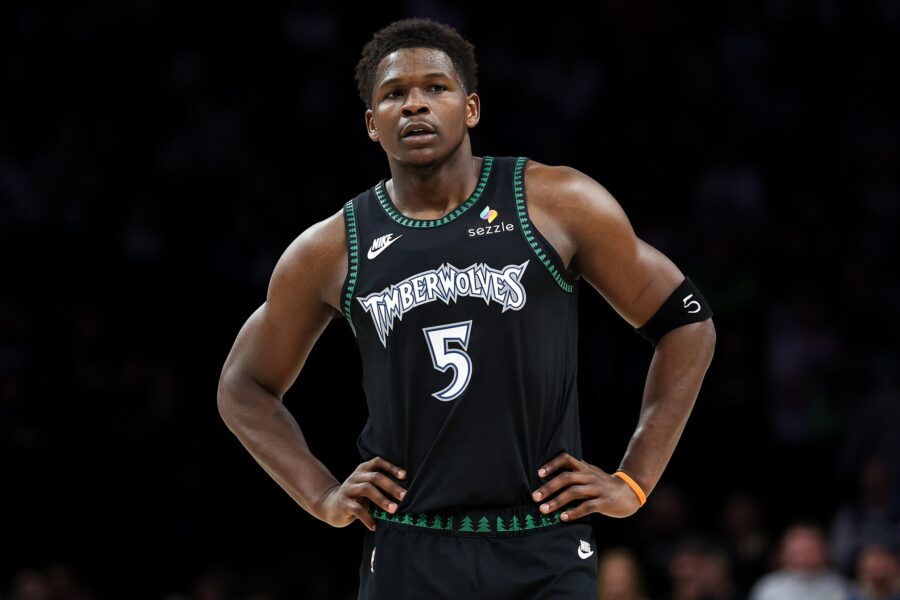
Anthony Edwards Knee Surgery Update: Timberwolves Face Long Absence
Anthony Edwards is headed for knee surgery and could miss more than two months. For Minnesota, this is more than an injury update; it’s a test of identity.
Alabama CB Dre Kirkpatrick Jr. dismissed after arrest for doxxing
Dre Kirkpatrick Jr. is out at Alabama after an arrest tied to doxxing and harassment. The dismissal speaks to more than discipline; it speaks to the standard a program must protect.
Tyrone Tracy Injury Update: Giants to Place RB on IR
The Giants will send Tyrone Tracy to injured reserve, a reminder that running back depth is never a luxury in the NFL. For New York, this is a small move with outsized consequences.