
Warriors Brandin Podziemski Extension: Golden State Pays Early
The Warriors are buying certainty, and the price says they still believe in his nerve.
 Beatrice Kensington5 min read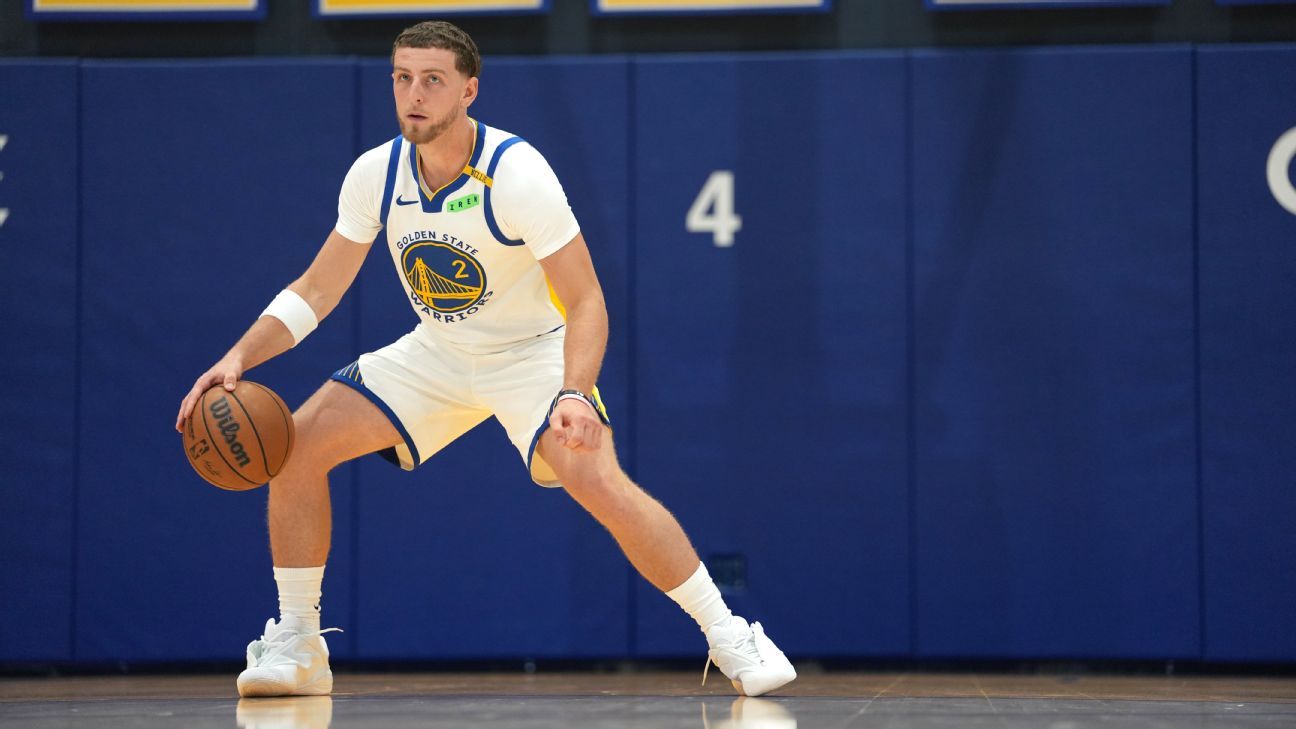
The Golden State Warriors did not wait around for the market to remind them what they already know. They handed Brandin Podziemski a five-year, $110 million extension, a sturdy piece of business that removes a looming restricted-free-agency headache and places a real financial wager on a player who, not so long ago, was still trying to turn promise into proof.
That is the part worth sitting with. In a league that has grown almost suspicious of its own patience, the Warriors chose to pay for continuity. Not the shiny kind, either. This is not a max contract for a finished star or a dramatic rescue of a broken roster. It is a deliberate investment in a guard whose value has been built in the ordinary, demanding hours of NBA life: rebounds in traffic, smart swings to the weak side, defensive chases, the small indignities and small victories that coaches adore and casual viewers often miss.
Golden State’s bet is about more than one season
Podziemski’s extension is not simply an accounting line. It is a statement about what the Golden State Warriors believe the next phase of their identity should look like. The dynasty years were built on a comet trail of shooting brilliance, but the years that follow a dynasty usually belong to the workers, the adapters, the players who can hold structure together while the old order slowly changes shape.
Podziemski fits that description in a way that feels almost tailored. He gives Golden State ballhandling without needing the offense to be reimagined around him, and he brings a kind of competitiveness that seems to thrum through every loose ball. The numbers matter, of course, but what the Warriors are really paying for is function: a guard who can survive in the clutter of playoff basketball and not lose his way.
That matters on a roster still living in the gravitational pull of Stephen Curry. When Curry is there, the standard is championship. When he is not, the burden shifts onto the supporting cast to keep the team coherent, competitive and, above all, sane. Podziemski’s deal says Golden State wants a hand they can trust on the wheel.
The financial message is clear: avoid the restricted-free-agency squeeze
There is also the cold math of the modern NBA at work. Restricted free agency can become a slow, awkward theater of leverage, one in which the incumbent team is forced to match or risk losing a player it spent years developing. By moving now, Golden State avoids letting the situation harden into a public negotiation drama.
That is smart business, but it is also revealing. Teams do not hand out $110 million to young guards unless they see a floor that is already sturdy and a ceiling they still want to reach. The Warriors, who have been forced in recent years to balance ambition with age, can read the market as plainly as anyone: good young talent is expensive, and it gets more expensive when it can dribble, defend and keep the offense from wandering into the weeds.
The Warriors are not just paying for what Podziemski is. They are paying to avoid the far higher cost of not having him.
This is the kind of move that can look expensive in October and sensible by May. It may even look cheap if Podziemski keeps growing into the kind of connective guard playoff teams depend on when possessions shrink and nerves become visible.
What this means for the rest of the roster
Extensions like this do not happen in a vacuum. They shape the temperature of the room. Young players notice when a front office rewards reliability. Veterans notice, too. And for a franchise that has spent much of the last decade balancing legacy with the need to refresh the cupboard, the message is direct: there is still a lane here for players who earn trust the old-fashioned way.
For Golden State, that matters because the roster has been built around a central contradiction. The team remains attached to its title pedigree, yet its future depends on younger players growing up fast enough to protect what is left of the present. A player like Podziemski helps bridge that gap. He does not ask the team to become something else, only to become sturdier.
He also gives the Warriors optionality. Around stars, functional guards are currency. They can start. They can close. They can absorb injuries, bridge lineups, and keep a season from unraveling during those ugly winter weeks when the ball sticks and the shots don’t fall. If that sounds unglamorous, it is. It is also how a lot of good teams stay good.
My view: this is the sort of move dynasties make when they are still thinking clearly
I have long believed that the hardest part of life after a title cycle is not the loss of talent. It is the temptation to chase nostalgia. Organizations linger too long in memory, paying premiums for yesterday’s certainty while neglecting the players who can actually carry tomorrow’s burden.
The Warriors have not entirely escaped that danger, but this extension suggests they have not surrendered to it, either. In NBA terms, $110 million is a serious commitment; in organizational terms, it is a declaration that Podziemski is not just a nice story from the player-development department. He is part of the plan. Maybe not the loudest part, but often the most durable plans are written in quieter ink.
I also think there is something culturally resonant here about the player Golden State chose to pay. Podziemski is not the kind of young guard who forces the league to rearrange itself around his highlight reel. He is the kind who makes the people around him cleaner, calmer, more functional. In a sports culture addicted to spectacle, that kind of value can be overlooked right up until the moment it cannot be replaced.
And that is why this deal feels like more than payroll management. It feels like a team deciding that competence, edge and basketball intelligence are not secondary traits. They are the spine.
The Warriors have bought time, trust and a little peace. Now comes the harder part: making that money look like foresight rather than insurance.
More from Straight From The Bench
Comments
Join the conversation — sign in to leave a comment.
Sign in to commentRelated Stories
LeBron James 76ers debut: early spark, bigger questions
LeBron James made his Philadelphia debut with a familiar steadiness, but the first half told a larger story about fit, age and ambition.

LeBron James 76ers offense: first look at star-studded lineup
Philadelphia’s first look with LeBron James and Jaylen Brown was loud in the best way. The bigger question now is whether the 76ers can turn that talent pile into a real hierarchy.

College Football Playoff media rights: ESPN closes in on 24-team price
The CFP and ESPN are still haggling, but the money trail points one way: a bigger playoff and a richer deal. The sport is staring down its next arms race.