
WNBA transgender athletes talks: Engelbert memo sets next test
A league built on inclusion now has to answer a harder, sharper question.
 Beatrice Kensington6 min read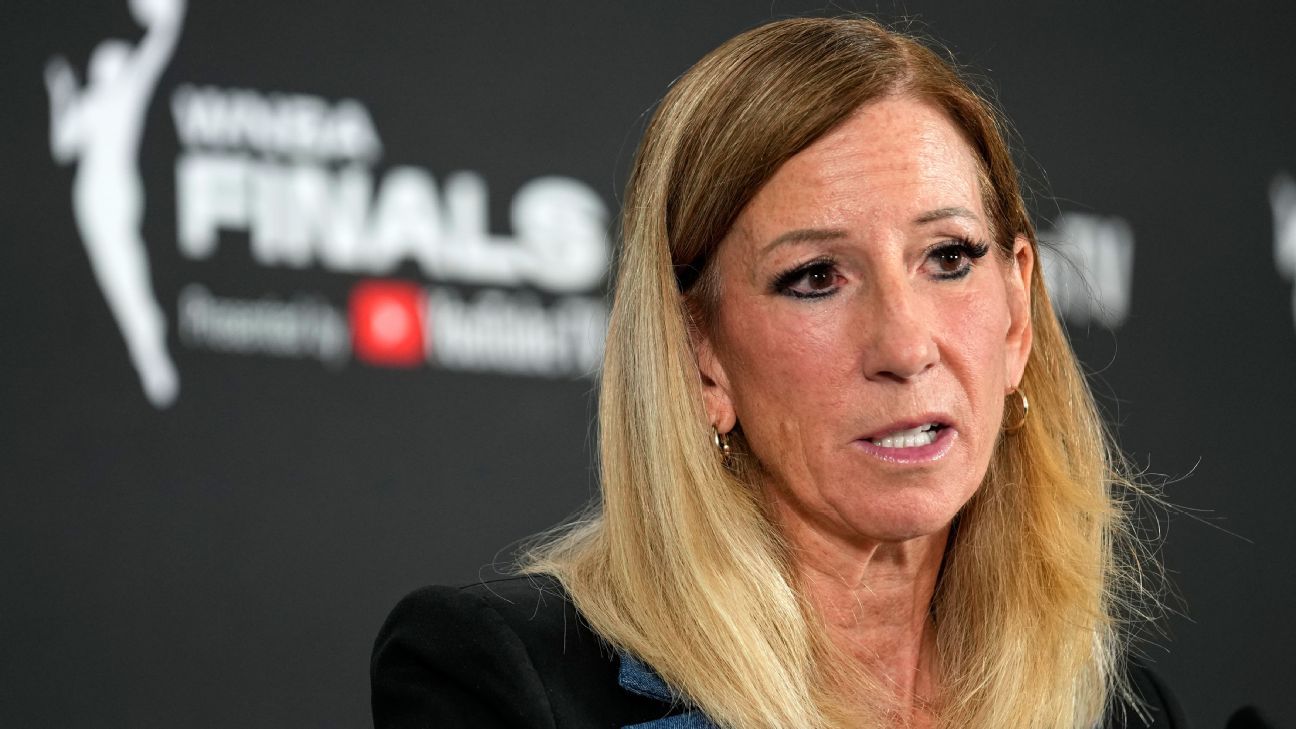
A memo that lands in a season of bright lights and hard questions
Cathy Engelbert’s memo to WNBA teams arrives with the soft authority of an administrative note and the weight of a culture fight. In another era, it might have been filed away between travel schedules and roster housekeeping. Not now. Not in a league that has spent years building itself as a visible, vocal home for women’s basketball, and not in a country where every conversation about inclusion seems destined to gather speed, heat and a dozen competing definitions of fairness.
The WNBA, which has long styled itself as more than a scoreboard, is once again being asked to prove what that phrase means in practice. Engelbert’s decision to keep discussions going next week tells us two things at once: the league understands the issue is not going away, and it does not appear eager to let the conversation be dictated by outrage merchants or the fastest social-media recoil.
That is the delicate part. Real leadership in sports rarely looks cinematic. It looks like memos, meetings, and the slow, unglamorous work of trying to make language match principle.
Why the WNBA cannot treat this as a side note
Women’s sports have always carried more than athletic stakes. They carry an argument about access, dignity, labor, and who gets to belong in public life without having to apologize for taking up space. The WNBA, by virtue of its place in the broader WNBA, sits at the center of that argument whether it wants to or not.
This is why Engelbert’s memo matters beyond the walls of any one locker room. The league is not discussing a hypothetical. It is confronting the old and stubborn tension between competitive category and human identity. That tension has no clean, emotionally convenient answer, which is exactly why so many institutions mishandle it. They either hide behind silence until the issue explodes, or they reach for slogans so broad they collapse under their own cheerfulness.
The WNBA has tried to occupy a more difficult middle ground before, and to its credit, that middle ground is where serious leagues live. If you care about women’s sports, you cannot pretend questions about policy, participation and fairness can be solved by the volume of the loudest voice in the room. Nor can you reduce a deeply personal subject to a slogan pinned on a digital banner.
That balancing act is also why readers who followed the recent flashpoints around Sophie Cunningham trans comments: Bill Maher backs women's sports stance will recognize the stakes immediately. The debate has already spilled well outside basketball. The league now has to decide whether it wants to be reactive, or whether it wants to set a steadier standard and defend it in plain English.
The WNBA’s real challenge is not picking a side in a shouting match. It is proving that policy can be principled without becoming cruel.
What Engelbert is really protecting: trust
The most fragile currency in sports is trust. Not television money, not sponsorship polish, not even star power. Trust. Players need to believe the league sees them clearly. Fans need to believe the league’s values are consistent rather than convenient. And any athlete whose identity touches this debate needs to know the conversation is being handled with seriousness rather than theater.
Engelbert’s memo suggests the WNBA understands that the issue is bigger than a single eligibility rule. It touches the credibility of competition, yes, but also the league’s social identity. The WNBA has long been a place where gender politics and basketball have never been fully separable. That is part of its public force. It is also part of its burden.
The league’s next move should not be framed as a referendum on who deserves humanity. That framing is lazy and corrosive. The more useful question is how a professional women’s league defines participation in a way that is transparent, enforceable and humane. Those are not competing goals. They are the minimum standard.
Other sports have stumbled here, often because they treated the issue as a press-release problem instead of a governance problem. The WNBA would be wise to learn from that. Build the rules carefully. Explain them plainly. Listen longer than the headline cycle prefers.
The bigger picture for women’s basketball and beyond
What happens next week will reverberate beyond the WNBA’s own calendar. Women’s basketball has never lived in a vacuum; it sits inside the larger growth of women’s athletics, where every visible policy decision becomes a precedent, a warning or both.
That is why this moment feels familiar in the way only sports history can. New leagues and old institutions alike eventually run into the same truth: once the audience grows, the questions grow with it. The WNBA has done so much to broaden the frame of women’s sports that it now gets asked to answer for the culture at large. That is a burden, but also a measure of its influence.
I have covered enough sports disputes to know that the public usually demands moral certainty from institutions that are forced to operate inside ambiguity. It is a cruel ask. Yet this is exactly where strong leadership matters. Not in pretending the issue is simple. In refusing to make it uglier than it already is.
There is a particular temptation, especially in the era of instant opinion, to mistake speed for clarity. The WNBA does not need speed here. It needs coherence. If it can pair competitive integrity with a language of respect, it will have done more than manage a controversy. It will have shown the sort of institutional adulthood that sports, for all its noise, rarely rewards.
And yes, the heat will come anyway. It always does. The question is whether the league can keep its footing while it burns.
What to watch when the talks resume
The next round of discussions will tell us whether the league is drafting policy, refining messaging, or simply buying time. The most revealing detail will not be the loudest quote. It will be the shape of the language: specific or evasive, steady or performative, principled or panicked.
For the WNBA, this is not only about how a memo reads. It is about how a league of women’s professionals defines its own future in a moment when every public institution is being forced to say what it stands for. That answer will matter in boardrooms, in arenas, and in the broader argument over the place of women’s sports in American life.
The next conversation will not settle everything. It will reveal whether the league is willing to do the harder thing and think before it speaks — then speak with conviction.
That part, in sports and in life, still counts for something.
More from Straight From The Bench
Comments
Join the conversation — sign in to leave a comment.
Sign in to commentRelated Stories
Demi Vollering Tour de France Femmes Lead: Stage 8 Win
Demi Vollering timed the move, took stage eight, and grabbed yellow with one day left. The Tour de France Femmes just got a lot more tense.
Sophie Cunningham trans comments: Bill Maher backs women's sports stance
Bill Maher’s defense of Sophie Cunningham turned a messy culture war clip into a bigger debate about locker rooms, women’s sports, and where the line gets drawn.
Women's Professional Baseball League debut: a first pitch with real stakes
Springfield got the first look at a league built to last. The atmosphere was messy, loud, and bigger than one opening night.