
Women's Scottish Open: Jenny Shin wins title at Dundonald
A calm finish, a messy leaderboard, and a Korean showdown that held its nerve.
 Zane Miller5 min read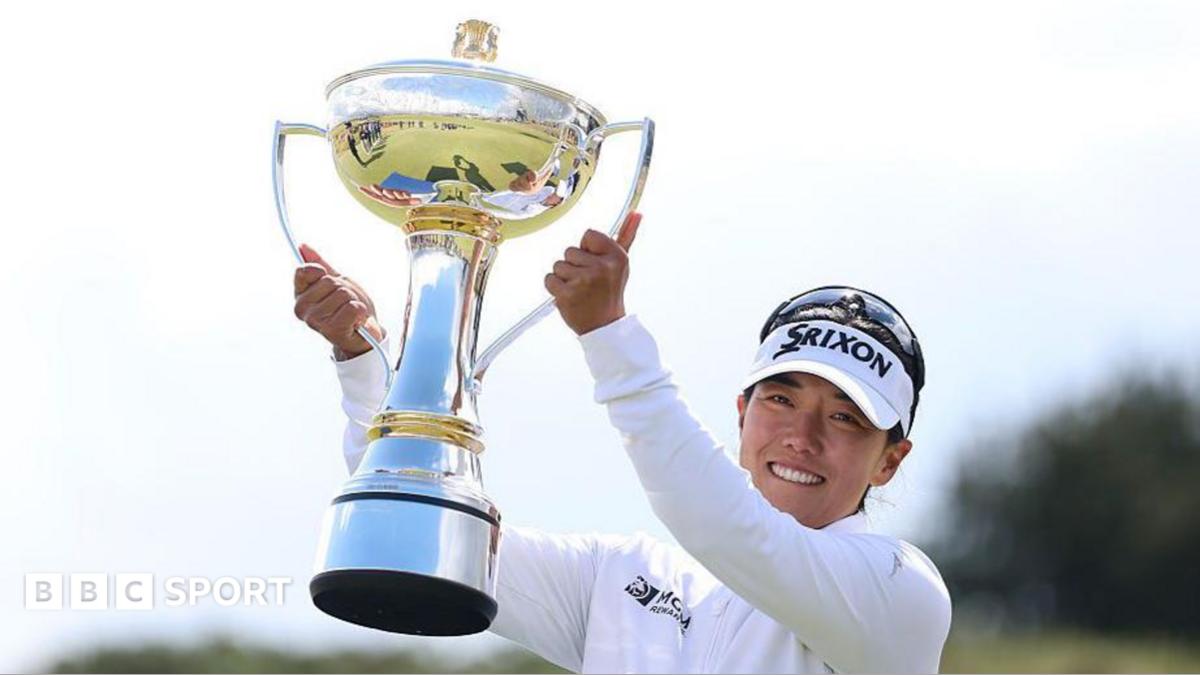
Jenny Shin didn’t blink when the round got ugly
Jenny Shin walked into the final day at Dundonald with the kind of lead that looks comfortable on a graphic and feels anything but on a windy links track. By the time the closing holes had done their usual Scottish mischief, she’d still done enough — winning the Women's Scottish Open by two over fellow South Korean A-Lim Kim.
That matters. A lot.
This wasn’t one of those runaway Sundays where a player coasts because everyone else hands her the trophy. Shin had to survive a tricky final round on a course built to expose indecision. Links golf doesn’t care about your reputation, your recent form, or how clean your ball-striking looked the day before. It asks one question over and over: can you think your way around trouble without trying to overpower it? Shin answered it better than anyone else in the field.
Dundonald did what Dundonald always does
The venue — Dundonald Links — was the real co-star here. If you know Scottish golf, you know the script. Wind, fast-running fairways, awkward bounces, and a leaderboard that can flip in a hurry once players start protecting rather than attacking.
That’s why the final board feels so instructive. Shin finished at 9-under, with Kim two back at 7-under. That gap is small, but in a final round like this it can feel enormous. One player stays patient. Another starts seeing flags instead of landing spots. That’s how links golf punishes you.
Shin didn’t win by outmuscling the field. She won by outlasting it.
The rest of the chase pack tells the story too. At 5-under, Pavarin Anannarukarn was right there, and Esther Henseleit, Leona Maguire, and Miyu Yamashita all hovered within range of a moving leaderboard. That’s the sort of depth the LPGA has been living with for years now: a lot of talented players, very little margin, and one round of cold putting or a bad bounce turning a top-five into a what-if.
A Korean finish, but with different pressure on each side
The Shin-Kim head-to-head was the sharp edge of this week. Same country, same final pairing stress, different kind of pressure. Shin came in with the title in sight. Kim had the chase job, which sounds simpler until you’re standing over a shot on a course that keeps moving the target in your head.
This is where experience starts to matter more than shot shape. Shin has lived enough tournament Sundays to know that winning in Europe, on links turf, often means accepting ugly stretches without letting them become disasters. She didn’t need to be brilliant every hole. She just needed to keep the round from getting away.
That’s the quiet skill most fans miss. Everyone loves the birdie flurry. The real separator is the player who can absorb a couple of awkward lies, a gust at the wrong time, and a putt that slides by, then step to the next tee like nothing happened. Shin did exactly that.
What this says about the LPGA pecking order
I’ll take this one step further: wins like this are part talent, part structural intelligence. The modern women’s game is brutally competitive, and the difference between a breakthrough week and a near-miss often lives in course management, not just power. Shin didn’t need to chase low numbers from the middle of the pack. She played the board in front of her, and that’s a veteran move.
I’ve always thought links golf strips away the marketing noise around players. It’s one of the few settings where the course can’t be bullied into submission, so the result tells you something honest. If you can win on a week like this, you’re not just hot. You’re adaptable. That travels.
And for a tour that’s packed with international talent, this is the kind of result that keeps the competitive map looking fresh. South Korean winners are hardly a surprise in elite women’s golf — that pipeline has been strong for years — but the significance here is how Shin separated herself in a field that had enough names to make the final leaderboard feel crowded all afternoon. If you’re looking for a clean indicator of depth, this is it.
For comparison, this kind of tight, nerve-heavy finish has a similar feel to the drama we’ve seen in other late-stage golf stories on the site, like the tension in the 2026 WNBA All-Star Game Grades breakdown — different sport, same truth: star power only goes so far when the moment gets loud.
The bigger takeaway from a two-shot win
Shin’s title won’t get framed as a blowout, and that’s fine. It shouldn’t. A two-shot win on a Scottish links course is a strong win. It says she handled the weather, the pressure, and the small decisions that usually decide these events.
It also leaves A-Lim Kim with something useful: proof she was close enough to matter. In events like this, that’s not consolation prize stuff. It’s evidence the form is there, and one cleaner weekend can flip the whole story.
For a deeper look at how a tournament can turn on thin margins, the same kind of deadline-style logic shows up in our Red Sox trade Connelly Early for Curtis Mead: deadline logic piece. Different sport, same front-office and competitor truth: timing, patience, and pressure all count.
Shin leaves Dundonald with a trophy, not just a scorecard. And in golf, that’s the only thing that really travels.
Next stop: the players who chased her now have a target, and Shin gets to carry the thing everyone else was trying to catch.
More from Straight From The Bench
Comments
Join the conversation — sign in to leave a comment.
Sign in to commentRelated Stories
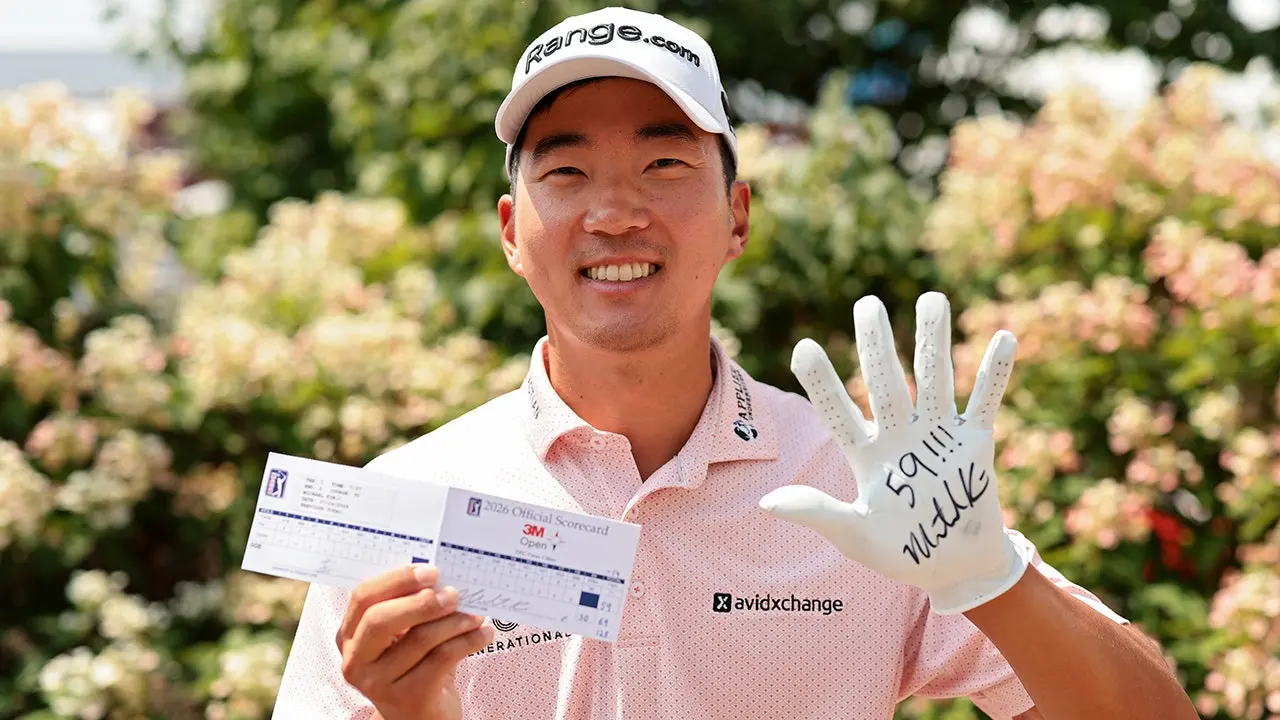
Michael Kim 59 at 3M Open: PGA Tour scoring history
Michael Kim carved out a 59 at the 3M Open, cashing a 24-footer on 18 to join one of golf’s rarest clubs. It was the kind of finish that changes a week fast.

Michael Kim 59 at 3M Open: A rare number, a rarer kind of nerve
Michael Kim’s 59 at the 3M Open was not merely a round. It was a small, bright rupture in the daily monotony of pro golf, the kind that reminds everyone how fragile and theatrical low scoring can be.

Brewers DFA Lance McCullers Jr.: trade gamble turns sour fast
The Brewers moved on from Lance McCullers Jr. barely after the ink dried on the trade. That’s not a footnote — that’s a warning label.