
World Cup 64-Team Expansion: Infantino Opens the Door
More nations may mean more dreams — and a thinner sense of occasion.
 Beatrice Kensington6 min read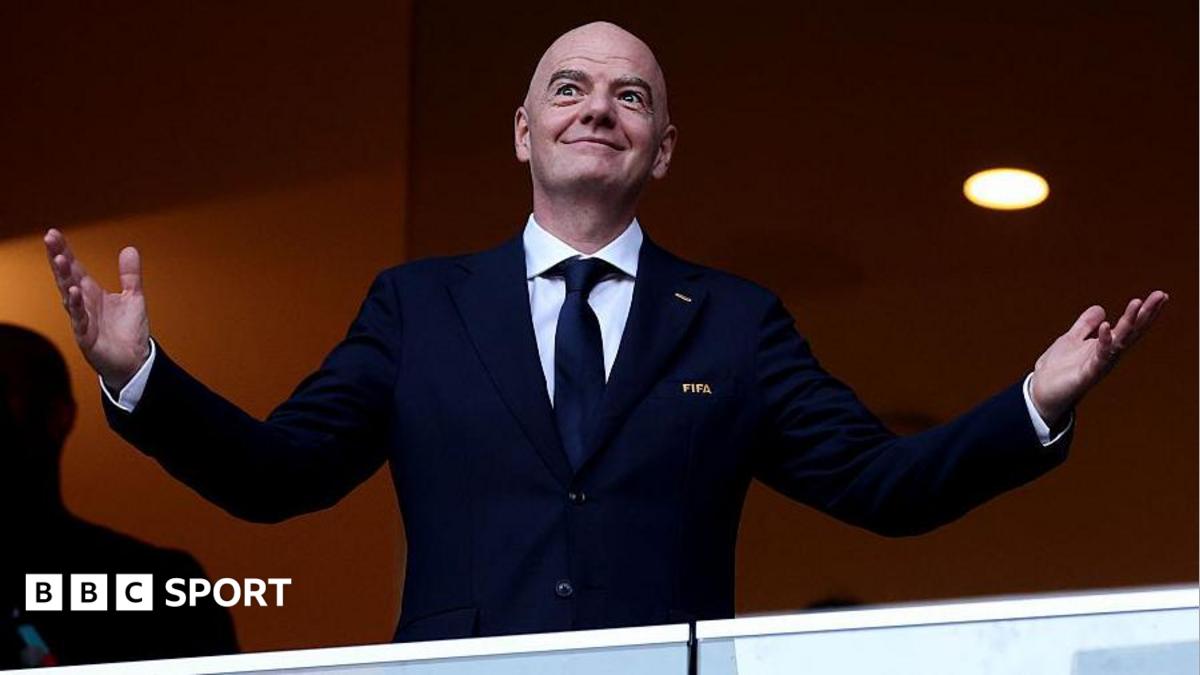
When Gianni Infantino says football must be “for the whole world,” he is not merely making a promise. He is laying bricks for a larger cathedral, one built to hold more flags, more anthems, more first-time qualifiers and, inevitably, more arguments about what the game is supposed to be.
The latest talk of a 64-team men’s FIFA World Cup is not yet a decision, but it is no mere idle balloon drifting above the game. FIFA has already stretched the tournament from 32 to 48 teams for 2026, and now the idea of a further expansion — especially for the 2030 edition — has moved from the speculative margins into the boardroom light. First it was a question of logistics. Then of politics. Now it is becoming a philosophy.
The World Cup as global stage, not private club
For years, the World Cup has lived inside a tension it never quite escaped. It is football’s grandest pageant, a month when the sport speaks every language and still somehow makes sense. But it has also been, in the eyes of many federations outside Europe and South America, a gate with too few keys.
That is the emotional and political force behind this proposal. A 64-team field would almost certainly open the door wider for countries that have long hovered on the edge of qualification, nations for whom a World Cup berth would not be a luxury but a civic event, a generation-shaping lift. For them, the tournament is not an abstract product. It is proof they exist on the same map as the heavyweights.
And that matters. It matters in Africa, in Asia, in smaller federations that have spent decades selling the dream of belonging on the biggest stage. If FIFA is serious about spreading football’s wealth, this is the kind of symbolic redistribution it has in mind.
But symbols have a way of arriving with invoices attached.
Bigger field, thinner edge
The modern World Cup works because it still carries danger. The group stage can be messy, but there is enough scarcity in the competition to make every upset feel like a small revolution. Add too many teams and the tournament risks becoming a larger, airier version of itself — grander in scale, lighter in pressure.
That is the central trade-off. A 64-team World Cup would almost certainly create more stories, more debutants, more regional pride, and more television inventory. It would also likely dilute the harder drama that has made the tournament so magnetic: the sense that every mistake costs real blood, metaphorically speaking, and sometimes footballing history.
Football can be widened, but it should not be flattened.
The 2026 expansion already raises questions about rhythm and fatigue. Double down again, and the tournament begins to resemble a festival with too many stages and not enough silence between songs. Fans will still come. Broadcasters will still pay. The real question is whether the event keeps its edge, or whether it becomes a sprawling administrative achievement that occasionally remembers to be a sporting one.
South America’s push and FIFA’s politics
The idea of 64 teams has not emerged from nowhere. It has come, in part, from South American lobbying around the 2030 World Cup, an edition already bound up in symbolism, with matches set to be staged across multiple continents to mark the tournament’s centenary. That alone tells you where the gravity lies: not just in footballing merit, but in the politics of inclusion and legacy.
FIFA, as ever, is both custodian and negotiator. It claims to steward the global game, yet it is also answerable to the federations that make its power possible. More teams mean more federations with a stake in the feast. More seats at the table. More applause, at least in the short term. The institution knows this language well.
I have watched enough football governance to know that expansion is rarely sold as expansion. It is sold as justice. There is usually a noble sentence attached, a broad civic idea about access, development, and the common good. Sometimes that sentence is true. Sometimes it is a silk glove over a very ordinary fist of money and influence.
And here is the part I cannot quite shake: once a competition like this grows, it rarely shrinks. Football has a way of treating temporary exception as permanent architecture. What begins as a one-off tribute to inclusivity can become the new normal before anyone has had the chance to ask whether the old normal was, in fact, working.
Who stands to gain — and who will pay the price
The obvious winners are nations sitting just outside the current qualifying threshold. More places would mean more pathways, more hope, more room for the unexpected. A 64-team World Cup would almost certainly produce stories the sport desperately wants: a first appearance, a historic point, a country that turns a qualification miracle into a national holiday.
Commercially, FIFA would gain a larger product, and the host countries would inherit a longer, more complex event with broader reach. For federations, there is prestige in saying football is finally less exclusive. For players, especially those in emerging programs, the chance to walk into a World Cup tunnel may be life-altering.
But there are costs beyond the abstract. A bigger tournament asks more of bodies, more of calendars, more of fans who already live inside an overstuffed football year. It also nudges the competitive balance toward mismatch. Not every addition is a fairytale. Some are just fixtures waiting to become foregone conclusions.
That is where the burden shifts onto the sport’s guardians. If FIFA wants the wider embrace, it must prove the competition still has a spine. If it cannot, the World Cup risks becoming a procession of participation badges draped over a shrinking sense of urgency.
My read: the game is being redefined in real time
I do not believe this is only about one tournament. I think it is about the story FIFA wants to tell about itself for the next decade: less gatekeeper, more global missionary. That is a useful story, and not entirely a dishonest one. Football has been unevenly shared for too long, and the map of excellence should not belong to a handful of old powers.
Still, the sport should be wary of confusing reach with richness. The great tournaments are not only large; they are precise. They know how to make the crowd lean forward. They create a sense that the next pass, the next tackle, the next minute might alter something permanent. If the World Cup becomes too accommodating, too eager to please everyone, it may end up softening the very tension that made it sacred.
I suspect the push toward 64 teams will gather momentum because politics, commercial appetite, and the language of inclusion are all pulling in the same direction. Yet the deeper test will arrive later, when the football itself has to justify the architecture built around it. That is the reckoning FIFA cannot stage-manage.
For now, the door is open. The corridor behind it is getting longer.
And football, once again, is being asked how many seats it can add before the room changes shape.
More from Straight From The Bench
Comments
Join the conversation — sign in to leave a comment.
Sign in to commentRelated Stories

Folarin Balogun Ban Waived: FIFA Discipline Case Raises Questions
FIFA’s decision to waive Folarin Balogun’s ban is drawing scrutiny because only one official was involved. The optics are ugly, and the precedent matters.

NASCAR Cup Series Atlanta Race: Quaker State 400 Live Updates
Atlanta is back in its usual role as a draft-race headache with weather lurking nearby. The Quaker State 400 should be messy, fast and worth every lap.
Michigan Athletics Investigation: Warde Manuel’s Tenure in Jeopardy
Michigan’s athletic department is under a hard, searching review — and Warde Manuel, once the steady hand, now sits in the line of fire. The real question is what kind of culture survives the audit.