
2026 World Cup Final: Trump’s Presence Casts a Long Shadow
Gold, boos and a trophy stage turned political theater.
 Beatrice Kensington5 min read
EAST RUTHERFORD, N.J. — The football belonged to Spain, but the room belonged, for a strange and uneasy stretch, to Donald Trump. By the time the trophy stage was being assembled after Spain’s win, the match had already yielded its sporting verdict. What lingered in the air was something else entirely: a president entering a stadium to a chorus of boos, waving as if the sound were simply weather, and then hovering near the brightest ceremonial moment the game had left to offer.
The final should have been a clean exhale after 90 minutes and then some, the sort of closing tableau that allows a tournament to seal itself in memory on athletic terms. Instead, it was interrupted by the peculiar gravity Trump always brings with him — a kind of political static that makes even a gold-trimmed stage feel like contested ground. FIFA, ever eager to wrap itself in power while pretending to stand above it, found itself with the sort of optics it pretends not to notice and absolutely cannot survive without.
A stadium response that said more than any speech
The boos were not subtle. They rolled through MetLife Stadium with the old, unmistakable force of a crowd deciding, in a single breath, that it was not playing along. That mattered. Sporting events at this scale are built on a fragile bargain: spectators will suspend their ordinary grievances for the sake of spectacle, and the spectacle, in turn, will give them a common language. On this night, the bargain cracked.
Trump’s arrival did not merely distract from the football; it reordered the emotional hierarchy of the evening. Spain’s victory ought to have occupied the center, the way FIFA World Cup finals usually do, with the ceremony serving as a neat crown on the competition. Instead, the crowd made plain that politics had elbowed its way into the frame and refused to leave quietly.
The trophy stage was supposed to be a coronation. It became a referendum.
That line may sound severe, but stadiums are honest places. They tell the truth faster than press releases do.
FIFA, ceremony, and the theater of proximity to power
Gianni Infantino’s long and well-documented habit of standing close to power makes this awkwardness feel almost pre-written. FIFA likes presidents, prime ministers and VIP box symbolism because it flatters the institution’s own sense of global importance. Yet the danger of proximity is that the crowd gets a vote too, and crowds at major finals are rarely interested in diplomatic choreography.
The awkwardness around the trophy ceremony was not just a matter of one man’s presence. It exposed the contradiction at the heart of modern mega-events: they sell themselves as universal celebrations, but they are always operating inside real political weather. The larger the event, the less it can pretend to be above the world around it. Even at a football final, especially at one, power walks in with its shoes already muddy.
For Spain, none of this should diminish the result. The champions earned the right to lift the cup with all the dignity the night could still muster. But the ceremony was denied its full innocence. The gold on the stage shone brighter because of Trump’s habit of pulling light toward himself, and dimmer because that same pull always casts a shadow.
What this means for the sport, and for the people watching it
This is not merely about one president and one booing crowd. It is about what happens when football’s global showpiece is asked to accommodate national politics that many in the stands did not sign up to applaud. The World Cup has always been a stage where governments try to borrow joy. Sometimes they succeed. Sometimes they get hissed for their trouble.
There is also a deeper anxiety here for supporters who want the sport to remain a place of temporary escape. That wish is understandable, even tender. But the modern game no longer grants such clean borders. The tournament is too large, too public, too tangled with state power, sponsorship and image-management for anyone to claim innocence with a straight face. If you put a politician on the pitch-adjacent carpet, you should not be surprised when the crowd behaves like a crowd.
Spain’s triumph, like Spain vs Argentina World Cup Final: Spain wins in extra time and the earlier Spain vs Argentina World Cup Final: Defensive Masterclass Wins, will be remembered for footballing reasons first. But the image that may travel furthest is not a pass, a save or a lift of silverware. It is the one of a president moving through a stadium that had already decided what it thought of him.
My read: the crowd reclaimed the final
I have long believed that the most revealing moments in sport are rarely the loudest ones on the scoreboard. They are the moments when the ceremony slips, just for an instant, and the audience shows you what it really thinks the event is for. That happened here. The crowd did not merely reject Trump; it reminded everyone that a World Cup final still belongs, in the end, to the people in the seats and the players on the grass.
There is a historical echo in that, though not a comforting one. Big sports spectacles have always been tempted by the prestige of the powerful, and the powerful have always been eager to stand near the glow. The difference now is that audiences are less willing to smile politely through the arrangement. They boo. They film. They post. They refuse the old choreography.
And perhaps that is the truest inheritance of the night. Not the polished stage, not the gold, not the awkward handshakes. The refusal. The crowd made clear that it knew exactly who was being centered, and it did not consent.
The football has moved on. The politics will not. Expect that tension to follow every grand finale from here on, with the people in the stands deciding whether the ceremony is celebration — or a challenge.
More from Straight From The Bench
Comments
Join the conversation — sign in to leave a comment.
Sign in to commentRelated Stories
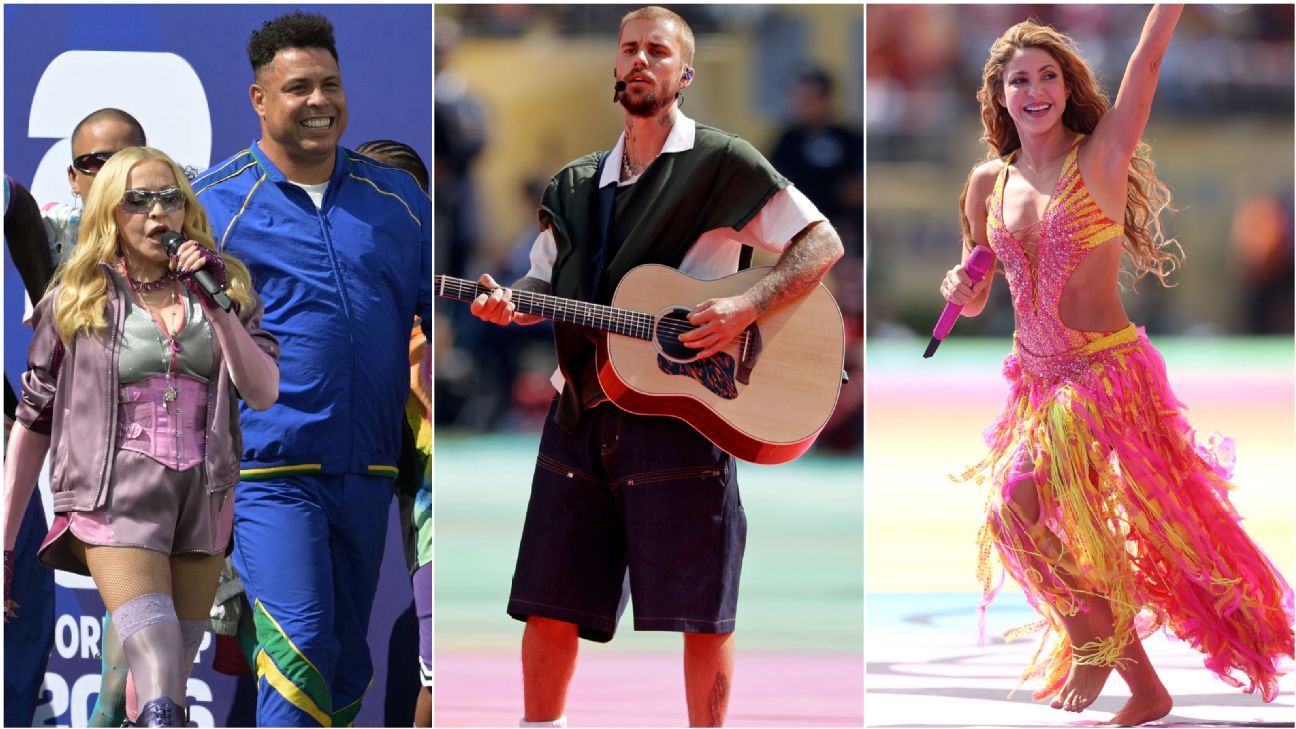
World Cup final halftime show: Mad, loud, and strangely earned
The first World Cup final halftime show brought star power and spectacle to the biggest stage in soccer. It also raised the old question: did the music serve the match, or swallow it?

Spain World Cup Final: Outplaying Messi's Argentina to the Summit
Spain were cleaner, sharper and more ruthless in the biggest game. Messi’s Argentina never got a foothold, and the trophy followed the performance.

Spain vs Argentina World Cup Final: Young Spain Wins
Spain turned a tense final into a structural lesson, blanketing Lionel Messi’s Argentina and lifting a second World Cup in New Jersey.