
World Cup final halftime show: Mad, loud, and strangely earned
Four superstars, one soccer cathedral, and the sport’s newest sideshow.
 Leo Lupo5 min read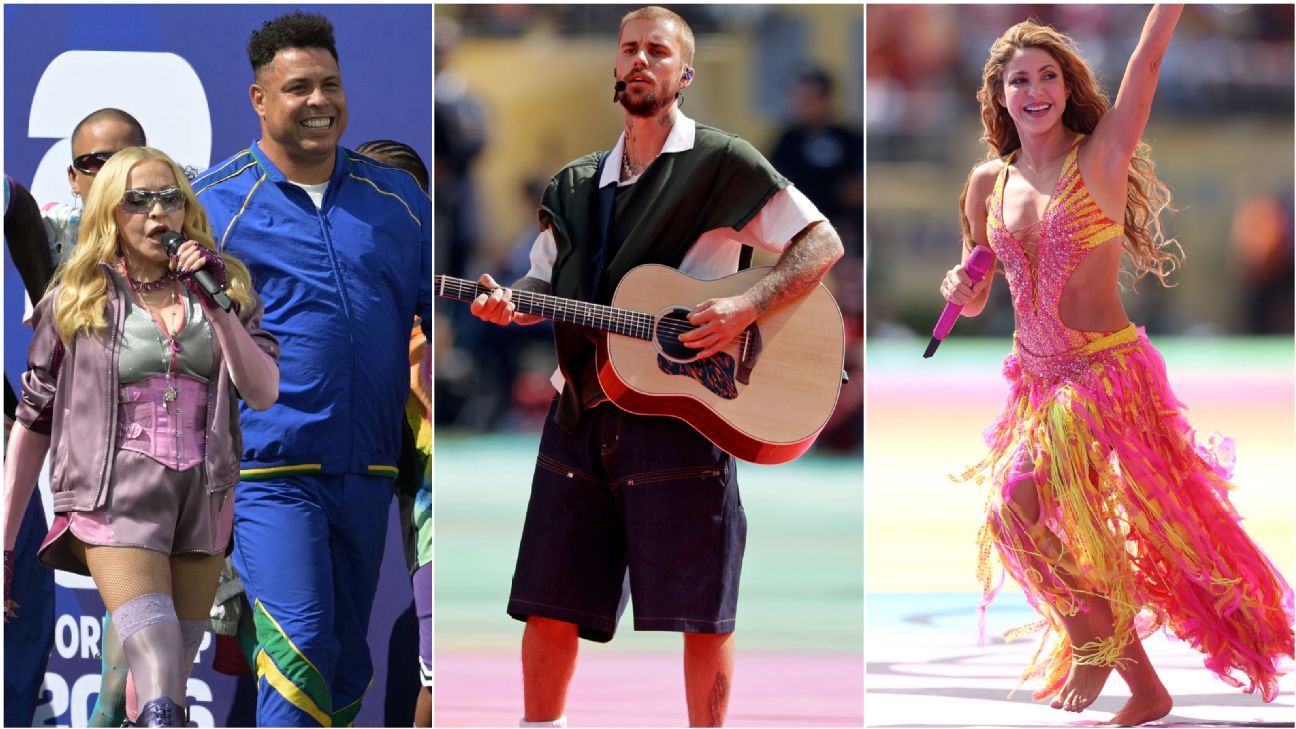
The first crack of the big-top tent came at halftime, where the World Cup final stopped being just a soccer match and turned into a full-blown showbiz event. You had Madonna, BTS, Justin Bieber, and Shakira all taking a turn in the spotlight, which is the sort of lineup that would’ve sounded like a barstool joke ten years ago. Now it’s the new reality: the game’s biggest day wants its music to hit as hard as the football.
The stage was bigger than the penalty area
This wasn’t some cute little pregame serenade in the tunnel. This was the final, the last whistle’s worth of attention in one place, and the planners wanted global reach. The FIFA World Cup already sells itself as the world’s common language. A halftime show like this says: fine, let’s make it a multilingual broadcast, too.
That’s the part nobody should pretend to be shocked by. Modern sports is a housing market for attention. Leagues, federations, and broadcasters all keep trying to squeeze another ounce out of the audience between kickoff and the trophy lift. The music acts are there because they drag in viewers who might not know a back line from a backbeat. And the soccer people? They’re there because they know the eyes have to stay glued somehow.
Madonna, BTS, Bieber, and Shakira: star power with different jobs
Each performer walked in with a different assignment. Madonna is the veteran in the room, the one who turns a stage into a command post just by standing on it. BTS brings the machinery of a fanbase that travels like weather. Bieber has the pop-machine familiarity that cuts through any market. Shakira, naturally, belongs in this conversation the way coffee belongs to a night shift.
And that’s the thing about rating a halftime show like this: you’re not just grading vocals or choreography. You’re grading fit. Who actually belongs on a World Cup final stage without making it feel rented? Shakira usually gets that answer right because she understands rhythm as part of the sporting bloodstream. Madonna brings authority. BTS brings scale. Bieber brings reach. The blend matters more than any one set piece.
The halftime show wasn’t a break from the final. It was part of the final whether soccer purists liked it or not.
The purists will grumble, and they should a little
I’ve been around long enough to remember when halftime meant bad coffee, a scribbled note card, and a coach with a jaw like he’d been chewing nails. Now the middle of the biggest match on earth has become a production number. Fine. The sport changed. The business changed. The audience changed. But let’s not get misty about it and call every shiny idea progress.
Here’s my take, and I’m not dressing it up: the halftime show is only worth its salt if it doesn’t cheapen the match. Soccer has spent generations trying to prove it doesn’t need American gimmicks to matter. So if the sport is going to borrow the Super Bowl’s old circus tricks, it better do it with some sense of scale and some respect for the game. Otherwise you’ve just put sequins on a cathedral and called it modernization.
Still, there’s no denying the draw. A Justin Bieber appearance can pull in casuals. Madonna gives the thing a bit of class-by-fire. BTS brings the modern global sledgehammer. Shakira brings the soccer pulse. Put that together and you’ve got a halftime show that can travel from Buenos Aires to Bangkok without a translator.
What it means for the sport going forward
This is the part that should make soccer executives sit up straight. Once you plant a flag like this in the middle of the World Cup final, you’ve raised the bar for every big event that follows. The music industry will want bigger bills. Sponsors will want cleaner integration. Broadcasters will want more shoulder programming. And fans, bless them, will want the spectacle to be worth the interruption.
There’s also a cultural tug here. Soccer has always been strongest when it feels like the center of the planet’s attention, not a guest in somebody else’s house. A halftime show can either reinforce that or make the event feel like it’s borrowing prestige from pop culture. The best case is mutual benefit: the game keeps its throne, and the artists make the room wider. The worst case is a bloated TV product that forgets why people tuned in.
I’ll say this much: if the sport’s first halftime show had to start anywhere, starting with names this large was the right move. You don’t launch a new tradition with a regional act and a prayer. You hit the gas and see if the chassis holds. Some of the old guard will hate it no matter what. They hated shirt sponsors once, too. Then they got used to the check.
There’s a line here, and soccer would do well not to cross it. The final should never become the opener for the music show. The music is the garnish. The match is the meal. Keep that order straight and the whole thing can work.
The next one will be judged harder, because that’s what happens when you break new ground. Until then, this first halftime show did what it was supposed to do: it made the world look up for a few minutes. Soccer can live with that, as long as it doesn’t start living for it.
More from Straight From The Bench
Comments
Join the conversation — sign in to leave a comment.
Sign in to commentRelated Stories
Kevin Keegan Death: Liverpool and England Legend Dies at 75
Kevin Keegan was more than a scorer and more than a manager; he was a weather system. His death at 75 closes a chapter of English football that still feels alive in the memory.

Spain World Cup Celebration Photo Leaves Trump Out
Spain’s championship photo went out clean, and Donald Trump wasn’t in it. In a moment built for optics, the edit said plenty.

Argentina loss: Trump sports curse talk returns after Messi comments
Trump’s praise of Lionel Messi before Argentina’s loss to Spain was enough to revive the old curse chatter. In a sport built on fate and memory, superstition always finds fresh soil.