
Brewers vs Dodgers NLCS Game 1: Milwaukee Stuns L.A.
The payroll giant blinked first, and Milwaukee’s noisy little corner of the postseason got louder.
 Beatrice Kensington6 min read
Milwaukee did not blink under the floodlights
There are nights in October when a supposedly smaller team is supposed to behave like a visitor in its own ballpark, tiptoe around the furniture, and wait politely for the richer club to decide the outcome. Milwaukee rejected that script at once. Against the Los Angeles Dodgers, a team built like a luxury tower and staffed like a parade float, the Brewers leaned into the old, stubborn virtues that still matter in the postseason: a young arm with nerve, a bullpen with backbone, and a crowd that understood the assignment before the first pitch had even settled into the catcher’s mitt.
Jacob Misiorowski, who has the sort of arm that makes radar guns feel underdressed, helped set the tone, and Milwaukee’s relievers carried the rest. One run allowed against a Dodgers lineup that can look like a tax bracket all by itself is not merely a tidy Game 1 result. It is a statement of method. The Brewers were not auditioning for admiration. They were building a wall.
The Dodgers’ money met Milwaukee’s timing
The Dodgers arrived with the kind of expectations that can flatten a series before it starts. They are baseball’s bright imperial project, the team most often asked to prove that accumulation can become inevitability. And yet postseason baseball has spent generations mocking that assumption. October does not reward the deepest roster merely for existing. It demands the right pitch, the right out, the right refusal to crack when the moment tilts greasy and strange.
Milwaukee, by contrast, plays with the beautiful inconvenience of the underdog. The Brewers won 103 games for a reason, and that reason is not romance. It is structure. It is a rotation and bullpen ecosystem that asks different pitchers to solve different problems, then trusts them to do it without pleading for heroics from the same two or three stars every night. The relief corps did what October relievers must do when the lights feel hottest: they made the inning feel smaller for the hitter than it felt for anyone watching.
This is the part that should worry Los Angeles. The Dodgers can survive a bad night at the plate; every serious club has one in the chamber. What they cannot afford is to let a series become a referendum on their patience, especially against a team happy to turn every base runner into a minor siege. Milwaukee’s edge was not flash. It was compression. There is less time in a game like this than the glamour clubs prefer to admit.
The Brewers did not outspend Los Angeles. They outlasted it.
Front Row Amy and the civic theater of a playoff crowd
Then there was Front Row Amy, who went viral as these things tend to happen now, when the camera finds a face that embodies the night as clearly as any box score ever could. Her presence was not a sideshow. It was part of the atmosphere that gave the ballpark its voltage. Baseball has always been a game in which the crowd is not merely noise but narrative pressure, and in Milwaukee the stands felt less like spectatorship than civic witness.
That matters more than the internet likes to admit. We spend so much of the sport’s modern conversation on velocity, spin rate, payroll, and market size that we risk forgetting the oldest competitive resource of all: belonging. A home crowd does not hit for average, but it can harden a team’s posture. It can keep a young pitcher’s delivery from drifting into panic. It can turn a routine grounder into a small, roaring civic event. Front Row Amy became the face of that energy because she looked like someone who had been waiting all year to be needed, and finally was.
If you want a useful frame for Milwaukee’s postseason identity, it is this: the Brewers are not trying to seduce you with excess. They are trying to convince you that conviction can still beat pretense. That is a gorgeous and dangerous way to play baseball.
Misiorowski’s night changes the temperature of the series
Misiorowski’s role in all this cannot be reduced to a highlight package, though the clips will travel far and fast enough on their own. What matters is the feeling he gave his teammates — the feeling that the first inning did not belong to the Dodgers by default. Young starters in October often carry the burden of proving they are not merely talented but usable in a furnace. Misiorowski answered that test, and in doing so he gave Milwaukee something more valuable than innings. He gave them permission.
That permission extends through the bullpen, where a manager can become either a steward of momentum or its undertaker. Milwaukee chose stewardship. The sequencing, the trust, the refusal to panic when the game threatened to become a Dodger-shaped avalanche — that is the hidden craft of a postseason win. It is easy to celebrate the final score and miss the architecture underneath.
I’ve spent enough Octobers watching heavy favorites discover, usually too late, that baseball is a sport with no charity for reputations. The Dodgers still remain the more complete, more expensive, more visibly powerful machine. I would not pretend otherwise. But I also know how often teams like Milwaukee become most dangerous precisely because the larger stage allows them to stop explaining themselves. They are free now. Free of the burden of surprise, free of the need to sound humble, free to keep throwing strikes and taking the extra base and letting the game narrow into something they can manage.
What the Brewers must preserve, and what Los Angeles must fix
The Brewers do not need to become something they are not. They do not need to chase a slugging contest against a club with too many bats that can change a night with one swing. They need to keep doing the small violent things that win October series: steal a strike here, strand a runner there, let the bullpen inherit clean edges rather than chaos. That formula can carry far if the starting pitching keeps the door only partly open.
The Dodgers, meanwhile, must treat this not as an inconvenience but as a warning. The next game will ask whether they can force Milwaukee out of its preferred shape. That means pressure on the bases, cleaner at-bats, fewer empty turns, and above all a refusal to let the Brewers dictate tempo. Good teams can be embarrassed once. Great teams answer quickly.
And yet the deeper truth of Game 1 is this: Milwaukee has already proven that it belongs in the conversation, not as a charming side note but as a menace. The brightest lights were supposed to belong to Los Angeles. Instead, the Brewers left their own imprint on the opening night of the NLCS, and they did it with the kind of plain-spoken confidence that survives long after the viral clips fade.
The series has only begun, but the tone has been written. Milwaukee just handed the Dodgers a bill. Next comes collection.
More from Straight From The Bench
Comments
Join the conversation — sign in to leave a comment.
Sign in to commentRelated Stories

Brewers vs Dodgers NLCS Game 1: Milwaukee’s arm farm holds
Game 1 in Milwaukee turned into a bullpen knife fight, and the Brewers didn’t blink. Aaron Ashby and the crew kept the Dodgers from breathing easy.
Dodgers-Brewers NLCS Pitching Matchup: How the Rotations Line Up
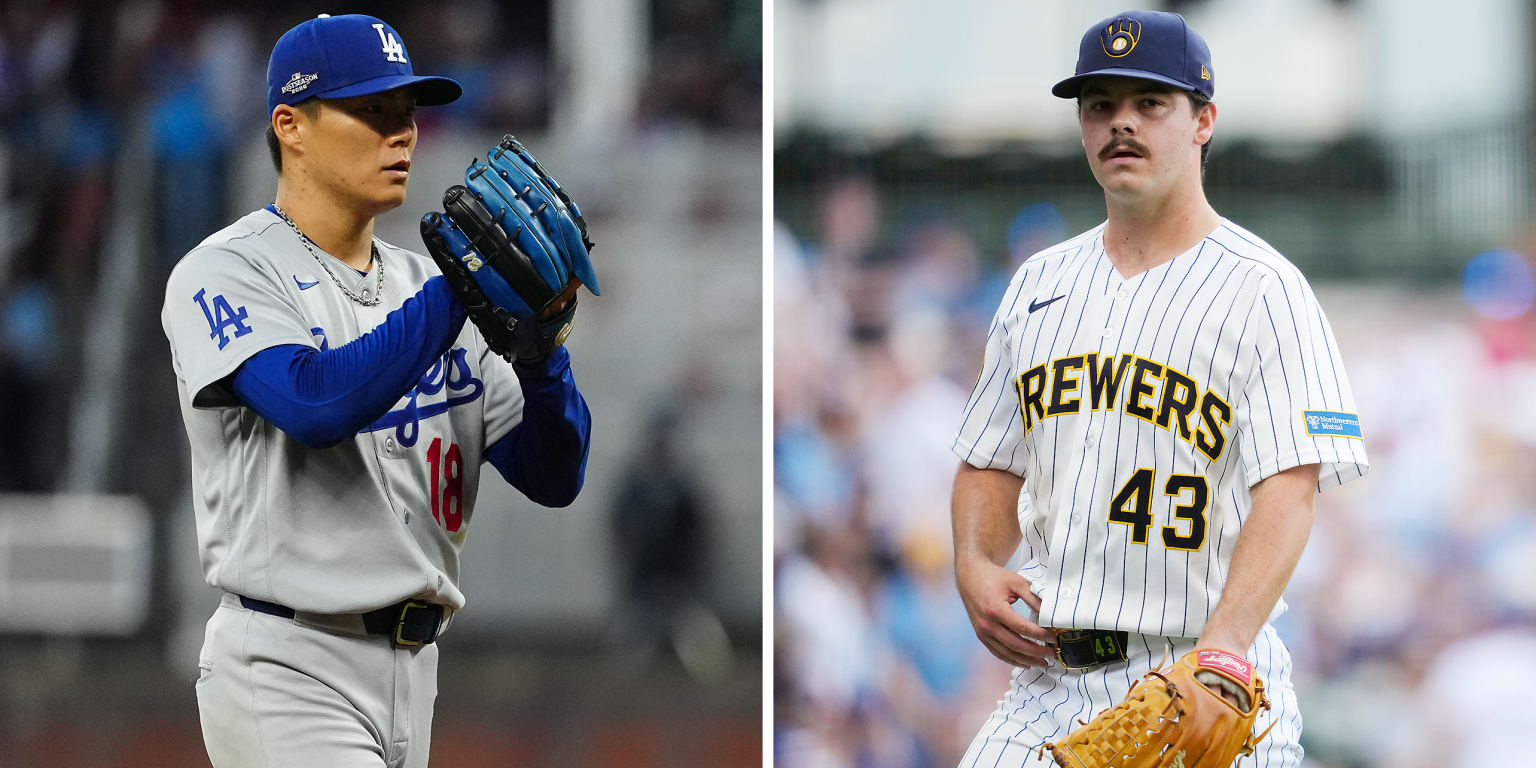
The NLCS turns on the arms, and this one arrives with a sharp contrast: Milwaukee’s homegrown resilience against Los Angeles’ expensive certainty.
Miguel Vargas Trade Update: White Sox Turnaround Has a New Face
Miguel Vargas is no longer a side note in Chicago. The White Sox have found real value in a player who once looked lost, and that matters in a hurry.