
Hannah Rapp Death: Rising Boxer Killed in Texas Bicycle Crash
A brutal, senseless loss in a sport that already asks too much.
 Beatrice Kensington6 min read
Hannah Rapp was supposed to be writing the hard, stubborn middle chapters of a fighting life — the roadwork, the gym dust, the small leaps that carry a boxer from promise to relevance. Instead, her name now sits in the cruelest category of sports news, the kind that arrives without warning and leaves the room changed. The 26-year-old professional boxer died after authorities say a motorist passed her on a rural Texas road, stopped, and then reversed into her while she was riding a bicycle. It is a sequence so senseless it feels almost unreal, and yet it is exactly the sort of violence that reminds you how thin the line is between ordinary motion and catastrophe.
A fighter taken on a training road
Rapp was out on a bicycle ride in Brazos County, doing what boxers often do when they are trying to build lungs, legs, and discipline all at once. Roadwork is the old religion of the sport. It is solitary and punishing and, for many fighters, the place where the day begins to reveal its truth. There is no canvas there, no bell, no referee to separate danger from intent. Just pavement, heat, traffic, and trust.
That trust was shattered here.
Authorities say the driver first passed Rapp, then stopped, and then reversed into her. The details are still being sorted through by investigators, but the basic outline is enough to make the stomach tighten. A cyclist is already exposed in the way that a boxer is exposed when she steps through the ropes: the body is doing its work in plain sight. To be struck in reverse — not in the motion of going forward, but in a deliberate backing up — carries a particular ugliness. It turns a road into something else entirely.
For fans of combat sports, the name Hannah Rapp may not have been widely known yet. That is the tragedy of rising athletes: they live in the space between local recognition and national profile, where the people who truly know them are the ones at the gym, on the road, in the corner, or sitting through long afternoons waiting for the next fight date to become the right fight date. She had not reached the scale of a Katie Taylor or a Claressa Shields, but that never makes a life smaller. It only means the sport lost a story before it could fully introduce her.
The hidden danger of boxing’s most ordinary ritual
Boxing has always romanticized the grind, and not without reason. Roadwork builds endurance. It sharpens the lonely muscles that title fights demand. Yet the sport’s oldest traditions can look almost quaint against modern reality, where a bicycle on a rural Texas road can become a site of irreversible loss in seconds.
The fight game can survive a broken hand; it cannot shrug off a stolen life.
That line may sound severe, but boxing has earned its severity. It is a sport that asks its athletes to accept risk as part of the profession. What happened to Rapp is different. This was not the chosen hazard of the ring. It was the uglier bargain of public space, where a young athlete trying to train met a motor vehicle and did not come home.
There will be questions about motive, about what investigators learn, about whether this was reckless behavior, criminal intent, or both. Those questions matter deeply to the law. They matter less to the grief, which has already done its work. Her fellow fighters, coaches, and family are left to absorb a truth that no press conference can soften: the world outside the gym is not always neutral. Sometimes it is indifferent. Sometimes worse.
For women in combat sports, that danger carries an added sting. They already fight for visibility, for serious purses, for respect that is too often granted grudgingly. To lose one in such a violent, absurd manner feels like a theft from a lane that was never easy to begin with. The ring is supposed to be the place where the odds are fairer than they are on the road.
What this says about the life behind the gloves
I’ve covered enough sports tragedies to know the public instinct is to rush toward the box score, the record, the bracket, the next event. But the deeper story lives elsewhere. It lives in the private architecture of an athlete’s week: the alarm before dawn, the long run, the bike ride for conditioning, the meals measured in portions and purpose, the hope that all of it might one day be rewarded with a bigger crowd and a better opponent.
That is the life Rapp was inhabiting. Not celebrity. Not myth. Work.
And work is what makes this so galling. We tend to honor athletes for their spectacle, but they are most vulnerable in the unfilmed hours. A boxer may be praised for toughness in the ring, yet she is just as exposed on a roadside as any other person. Perhaps more so, because she has spent her professional life learning to endure contact and to keep moving forward. There is something especially cruel about a sport built on resilience losing one of its own in a moment that made resilience irrelevant.
I keep thinking about how often we celebrate the heroic inconveniences of sport — the icy training camp, the road miles, the early flights, the bruises we call character — and how little attention we give to the fragility of the bodies doing the labor. We ask athletes to be engines. Then we forget they are flesh.
The grief now belongs to boxing, too
The broader boxing community will do what it always does after a loss like this: post tributes, share memories, speak her name, and try to make a circle around the people left behind. That matters. Ritual matters. In a sport that can be unforgiving and transactional, grief is one of the few honest currencies.
If there is any silver lining here, it is not consolation — nothing of the sort — but clarity. Clarity about how dangerous the margins can be, even for a young athlete doing something as familiar as a training ride. Clarity about the fact that safety is not abstract, not when roads intersect with ambition.
The sport will move on. It always does. Cards will be scheduled, prospects will rise, and the next gifted woman with fast hands will start making her case. But Hannah Rapp’s death should linger in the memory of boxing as a warning and an indictment. Not every loss is inside the ropes. Some are swallowed by the ordinary world before a fighter ever gets the chance to tell her story.
There should be no hurry past that fact.
The road will still be there tomorrow. So will the sorrow.
More from Straight From The Bench
Comments
Join the conversation — sign in to leave a comment.
Sign in to commentRelated Stories
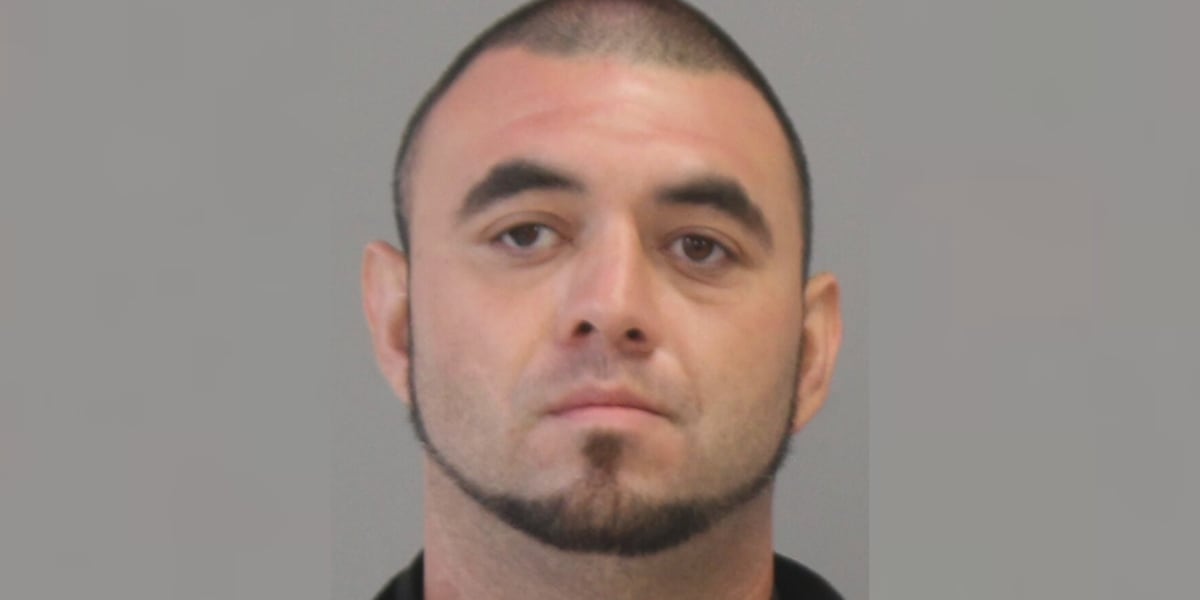
Hannah Rapp Death: Arrest in Brazos County Manslaughter Case
Deputies say a man reversed into bicyclist Hannah Rapp on FM 159, killing her. The arrest now shifts this from tragedy to a hard legal fight.

Spain World Cup Final: Outplaying Messi's Argentina to the Summit
Spain were cleaner, sharper and more ruthless in the biggest game. Messi’s Argentina never got a foothold, and the trophy followed the performance.

2026 World Cup Final: Trump’s Presence Casts a Long Shadow
Spain won the final, but the loudest reaction in the building belonged to Donald Trump. In a sport built on ceremony, his presence turned one last act into a test of nerves.