
Jonas Vingegaard Injury Update: Tour de France Exit Stings
The race lost its sharpest knife, and the yellow jersey picture just got a lot messier.
 Zane Miller5 min read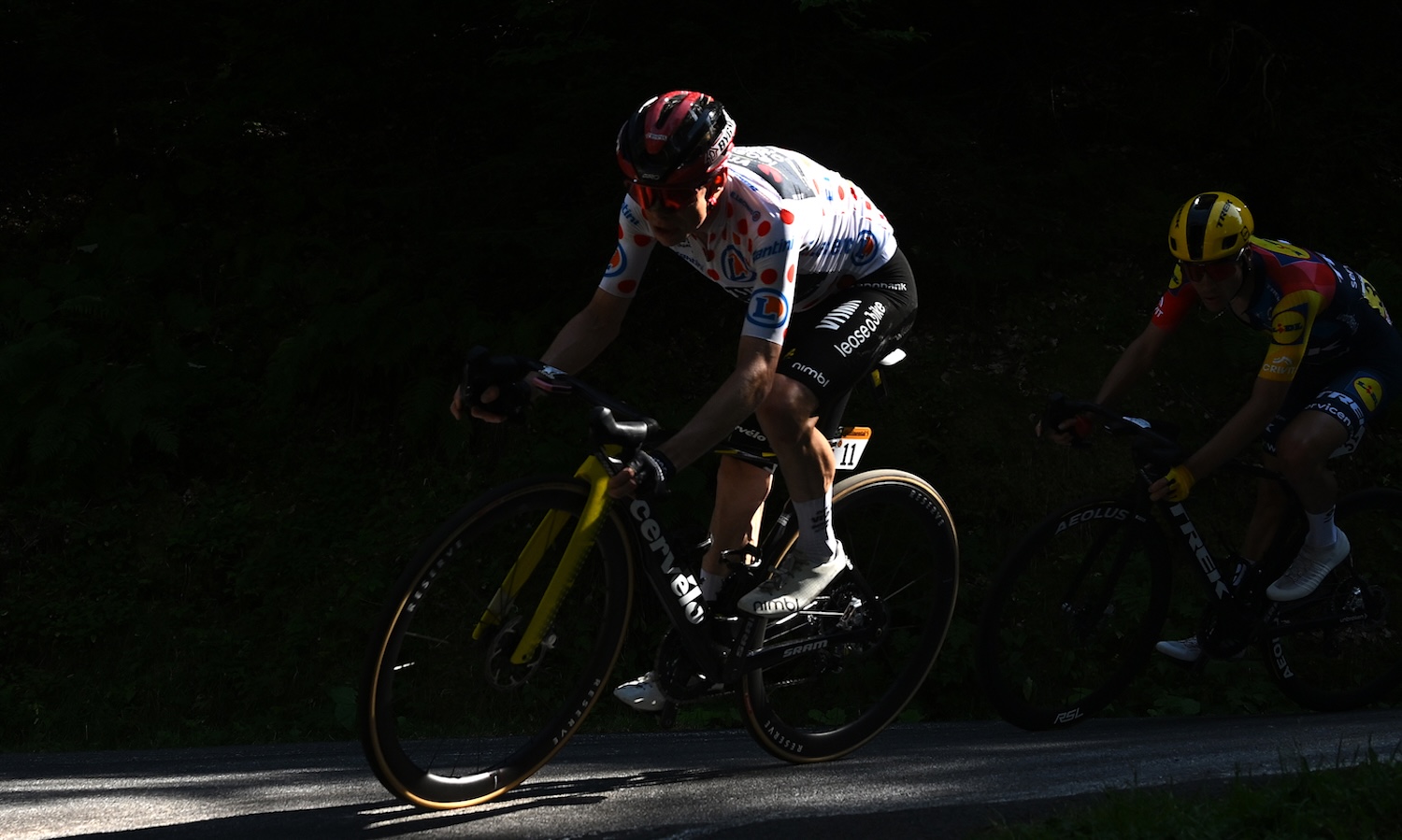
A crash that changes the whole Tour
The Tour de France doesn’t do mercy. One second you’re fighting for position, the next you’re on the roadside dealing with a collarbone, an ambulance, and a race that keeps rolling without you. That’s where Jonas Vingegaard found himself, and this one lands hard because he wasn’t just another stage casualty. He was one of the central reasons this Tour had tension in the first place.
The detail that matters most is the speed of it. Vingegaard was out of the race almost immediately after the crash, and the image of him trying to make sense of the damage on the Tour de France bus says plenty. These guys are built on pain tolerance, but collarbone injuries are not a “tape it up and keep moving” situation. Not at this level. Not with the Grand Tour grind still ahead.
The Tour doesn’t just test legs. It exposes every fragile thing racing asks riders to survive.
Why this hits harder than a normal withdrawal
Vingegaard is not some mid-pack climber you can swap out and keep the structure intact. He is the structure. The Visma–Lease a Bike setup is designed around precision, discipline, and the idea that their leader can absorb the chaos of a three-week war better than almost anyone. Pull him out, and the entire chessboard changes.
That’s the real sting here. The Tour is full of attrition, but the highest-value withdrawals don’t just affect the standings. They affect tactics, television, team resource allocation, even the emotional temperature of the race. Now every mountain stage gets a little less explosive in one direction and a little more open in another. Opponents don’t just lose a rival. They gain freedom.
This is also why cycling fans are so ruthless about bad luck. The sport has spent decades pretending it’s a clean measuring stick for greatness, but the truth is uglier. Positioning, road furniture, weather, one misread line in a sprint zone — that stuff can undo months of preparation. Vingegaard didn’t lose a race so much as get swallowed by the sport’s oldest tax: chaos.
Visma’s plan just got ripped apart
Teams don’t build around a superstar for fun. They do it because the margins in a Grand Tour are microscopic, and one elite leader lets everyone else ride with purpose. With Vingegaard gone, Visma’s priorities shift fast. Stage wins become more valuable. Supporting riders get bigger roles. Every tactical decision becomes less about GC control and more about damage control.
That doesn’t mean the whole month is a loss for the team, but it does mean the original script is toast. A squad like this can still operate, still hunt, still influence the race. But the oxygen changes. Without a rider who can contest the overall battle, the pressure moves to salvaging something from the chaos rather than owning it.
If you want the blunt truth, this is the kind of break that exposes whether a Tour team was built around one man or built to survive without him. Visma has depth. Everybody knows that. Depth, though, is not the same thing as replacing a two-time Tour de France winner and continuing like nothing happened.
What the rest of the field just gained
This is where the contenders start doing quiet math. Every GC rival knows the same thing the fans know: the fastest way to make a race less complicated is to remove the guy who can control the hardest moments. Vingegaard’s exit won’t just alter the podium conversation. It changes how aggressive everyone else can be from here on out.
You’ll see it in the pacing. You’ll see it in the willingness to attack earlier. You’ll see more riders and directors betting on opportunistic stages because the power balance is suddenly less rigid. And once the fear of Vingegaard is out of the air, the race gets wider, messier, and a lot harder to predict.
That’s where I’ll say this plainly: cycling keeps asking us to admire its suffering, but its most honest feature is also its ugliest one. The best rider in the race can be erased by a curb, a split-second decision, or bad luck that no training block can prevent. Vingegaard’s exit is a reminder that Grand Tours are less about guaranteed destiny than survival.
I’ve always thought the modern Tour is at its most compelling when the strongest rider is forced to keep answering random questions the body never agreed to. That’s the brutal beauty of it. But there’s a difference between challenge and absurdity, and this injury sits right on that line. One minute the race is about power. The next it’s about who can keep their balance when the road turns cruel.
What to watch next in the Tour
The immediate question is how Visma–Lease a Bike reorders itself, because the optics matter almost as much as the tactics. Teams read body language as much as wattage. If the riders look flat, the race notices. If they look liberated, the breakaway merchants start circling.
Also watch the tone from the contenders. Nobody wants to sound like they’re celebrating another rider’s bad luck, but every GC hopeful knows this is a major event in the race. That’s not disrespect. That’s reality. A Tour without Vingegaard is still a Tour, but it is a different beast now.
The whole thing turns sharper from here. More uncertainty. More freedom. Less control. And in this race, those three things usually mean the same thing: somebody else just got a lot more dangerous.
The Tour moves on, because it always does. The question now is who’s brave enough to take advantage of the opening Vingegaard left behind.
More from Straight From The Bench
Comments
Join the conversation — sign in to leave a comment.
Sign in to commentRelated Stories

Conor McGregor Knee Injury: ACL and Meniscus Details After UFC Return
McGregor’s latest setback is not just another injury update. It is a study in how violence, time, and ambition can collide in one ruined knee.
Shohei Ohtani Injury Update: Dodgers Pause His Pitching Plan
Shohei Ohtani’s knee issue is now affecting more than one part of his game. The Dodgers are slowing the pitching side down, and that changes the whole calculus.
Hannah Rapp Death: Arrest in Brazos County Manslaughter Case
Deputies say a man reversed into bicyclist Hannah Rapp on FM 159, killing her. The arrest now shifts this from tragedy to a hard legal fight.