
Pan Pacific Championships 2026: Day 1 Prelims and Summer McIntosh
Eight years gone, and the water already feels charged.
 Beatrice Kensington6 min read
The meet is back, and so is the tension
Eight years is a long silence for a championship built to measure the sporting weather of the Pacific Rim. The Pan Pacific Championships have not merely returned; they have returned with the quiet authority of a meet that knows its place in the pecking order and does not need to shout. On Day 1 prelims, the water already had that unmistakable championship glint — not the bright carnival glare of a world-record chase in midsummer, but the harder, more intriguing light of athletes trying to establish who belongs at the center of the frame.
The headliner, of course, is Summer McIntosh in the women’s 200 free. That alone changes the emotional temperature of the session. McIntosh turns almost every race into a referendum on possibility, and in a meet with a long absence behind it, her presence supplies both continuity and expectation. She is one of those rare swimmers who makes the lane lines seem narrower, the margins thinner, the whole enterprise more severe.
Summer McIntosh and the burden of being the standard
McIntosh does not simply arrive as the favorite. She arrives as the measure. That distinction matters. Favorites can be upset; standards force everyone else to explain themselves.
The women’s 200 free has always carried a particular kind of prestige because it asks for contradiction: speed without panic, endurance without drift, control without stiffness. It is a race that exposes the cost of ambition in increments. McIntosh’s draw here is not just that she is excellent. It is that she has become the swimmer against whom the rest of the field imagines the ceiling.
That pressure radiates outward. Competitors in the same event are not only chasing a lane in the final; they are testing whether the hierarchy around McIntosh can be made to wobble at all. Coaches know it. Teammates know it. And fans, even if they only half admit it, know that every McIntosh appearance has a second race attached to it: the one between her and history.
In swimming, the stopwatch is never the whole story; it is the verdict dressed in numbers.
Why the Pan Pacs still matter after the long pause
The meet’s return carries a significance that goes well beyond nostalgia. Swimming has no shortage of global showpieces, but the Pan Pacs occupy a useful middle ground: prestigious without being bloated, international without the overstuffed choreography that can swallow a championship whole. It is a proving ground for Swimming) nations that tend to dominate the sport’s most consequential lanes — the United States, Australia, Japan, Canada — and a place where a generation can begin to sort itself in public.
The eight-year gap gives this edition a slightly ghostly quality. Sporting institutions can survive disruption, but they do not return unchanged. Some names have faded, others have ascended, and some athletes have spent the intervening years becoming the face of a sport they were once only expected to join. That makes Day 1 prelims feel less like a routine opening session and more like the first page of a new ledger.
The athletes competing here are not merely racing for medals that have yet to be awarded. They are racing for relevance in a year when every swim will be interpreted through the lens of what comes next — national selections, world rankings, Olympic pathways, the endless arithmetic of progress. The Pan Pacs have always had that stern usefulness. They tell us who is honest about the work.
The lanes behind McIntosh still carry real stakes
It would be easy, and lazy, to let the session become a one-name story. But prelims at a championship meet are built on pressure distributed unevenly, and some swimmers will leave the pool with far more to prove than the headline act.
This is the stage where reputations can harden or crack. A clean morning swim buys oxygen. A muddled one creates the kind of afternoon that feels longer than the race itself. That matters especially in a meet like this, where the field includes veterans trying to hold off the drift of time and younger swimmers trying to announce themselves before the final turn of the season. The prelims do not hand out medals, but they do sort the emotional furniture.
There is also a broader national texture here. Swimming Australia and USA Swimming are never merely collecting entries; they are measuring systems. Which programs are still producing depth? Which athletes can handle compressed expectations? Which coaching groups are shaping swimmers who can deliver on successive days, not just in the glow of one pristine final? Day 1 does not answer those questions. It begins them.
What this first morning says about the sport now
I have long believed that swimming reveals a country’s sporting character more cleanly than most disciplines. There is nowhere to hide once the race starts. No screen, no scrum, no clock management, no tactical wobble to hide behind. The lane either holds or it doesn’t. The breath is either timed or it isn’t. The touchpad does not care about reputation.
That is why a meet like this still feels necessary. In an era when sports can become overproduced and oversold, swimming preserves a rare kind of severe honesty. It asks athletes to be exact. It asks viewers to pay attention to fractions that often decide careers. And because the Pan Pacs have been absent for so long, the return sharpens that honesty rather than dulling it.
I find myself thinking about what McIntosh represents here, not just as a medal threat but as a marker of a sport’s present tense. She is part of a generation that has grown up in the glare of expectation and learned to wear it like training gear. That is not a trivial skill. It is the difference between surviving a season and shaping one.
The broader lesson is quieter than the hype would like. Champions do not announce themselves only in finals, and serious meets do not begin when the stands fill. They begin in the morning, when the pool is cool and the field is still honest about its own limits.
The finals will tell a fuller story. For now, the water has already spoken.
What to watch when the lights come up
Keep an eye on whether McIntosh turns a commanding prelim into something sharper in the evening, because the best swimmers use morning control as a prelude, not a destination. Watch the depth behind her too; championship meets are often remembered for the winner, but they are built by the swimmers who make the winner earn every inch.
The return of the Pan Pacs deserves that kind of attention. Not as a curiosity. As a test.
The next session should tell us whether this meet is merely back, or whether it has returned with purpose.
More from Straight From The Bench
Comments
Join the conversation — sign in to leave a comment.
Sign in to commentRelated Stories

Caitlin Clark Defends Stephanie White After Fever Booing
Caitlin Clark stood up for Stephanie White after boos rained down at Gainbridge. That matters more than one noisy home night.
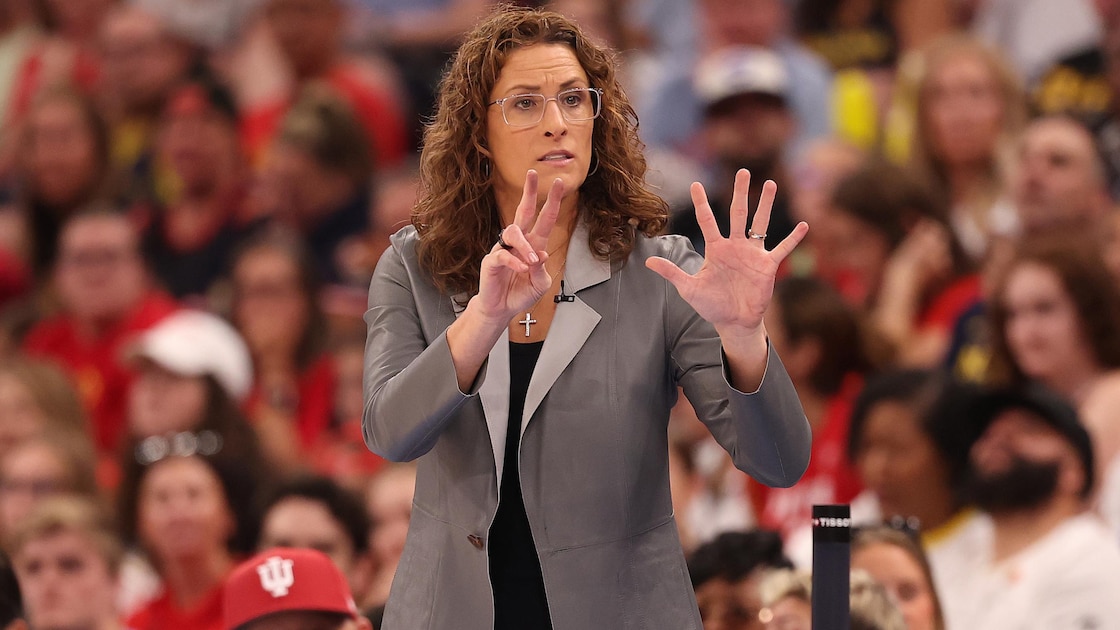
Chicago Sky vs Indiana Fever: Stephanie White Defends Carrington Foul
DiJonai Carrington’s ejection turned one foul into a larger argument about force, intent, and the line the WNBA keeps asking players to walk.
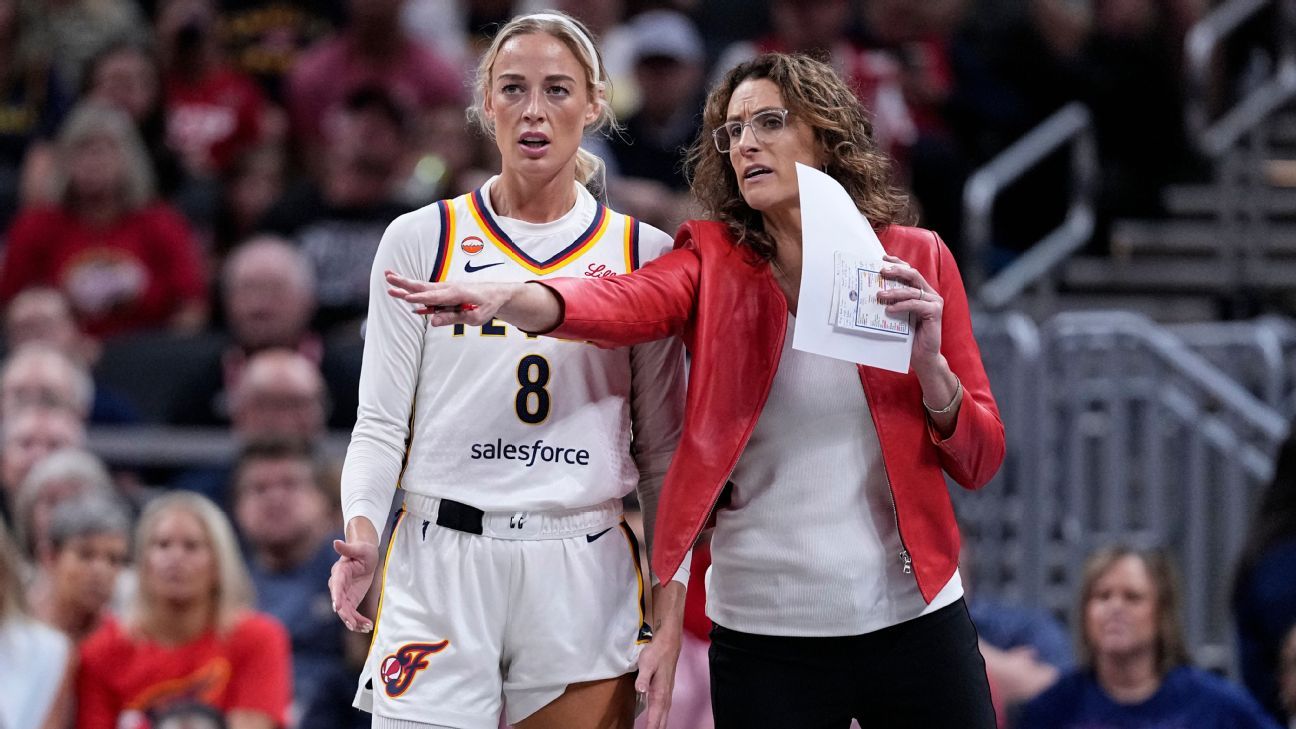
Indiana Fever Stephanie White boos, Clark and Cunningham back her
Stephanie White did not shrink from the booing in Indianapolis, and Caitlin Clark and Sophie Cunningham made sure she didn’t stand alone. The Fever’s win over the Liberty carried a deeper charge than