
World Cup Final Half-Time Show: Politics, Pageantry and FIFA
The curtain call got louder than the football, and that says plenty about the times.
 Leo Lupo6 min read
A final that kept one eye on the pitch and one on the podium
The first thing worth saying about the first World Cup final halftime show is this: nobody asked for it, and everybody noticed it. That’s the modern game for you. What used to be a clean break for a swallow of water and a man with a clipboard has turned into a statement of intent, a branding exercise, and, in FIFA’s hands, another chance to remind the world that it likes the spotlight almost as much as the sport.
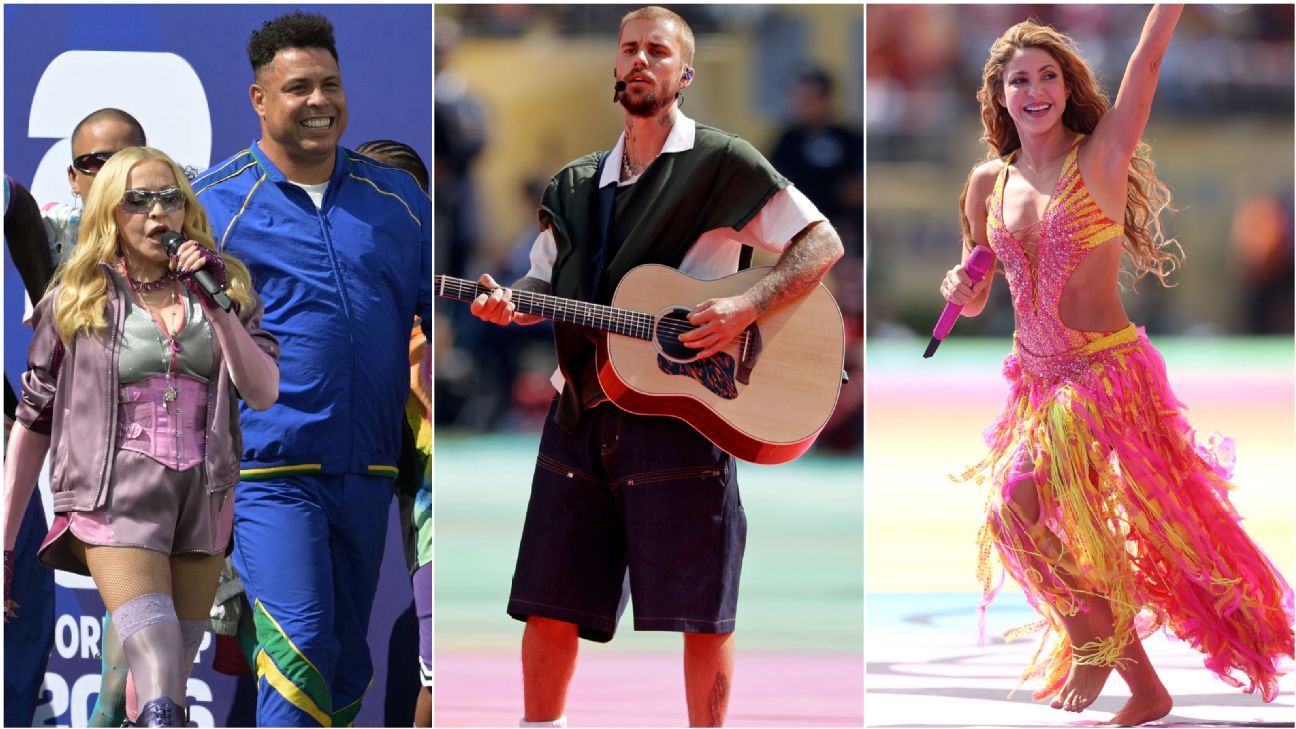
Sunday’s show, with the likes of Justin Bieber, Madonna, Shakira and BTS all part of the conversation around the break, wasn’t just entertainment. It was a signal flare. The World Cup final, already the most watched piece of football on earth, got a halftime presentation more suited to a championship game in the American style — loud, packaged, and built to be talked about long after the last note fades.
And talked about it was. Because once you put a stage in the middle of the biggest match in the sport, you stop pretending football exists in some pure little bubble. It doesn’t. It never did.
FIFA loves the gloss, but the game pays the bill
FIFA has spent years polishing the edges of the World Cup, sanding down the rough stuff, and turning a tournament into a global product. This halftime show was just the next coat of paint. Same people, same instinct: sell the pageantry, sell the reach, sell the idea that football is no longer merely a match but a full-spectrum event.
The trouble is, pageantry always comes with a price, and not just the money. The match itself has rhythms. Players need recovery, coaches need to adjust, and fans need the football to stay the main course. Stretching the show into the middle of a final changes the mood. It turns the game into something that has to compete with itself.
That’s not some old man shouting at clouds. It’s the basic truth of sport. Football earns its drama the hard way. You don’t need to drop a fireworks display on top of it to prove it matters.
The World Cup final does not need rescuing by halftime entertainment. If anything, the entertainment needs the final.
There’s a reason World Cup finals have always felt different. The best ones carry their own music. A tackle. A surge down the flank. A save that leaves a stadium flat-footed. That’s the theatre. Everything else is garnish.
Politics was already in the room before the music started
The tip here makes the right point in the wrong order: the half-time show is just one chapter in a World Cup that has been bumping into politics from the opening whistle. That’s the real story, and it’s why this event keeps producing odd little collisions between sport and statecraft.
FIFA president Gianni Infantino has become an expert at walking the line between football’s global reach and the political baggage that travels with it. The World Cup has long been a stage for national pride, soft power, and all the rest of the grandstanding. It is impossible to host a tournament of this size without politics hanging around like cigar smoke in an old press box.
That’s why stories about the Falkland Islands, presidents, monarchs, and every other power broker who sniffed around this tournament mattered. The football was never sealed off from the real world. It was always part of it. FIFA just keeps pretending it can manage the messy bits with better production values.
And no, that doesn’t make the halftime show sinister by itself. It makes it revealing. When a governing body starts choreographing spectacle that hard, you can bet it’s not doing it out of a love for the culture. It’s doing it because attention is currency.
The final became a stage, and that changes what fans are buying
The working fan is supposed to be grateful for all this. More entertainment. More global reach. More “engagement.” Fine. But there’s a line between enhancing the occasion and turning the occasion into a billboard with grass on it.
This is where the World Cup starts to look less like a tournament and more like a showcase for whoever can command the loudest room. If you’re a kid in the stands or on the couch, maybe you eat it up. Fair enough. That’s part of the trade now. But for the folks who still believe the final should be about the players, the tactics, the nerves in the tunnel and the first crunching challenge, there’s a sour note here. The game is being asked to share its last, best stage.
I’ve seen enough big sporting events to know this kind of thing doesn’t happen once and stay once. If the show lands, it becomes a habit. If it becomes a habit, it becomes an expectation. And once expectation sets in, the sport starts adjusting itself around the spectacle instead of the other way around. That’s how these things grow teeth.
I’ll tell you what else I’ve learned in forty years of watching leagues, tournaments, and suits in expensive shoes try to “elevate” a product: they almost always confuse louder with better. The game doesn’t need louder. It needs room to breathe. The best finals — and Spain's World Cup win over Argentina style nights? The best ones are remembered because the football was heavy enough to carry the memory by itself.
This was bigger than a halftime stunt
The halftime show matters because it says FIFA sees the World Cup final less as a sacred sporting contest and more as a platform to be optimized. That’s the modern gospel. Sell the moment. Extend the reach. Keep the cameras busy. Nobody in Zurich is likely losing sleep over a few traditionalists griping into their coffee.
But the criticism has a point. Once you start importing the full entertainment-industrial mindset into football’s crown jewel, you risk flattening what makes the crown jewel worth wearing. The final is supposed to be the one event where the game’s own drama is enough. If the show has to interrupt that, the show better have a darned good reason for being there.
Football’s history is full of power plays, and the World Cup has always been especially good at attracting them. That’s why this halftime spectacle doesn’t feel like a novelty so much as a marker. A signpost. The tournament is drifting farther from the muddy, human game and closer to the polished global broadcast machine. Maybe that’s inevitable. Maybe it isn’t. But don’t kid yourself: it changes the flavor.
The ball still decides the winner. It always will. But the room around it? That’s getting a lot more crowded. Expect the next final to arrive with even more noise, more shine, and more people trying to sell you the idea that all of it is for the good of the sport.
More from Straight From The Bench
Comments
Join the conversation — sign in to leave a comment.
Sign in to commentRelated Stories

Argentina loss: Trump sports curse talk returns after Messi comments
Trump’s praise of Lionel Messi before Argentina’s loss to Spain was enough to revive the old curse chatter. In a sport built on fate and memory, superstition always finds fresh soil.
FBI World Cup Security: 700 Drone Takedowns, No Major Attacks
The World Cup was sold as a festival, but it was also a sprawling security test. The FBI says the event passed with no major attacks and hundreds of drones brought down.
World Cup final halftime show: Mad, loud, and strangely earned
The first World Cup final halftime show brought star power and spectacle to the biggest stage in soccer. It also raised the old question: did the music serve the match, or swallow it?