
Astros Front Office Direction: Jim Crane Tightens His Grip
A first-place club should not feel this unsettled, but Houston now does.
 Beatrice Kensington6 min read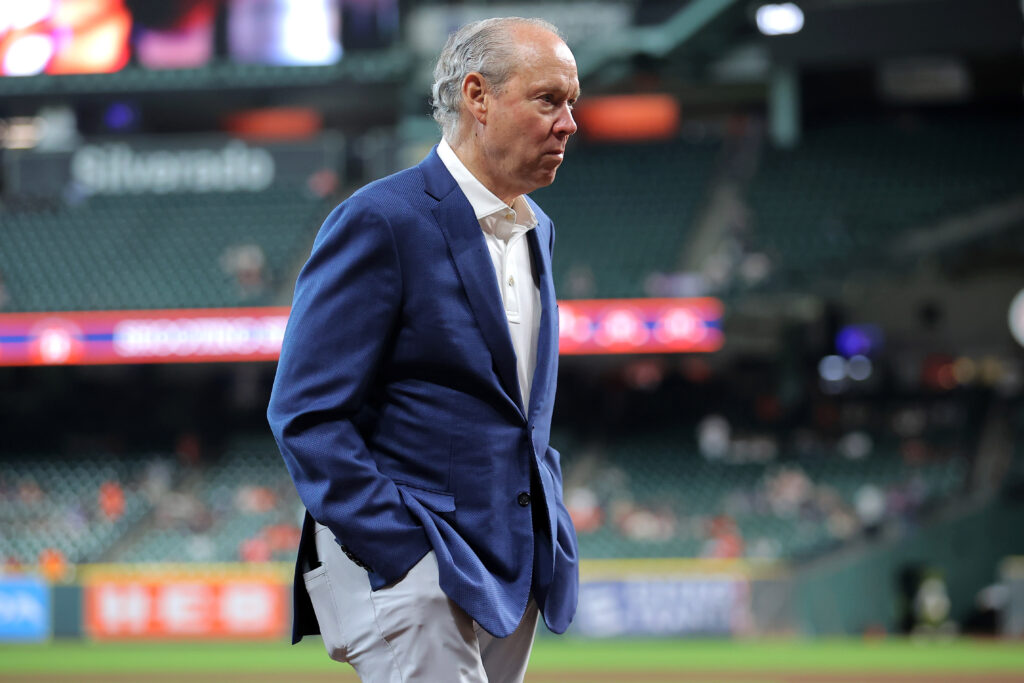
The strange thing about a first-place team is how quickly success can hide a crack in the foundation. Houston is still standing at the top of the standings, still carrying the familiar weight of October expectations, and yet the removal of Dana Brown has left the Astros looking less like a machine and more like a house after someone has quietly taken down a load-bearing wall.
Jim Crane, as owner, has never been shy about asserting himself. That is part of the bargain in modern baseball, where the richest voices often make the loudest final say. But there is a difference between stewardship and concentration of power, between being the last word and being the only one in the room with a pen. The Astros have now crossed into the latter territory, at least for the moment, and that changes the texture of the organization whether the win column admits it or not.
A first-place club with an empty chair at the table
The immediate baseball question is not whether Houston can still win games. Of course it can. This is an organization that has spent the better part of a decade teaching itself how to absorb turbulence and keep moving. The Astros have lived through scandals, roster churn, postseason heartbreak, and the sort of scrutiny that would flatten lesser franchises. They know how to play while the world talks about everything except the game.
But front offices are not decoration. They are the wiring behind the walls. When a club in contention removes its general manager without handing the public a stable succession plan, it sends a message to the clubhouse whether intended or not: the people making decisions above you are still sorting out who counts most.
That matters in July, and it matters even more by August, when deadline logic begins to squeeze every roster flaw into sharper relief. Houston has long been at its best when the baseball operations department and the dugout moved in tandem, with roles clearly defined and ego kept mostly in its lane. Remove the lane markers, and the whole road gets slippery.
The club can insist this is an internal adjustment. Fine. Internally, though, these things always carry a smell. And players know the smell.
What Dana Brown’s exit says about Houston now
There is a human cost to these decisions that often gets buried beneath the sterile language of “direction” and “alignment.” Brown was the face of baseball operations, and his departure does not merely clear a desk; it rearranges relationships. Scouts, analysts, player-development staff, and the people who make the invisible day-to-day calls all have to recalibrate. That kind of uncertainty does not stay neatly in the executive suite.
The Astros have built their identity on the idea that process beats panic. They found stars, extended windows, and kept adapting as the league tried to catch up. If this move signals that owner control is superseding institutional rhythm, it risks eroding one of the few edges a perennial contender can’t simply buy back with a clever trade.
For context, there is nothing unusual about an owner’s imprint shaping baseball operations; MLB is full of such kingdoms. But there is a reason the smartest of those kingdoms delegate. The game is too complex, the injury cycles too cruel, the scouting too granular for one voice to dominate every room. Houston has thrived when its structure looked modern. It looks less modern now.
The most dangerous thing for a winning club is not a bad month. It is a front office that starts believing its own stability is permanent.
That line, in one form or another, has haunted this sport for generations. Ask any club that mistook a golden run for a permanent law of nature. Baseball has a way of collecting its debts.
Jim Crane’s style: decisive, but not always reassuring
Crane deserves credit for refusing to pretend that ownership is some ceremonial post. Many owners hide behind layers of advisers and polished slogans. Crane does not. He acts like a man who believes accountability should have a face. There is clarity in that, and sometimes clarity is useful.
Still, there is also a reason baseball people flinch when an owner begins to orbit the daily baseball decisions too closely. The best-run organizations usually have enough friction to prevent bad instincts from becoming policy. Crane’s approach has worked often enough to keep the Astros elite, but the current moment asks a different question: can a team remain excellent when the architecture of decision-making becomes narrower instead of sturdier?
I’ve covered enough winning eras to know that the public often notices leadership problems only when the losses arrive. By then, the damage is usually already done. What Houston is doing now is riskier than a bad trade or a cold stretch. It is reorganizing authority while the season is still alive, which is the organizational equivalent of changing the engine while the plane is descending.
And yet, there is no denying the pragmatism of the move if Crane believes Brown no longer fit the shape of the club’s next phase. Owners rarely fire executives because they feel sentimental. They do it because they want leverage, speed, or a cleaner chain of command. Sometimes all three. The question is not whether Crane is serious. He is. The question is whether seriousness, without enough ballast, becomes volatility.
The clubhouse still has to play through the noise
For the players, the hope is simple: keep the baseball separate from the bureaucracy. That is easy to say and hard to live. Every clubhouse has ears. Every veteran knows that front-office upheaval can mean a deadline push, a roster reshuffle, or an evaluation period that suddenly feels more severe. Young players sense it even faster; they hear the tone before they understand the substance.
This is where Houston’s culture will be tested. Not in some abstract ownership seminar, but in the small daily moments that define a season: whether the dugout stays calm, whether the veterans steady the room, whether the manager can keep the focus on the next pitch instead of the next memo.
If you want a preview of how much the Astros still value institutional continuity, look at how carefully they’ve handled other points of transition around the roster in recent years. Stability has been part of the product. The club has not always been graceful about it, but it has usually been deliberate. That is why this front office change lands with such force. It is not merely a personnel move. It is a signal that the old comfort may not be guaranteed.
There is another layer here, too: the broader baseball public is increasingly impatient with the idea that winning excuses everything. Fans can forgive a bad month. They are less forgiving of opaque power structures, especially when a franchise already carries the burden of history and scrutiny. Houston knows that better than most.
Astros GM change is not a story about one man’s departure alone. It is a story about who gets to define the next era, and how much of a winning machine remains intact when one of its architects is shown the door. If Crane has a plan, the burden now is to make it legible, not merely forceful.
The standings will keep their own record. The bigger ledger is the one Houston is writing behind closed doors. That page is not finished yet. And the next line matters.
More from Straight From The Bench
Comments
Join the conversation — sign in to leave a comment.
Sign in to commentRelated Stories

Carson Whisenhunt UCL Tear: Giants Lefty Faces Surgery
Carson Whisenhunt’s elbow injury has changed the Giants’ picture fast. A lefty with upside is now staring at a surgery timeline and an even longer wait.
J.P. Crawford return: Mariners get their steady hand back
J.P. Crawford is back from the injured list, and the Mariners finally regain the calmest glove on their infield. After weeks of makeshift shortstops, that matters more than it sounds.

Little League World Series: Kinley Rasmus Leads Phenix City
Phenix City survived another elimination-game test at the Little League World Series. Kinley Rasmus is turning into the face of the run.