
Carlos Baleba Manchester United Transfer: What £70m Means
United bought steel for the middle, and with it another bet on time, patience and nerve.
 Beatrice Kensington6 min read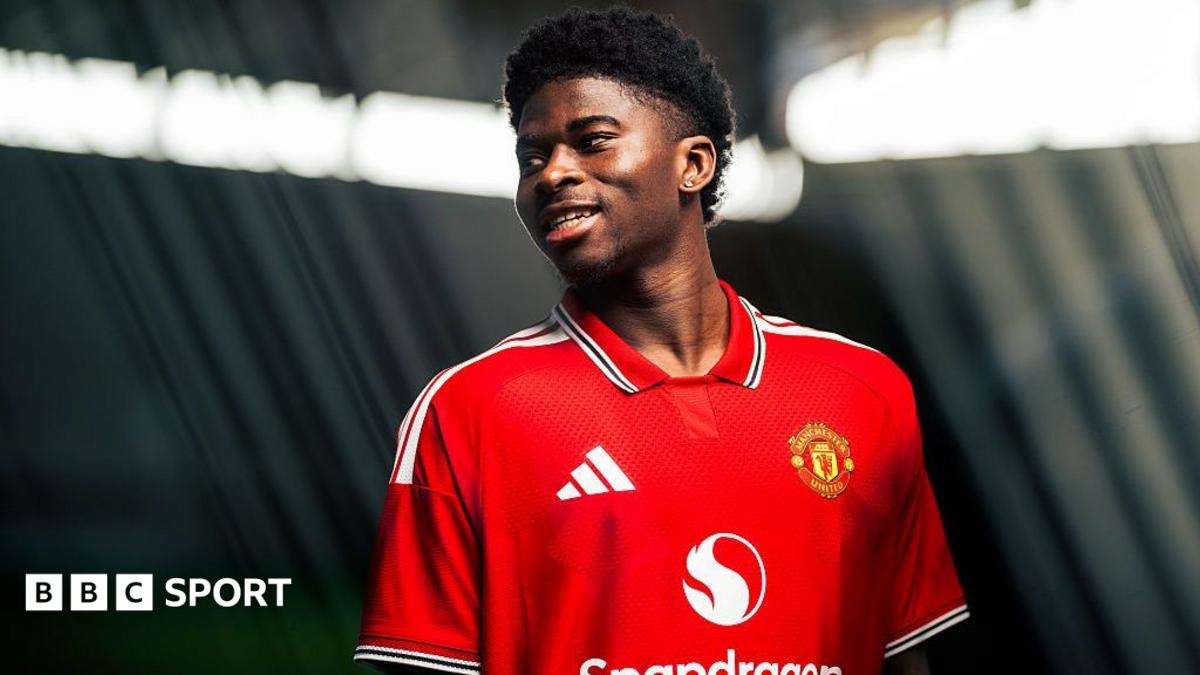
A midfield purchase built on force, not flourish
Manchester United have gone out and bought a player who does not ask for the spotlight so much as change the temperature in the room. Carlos Baleba arrives from Brighton in a £70 million deal, and the price tells you everything about the modern market: the days of finding a midfield destroyer on the cheap are mostly gone, and the clubs that wait usually end up paying more anyway.
Baleba’s attraction is not the silk of a No. 10 or the romance of a deep-lying passer spraying diagonals like confetti. It is something harsher, more useful, and often more difficult to teach. He wins the ball. He covers ground. He carries possession out of danger and into space. In a team as psychologically fragile as United have often looked in recent seasons, that is not a luxury. It is structural repair.
Brighton, as ever, have made a habit of turning promise into profit, and United have made a habit of admiring the mechanism from afar before finally deciding they need the part after all. The fee is eye-watering, but the logic is plain enough. Brighton & Hove Albion do not let important players leave unless the market has already written the cheque in bold ink. United, for their part, have long needed a midfielder whose first instinct is to put out fires rather than admire them.
Why Baleba fits the shape United keep chasing
There is a particular kind of midfielder that elite sides now crave: the one who can close space without fouling, recover with urgency, and then turn a defensive scrape into a forward thrust before the opposition has properly reset. Baleba belongs to that class. He is not being sold to supporters as a poet. He is being bought as a pressure valve.
That matters because Manchester United have spent too many afternoons looking like a team stretched between identities, too open when they have the ball and too easy to play through when they do not. The Premier League has become a league of savage transitions, where the distance between a clever pass and a concession can be measured in three hurried steps. Baleba’s best qualities speak directly to that reality.
What stands out is the blend of range and carry. Plenty of midfielders can win the ball. Plenty can run. Fewer can do both and then break the field with the confidence of a player who believes the next pass should belong to him, not the opposition. That is where Baleba’s value lives. Not in decoration. In interruption.
It also explains why this deal feels like more than a simple reinforcement. United are not merely adding depth. They are trying to alter the mood of the middle third, where games are won quietly and lost in a blink. In the Premier League, that kind of midfielder is often worth as much as a glamorous attacker because he prevents the frantic, end-to-end chaos that swallows so many rich teams whole.
United have not bought a highlight reel here; they have bought a firewall.
The Brighton tax and the market United chose anyway
There is no escape from the arithmetic. £70 million is a large sum for any player, and it becomes even larger when the player’s reputation rests more on control, recovery and progress than on a stack of spectacular goals or assists. Yet this is exactly where the transfer market now sits. Clubs pay not just for ability, but for the scarcity of a very specific kind of ability.
If you want a midfielder who can do the dirty work and still move the ball with purpose, you are shopping in an expensive aisle. Brighton know this better than almost anyone. They are one of the league’s sharpest operators, and they have a way of turning recruitment into resale value with the calm efficiency of a company with an immaculate ledger. United, by contrast, have often behaved like a club trying to correct past errors under the glare of public impatience.
The scale of the fee creates pressure, naturally, but it also creates expectation of role. Baleba will not be judged like a luxury signing. He will be judged by whether the side feels harder to break, steadier in possession, and less dependent on emergency defending from the back line. That is the real test.
There is a useful parallel tucked into LeBron James Loan Deal: The $300 Million Side Hustle: not because football and basketball are the same, but because modern sport has become fluent in the language of asset management. Clubs and stars alike are now weighed for the value they can create beyond the immediate spectacle. United are paying for footballing function, yes, but also for the promise of a more stable ecosystem around it.
What Baleba says about United’s bigger problem
I have long thought the easiest mistake to make with Manchester United is to confuse volume with strength. The club can spend loudly. It can sign expensively. It can make every transfer window feel like a parliamentary hearing. But the deeper question has never been whether United can buy talent. Of course they can. The question is whether they can build a midfield that survives the Premier League’s most brutal habits: rushed turnovers, second balls, and the constant demand to defend while tired.
Baleba interests me because he points toward a more adult idea of team-building. Not the fantasy version, where one elegant technician arrives and changes everything by aura alone. The grown-up version, where you identify the spaces in the team that bleed points and buy the player most likely to stitch them shut. There is less glamour in that. There is also more truth.
This is where the signing becomes politically interesting inside the club. A transfer of this size narrows the excuses. If United wanted a midfielder who could offer legs, ball recovery and physical authority, they have now paid for one. If the structure around him remains soft, if the passing angles are still poor, if the team still looks like eleven players negotiating their own separate instructions, then the problem is no longer recruitment alone. It becomes the culture surrounding recruitment.
And there is no hiding that in a league this unforgiving. Carlos Baleba will arrive with expectations that are practical rather than theatrical, but they will still be heavy. Every touch will be read through the lens of whether United have finally learned to value the midfield as the engine room, not an afterthought.
The test now is whether the signing changes the room
For all the noise that comes with a £70 million transfer, the real measure of this deal will be quieter. United need to look harder to play through. They need to look more balanced after turnovers. They need a player who can make the ugly moments less dangerous and the first pass after a regain more purposeful.
Baleba can help with that. The best version of him gives United something they have lacked far too often: a midfielder who brings gravity without dragging the team backward. If he settles quickly, the signing could become one of those rare purchases that improves not just the starting XI but the emotional tone of the entire side.
The fee will linger, because it always does. So will the comparisons to older mistakes and bigger promises. But this feels, at least on paper, like a club buying for function instead of fantasy. That is overdue.
Now comes the harder part. Making it mean something on grass.
More from Straight From The Bench
Comments
Join the conversation — sign in to leave a comment.
Sign in to commentRelated Stories

Premier League opening weekend: winners, losers and warning signs
Opening weekend always lies a little. Still, some clubs left with momentum, others with problems, and a few with both.
Carson Whisenhunt UCL Tear: Giants Lefty Faces Surgery
Carson Whisenhunt’s elbow injury has changed the Giants’ picture fast. A lefty with upside is now staring at a surgery timeline and an even longer wait.

Bella Mir Upset Loss: DWCS Season 10 Week 3 Shock
Bella Mir walked into the Apex with the spotlight on her. Alex Apodaca walked out with the upset and a reminder that the Contender Series eats reputations for breakfast.