
Rodri World Cup Golden Ball: Spain's Midfield Crown
A final won in the middle of the pitch, where Spain made control look like inevitability.
 Beatrice Kensington6 min read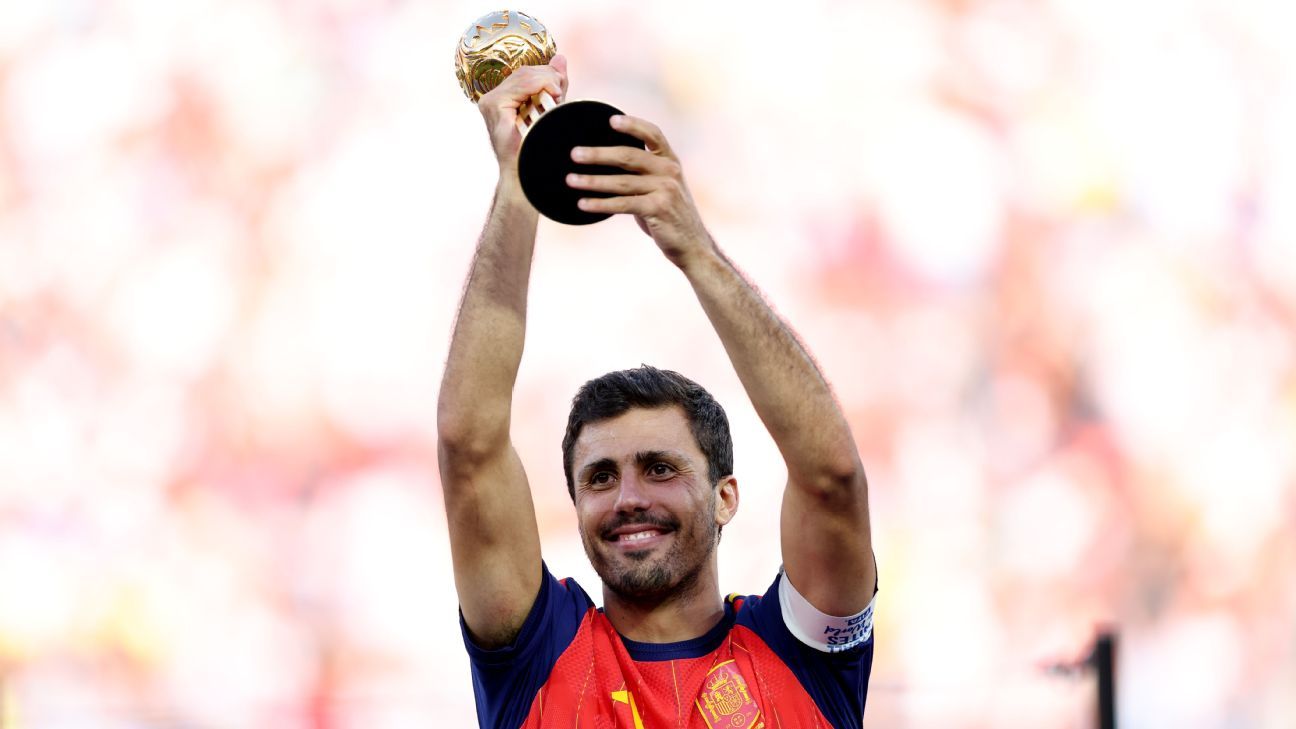
Spain did not merely win the World Cup in New Jersey. They arranged the whole occasion like a country with a long memory and a shorter fuse than most imagined, then finished it with the sort of authority that leaves the losing side staring at the grass, wondering where the oxygen went. A 1-0 defeat of Argentina at MetLife Stadium delivered Spain their second men’s crown, and the individual honors followed the script of the night: Rodri took the Golden Ball, while Spain’s collective superiority spilled into the rest of the awards ledger as if the trophy room itself had tilted red.
This was never going to be remembered as a carnival of chaos. Spain had other designs. They reduced the final to a question of nerve, spacing, and who could withstand the longest stare. Argentina, with the shadow and seduction of Lionel Messi at its center, brought the familiar threat of myth; Spain brought the cold discipline that often wins tournaments long after the songs have faded. In a final as tight as a clenched fist, the team that controlled the pulse also controlled the story.
Rodri’s Golden Ball and the tyranny of the middle
Rodri winning the tournament’s top individual prize feels less like ornament and more like diagnosis. The modern World Cup still likes its forwards, its dribblers, its men who make crowds rise in a single gasp. Yet the deepest truth of Spain’s triumph was written farther back, where Rodri stood arranging traffic, slowing danger, and making the game behave.
He is not the sort of player casual viewers always remember first, which is exactly why this matters. Finals are often sold as theater, but they are won by the people who prevent the theater from collapsing into noise. Rodri was that figure here: the metronome, the shield, the quiet authority. The Golden Ball is supposed to honor the tournament’s best player. On this evidence, it honored the one who most clearly understood what winning a World Cup actually demands.
Spain did not win by chasing brilliance. They won by making brilliance answer to structure.
That distinction has become one of the defining arguments of the sport. We have spent years romanticizing the spontaneous and the spectacular, yet the most durable champions keep reminding us that control is a kind of artistry too. Rodri’s award places a plaque on that truth.
Spain’s awards haul was the printout of a dominant month
Spain’s “hat trick” of individual honors only confirmed what the final had already shown: this was not a one-night theft. It was the end result of a month in which Spain looked increasingly like the tournament’s most complete side. When a team takes the title and also collects the hardware around it, you are usually looking at something more than a hot streak. You are looking at a system that held.
That matters because international tournaments are often remembered through a single face. But Spain’s title was built on a collective intelligence that made the whole team feel larger than any one star. The award to Rodri, and the wider recognition of Spain’s players, speaks to a squad that never had to choose between elegance and pragmatism. They found a way to wear both.
For Argentina, the defeat is harder because it came against a side that did not look flustered by the occasion. The emotional weight of a final is one thing; the technical burden is another. Spain met both. Argentina, for long stretches, seemed to be fighting the geometry of the match as much as the opponent across from them.
MetLife Stadium and the strange grandeur of a final far from home
There is always a little unreality in a World Cup final played in a stadium better known for Sundays in the NFL. That tension is part of the spectacle. It also changes the emotional temperature of the game. MetLife Stadium is a grand, blunt bowl, the kind of place that can amplify a roar and still make a football match feel like it has been translated into another language.
That setting mattered. Big finals in the United States now carry a particular kind of symbolism: a global sport staging its most sacred ritual in one of the most commercialized environments in sports. If that sounds like a contradiction, it is. Yet the World Cup has always thrived on contradiction. It is part pilgrimage, part marketplace, part fever dream.
Spain understood the room better than Argentina did. The atmosphere, the scale, the pressure — none of it seemed to tempt them into haste. They looked like a side that had studied not only the opponent but the occasion itself.
What this means for Spain, and what it says about the game
Here is my view, and I do not say it lightly: this Spain side should force a reconsideration of what we praise in elite international football. We still tend to award aesthetic virtue to teams that attack in flashes and individual menace. But Spain has now made a persuasive case that the highest form of ambition is not to overwhelm a match, but to domesticate it.
I have watched enough finals to know how rare that is. The great sides often have one crack in them — a dependence on a single scorer, a fragile back line, a tendency to become emotional when their plans are tested. Spain’s edge was that they seemed to have fewer of those cracks. They did not need every phase to be beautiful. They only needed each phase to be obedient.
That is the inheritance of the old Spanish school and something newer besides. The passing culture remains, but it has been hardened by a colder competitive instinct. It is the same reason Spain’s previous triumphs still matter in the conversation about the FIFA World Cup and the same reason this one may linger differently. This was not just artistry winning. It was maturity winning.
For readers tracking the wider tournament arc, this result also sits neatly beside the larger conversation we have been having about how finals are staged, marketed, and remembered. Our earlier look at the pageantry around the final in World Cup final halftime show captured the scale of the event. This result gave the football itself the final word.
And if you want the historical frame, Spain’s victory belongs in the same family as the moments covered in our past final-night pieces on Spain's World Cup triumph and Spain outplaying Argentina at the summit. The details differ; the lesson rhymes. Spain know how to turn the last match into a study in control.
The standard has been reset
Rodri’s Golden Ball will sit on the shelf, but the larger prize is subtler: Spain now have the right to demand that the rest of the game meet them on their terms. That is a heavier thing than a medal. It is a standard.
The next cycle starts immediately, as these things do. Rivals will study the shape of Spain’s midfield, the patience of their press, the calm that kept their title from slipping loose. That is the burden of excellence. Once you have ruled the middle, everyone else begins by trying to take it back.
More from Straight From The Bench
Comments
Join the conversation — sign in to leave a comment.
Sign in to commentRelated Stories

Argentina loss: Trump sports curse talk returns after Messi comments
Trump’s praise of Lionel Messi before Argentina’s loss to Spain was enough to revive the old curse chatter. In a sport built on fate and memory, superstition always finds fresh soil.
FBI World Cup Security: 700 Drone Takedowns, No Major Attacks
The World Cup was sold as a festival, but it was also a sprawling security test. The FBI says the event passed with no major attacks and hundreds of drones brought down.

World Cup final halftime show: Mad, loud, and strangely earned
The first World Cup final halftime show brought star power and spectacle to the biggest stage in soccer. It also raised the old question: did the music serve the match, or swallow it?