
Astros GM Dana Brown Part Ways: What Houston’s Reset Means
A tidy phrase from the front office, a messy reality beneath it.
 Beatrice Kensington6 min read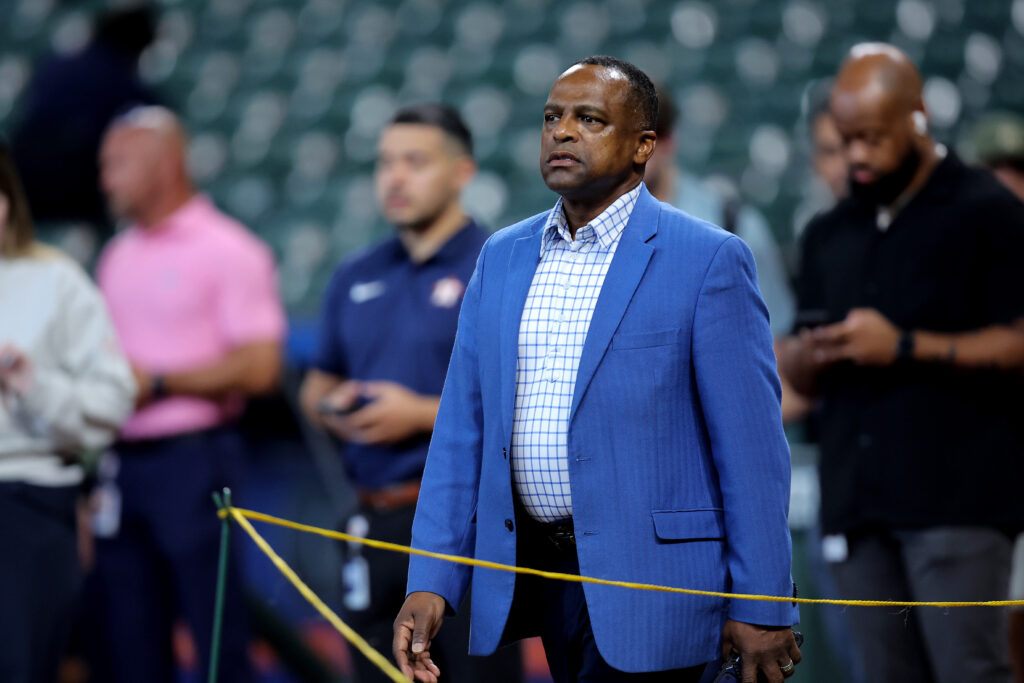
The Houston Astros have reached one of those organizational moments that looks procedural on paper and seismic in practice. Dana Brown is out as general manager, his responsibilities shifting to assistant general managers Charles Cook and Gavin Dickey, and the club is now asking its fans to accept a familiar baseball promise: this is merely a transition. It never is. Not really. A front office change at a club that spent the better part of a decade setting the standard in the American League always carries the scent of something larger — a reckoning with age, with payroll, with the narrowing margin between ambition and maintenance.
Brown did not inherit a blank canvas. He inherited a championship machine that was already beginning to show wear at the seams. That matters. General managers are often judged as if they are lone architects, when in truth they are working inside the weather system left behind by their predecessor. Brown’s brief in Houston was not to start a dynasty; it was to preserve one. That is a far crueler assignment. The Astros have spent years teaching the sport how ruthless sustained excellence can be. Now the franchise has to learn the other side of that lesson: what happens when the machinery that once felt inevitable starts asking for repairs.
A front office exit that says more than the press release
The language of mutual agreement is baseball’s preferred velvet glove. It softens the edges of a decision that, in plain English, says both sides understood the arrangement had run its course. For Houston, the move likely reflects a broader organizational calculation about direction, accountability, and the shape of the roster in the years ahead. A team that has lived for so long at the edge of contention cannot afford a front office stuck explaining yesterday.
There is no scandal in the announcement, no dramatic public rupture, and that absence is telling. Teams do not always fire their way into clarity. Sometimes they simply decide that a different voice is needed to navigate the same difficult terrain. Brown’s departure suggests the Astros believe the next phase of the franchise requires a different steward — one who can thread the needle between the present core and whatever comes after it.
And that core is no small matter. Veteran teams age in public, one hamstring, one diminished fastball, one expensive contract at a time. Houston has been living in that light for a while now. The margin for error narrows; the decisions get heavier.
The cost of keeping a contender alive
This is where the Astros’ situation stops being administrative and starts being human. Every enduring contender eventually faces the bill for its own success. Stars move toward their late-career seasons. Farm systems that once looked endless are asked to replenish the same club again and again. The trade deadline becomes less a theater of opportunism than a triage ward.
Brown’s tenure has to be judged against that backdrop. It is easy to look at a front office and say it should have done more, as if every possibility were available at every deadline. But baseball is a market of scarcity, and contenders pay in futures, in flexibility, in the creeping compromise that comes from trying to win now without collapsing later. If Houston is making this change, it may be because the organization no longer believes the current framework has found the right balance.
That is the burden of the modern Astros: they are not a plucky upstart any longer, not a cute success story, not the team everyone roots for from a distance. They are a standard. Standards are admired from afar and resented up close. They also age badly if tended poorly.
The hardest part of staying on top is that every small misstep starts to look like a philosophy.
For fans, the emotional terrain is tricky. A front office change can feel like accountability, like the club finally admitting that inertia is not a strategy. It can also feel like the first crack in a window you had assumed was sealed. Houston supporters have grown used to October baseball as a birthright; they will now have to wonder whether this is the first move in a patient reset or the beginning of a more uncomfortable reordering.
What this means for the roster, not just the office
The immediate consequence is not simply who sits in the chair next. It is how the Astros interpret the roster over the next several months. Assistant general managers stepping into expanded roles tend to prioritize stability, which means the club may lean toward continuity unless ownership dictates a more dramatic course. That could affect everything from trade posture to contract strategy to how aggressively the team handles its aging core.
If you want a useful comparison for the emotional shape of this moment, look no further than Mike Vrabel Patriots depth comments. Different sport, same principle: when an organization starts talking about depth, it is usually preparing for a reality it cannot completely control. For the Astros, the question is whether depth can still be conjured fast enough to keep the window open.
There is also the larger baseball economy to consider. The sport punishes hesitation and punishes overreaction with equal enthusiasm. A club that has won as much as Houston has over the last era can slip into the dangerous belief that its reputation will do the heavy lifting. It never does. The league keeps moving, the rivals keep drafting, and the margins keep thinning.
My read: this is the sound of an era being audited
I’ve always believed the most revealing personnel changes are the ones that arrive without theater. No fireworks, no grand reckoning, just a measured announcement and the quiet sense that an organization has opened its books and found the numbers no longer match the mythology. This feels like that.
The Astros are not tearing anything down. Not yet. But they are acknowledging, perhaps more plainly than before, that the old assumptions are not enough. That is healthy, even if it is uncomfortable. Championship teams often cling too long to the language of continuity because continuity flatters everybody. It lets ownership believe in patience, lets fans believe in destiny, lets the front office believe in its own instincts. Eventually, the bill arrives.
Houston may still have one more run in it, or two, depending on how generously the roster ages and how shrewdly the next leadership group acts. But this move tells us the franchise has stopped pretending the past can be preserved intact. That’s the honest part. And honesty, in baseball, is usually the first step toward whatever comes next.
The Astros have changed the name on the door. The larger question is whether they can change the mood in the room. That answer will come soon enough.
More from Straight From The Bench
Comments
Join the conversation — sign in to leave a comment.
Sign in to commentRelated Stories
Mariners Blowout Loss: Seattle’s Rotation Worry Deepens After Cubs Rout
Seattle has been flattened twice in short order, and Bryce Miller’s health now sits at the center of the anxiety. The standings can wait; the rotation cannot.

Yankees Place Ryan Weathers On 15-Day IL: Bellinger Returns
Cody Bellinger is back where the Yankees need him, but Ryan Weathers landing on the injured list keeps the rotation ledger messy. One step forward, one sore elbow away from trouble.
Luis Robert Jr. Home Runs: White Sox Return Turns Loud
Luis Robert Jr. returned to Rate Field and answered a rough night with two home runs, reminding Chicago what leaving can sound like.